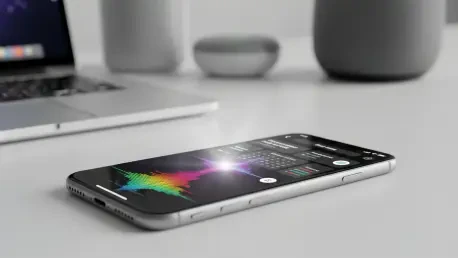

For years, Apple’s digital assistant, Siri, has been a familiar voice but often a frustrating one, adept at setting timers but stumbling over complex queries that its rivals handle with ease. This long-standing performance gap has left many users wondering if Siri would ever catch up in the rapidly advancing world of artificial intelligence. Now, a monumental shift is on the horizon as Apple prepares to fundamentally reinvent its assistant with the upcoming release of iOS 27. The core of this transformation is a strategic integration of the Gemini large-language model, a move designed to elevate Siri from a simple voice-command tool into a sophisticated, full-featured AI chatbot. This upgrade promises to equip Siri with advanced conversational capabilities, nuanced natural-language understanding, and the ability to handle rich contextual information, positioning it to compete head-to-head with other AI assistants that have already embraced powerful language models. It represents not just an incremental update but a complete reimagining of what Siri can be for hundreds of millions of users worldwide.
A Phased Rollout to a Smarter Future
Apple is strategically approaching this monumental upgrade through a carefully planned two-phase rollout, ensuring a smooth transition while building a robust foundation for the future. The initial stage is set to arrive with the iOS 26.4 update, which will focus on introducing a layer of advanced personalization. This preparatory phase is crucial, as it will enable Siri to learn user preferences, habits, and contextual patterns more deeply than ever before. By understanding individual routines and communication styles, the system will lay the groundwork for more intuitive and accurate interactions. The second and far more significant phase will launch with iOS 27, marking the full conversion of Siri into a true AI chatbot. This release will unlock the assistant’s ability to handle complex, multi-step tasks, engage in fluid, back-and-forth dialogue, and perform powerful content generation. Users will be able to ask Siri to draft detailed emails, summarize lengthy articles, or even brainstorm creative ideas, a leap in functionality that moves it from a reactive tool to a proactive, intelligent partner.
The Dawn of an Integrated Intelligence
This reimagined assistant signaled a profound shift in how Apple envisioned user interaction with its devices. The integration of advanced AI was not merely an enhancement but a fundamental redesign, moving Siri from a peripheral feature to the central nervous system of the Apple ecosystem. By embedding these new capabilities at the core of iOS, iPadOS, and macOS, Apple ensured that the assistant would be a consistent and deeply integrated intelligence rather than a standalone application. This approach facilitated unprecedented control over the Apple Home ecosystem, allowing users to issue complex, multi-device commands through a single, natural conversation. The upgrade introduced a host of anticipated features that collectively redefined the user experience. A persistent conversation history allowed for seamless follow-up queries without restating context, while the ability to upload files and images provided visual context for more precise assistance. The integration of real-time web search finally empowered Siri with up-to-the-minute information, closing a critical gap with its competitors and heralding a new era of proactive, intelligent assistance.