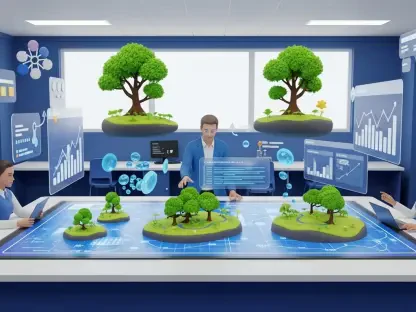

The global consumer electronics market is currently grappling with a baffling economic paradox where rising component costs are met with an unprecedented surge in buyer enthusiasm. Despite a significant spike in the prices of storage components and semiconductors that has forced high-end laptop and PC retail prices upward by as much as 1,500 yuan, consumer demand has remained remarkably resilient. Recent market data from leading e-commerce platforms like Tmall suggests that computer sales spiked by 40% year-over-year during the spring season. This shift is not driven by a sudden need for gaming performance or traditional office productivity software, but rather by the growing obsession with “OpenClaw,” a phenomenon frequently described by enthusiasts as “raising lobsters.” Consumers are increasingly viewing their hardware not as static tools for browsing or word processing, but as local environments designed to host and debug sophisticated intelligent agents. This transition has turned what was once a niche hobby for developers into a primary driver of the global hardware replacement cycle, affecting everything from entry-level smartphones to specialized domestic robotics.
Evolution of Mobile and Wearable Integration
Smartphone Transformation: Moving Toward Intent-Based Systems
Leading mobile manufacturers like Xiaomi and Huawei are currently engaged in a high-stakes race to embed OpenClaw capabilities directly into their core operating systems. This strategic pivot is fueled by the realization that the traditional app-based ecosystem is nearing its sunset, as users begin to demand more cohesive and fluid digital experiences. Xiaomi has recently introduced its “Miclaw” initiative, while Huawei has updated its existing digital assistant with “Xiaoyi Claw” features, both of which represent a fundamental departure from old-fashioned voice commands. In the past, a user had to provide granular, step-by-step instructions to accomplish even the simplest tasks, such as setting a timer or sending a specific file. Today, the integration of the “lobster” framework allows for intent-based interaction where a user expresses a vague desire, such as preparing a living room for a cinematic experience. The system then autonomously evaluates the state of various Internet of Things (IoT) devices, adjusting the lighting, closing the curtains, and activating the media player without further human intervention or specific sub-commands.
This shift toward intent-based logic represents the first major change in user interface philosophy since the introduction of the multi-touch screen. By focusing on the outcome rather than the process, these companies are positioning themselves as the primary gateways for the next generation of human-computer interaction. The hardware itself is becoming a container for a “master agent” that can bridge the gaps between previously siloed software applications. Instead of opening four different apps to plan a trip—checking weather, booking flights, reserving hotels, and mapping routes—the integrated framework handles the cross-application communication behind the scenes. This level of automation is what justifies the increased expenditure on high-performance mobile hardware, as these sophisticated agents require substantial local processing power to interpret natural language and maintain a persistent state across multiple tasks. Consequently, the smartphone is evolving from a mere communication device into a proactive personal administrator that anticipates needs rather than simply reacting to button presses.
Strategic Hurdles: The Conflict of Monetization and APIs
To facilitate this new era of automation while maintaining high standards of data security, manufacturers are widely adopting an Agent-to-Agent (A2A) architecture. This technical approach allows the system-level AI to communicate with third-party applications through standardized application programming interfaces (APIs) rather than attempting to read and interpret the visual elements of the screen. However, this transition is fraught with commercial tension, primarily because it threatens the established revenue models of many internet service providers. If a master agent performs a task like ordering groceries or booking a car directly through an API, the user never interacts with the application’s graphical interface. This means the user bypasses “splash screen” advertisements, promotional banners, and internal marketing funnels that drive the profitability of most free-to-use services. This creates a significant incentive for app developers to restrict their API access, fearing that their platforms will be reduced to mere background utilities for the smartphone’s primary agent.
Beyond the financial conflicts, the technical complexity of standardized A2A communication remains a formidable barrier to widespread adoption. While open frameworks like OpenClaw provide the necessary scaffolding, the lack of a universal industry standard for how these agents should exchange data leads to fragmentation. Major platforms like WeChat or Douyin are notoriously protective of their user data and internal ecosystems, creating “walled gardens” that the master agent struggles to penetrate. For the vision of a truly unified digital assistant to be realized, a fundamental shift in how software companies perceive value must occur. They must move away from capturing user attention through visual engagement and toward a model where they are compensated for the successful execution of tasks via automated systems. Until this economic and technical standoff is resolved, the “lobster” phenomenon will remain partially constrained by the unwillingness of major software players to fully open their doors to external AI orchestration.
Wearable Technology: AI Glasses as Perceptual Extensions
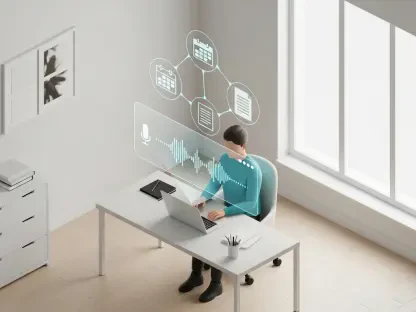
While industry analysts agree that smart glasses will not entirely displace the smartphone within the current product cycle, they are rapidly emerging as essential perceptual extensions. The prevailing strategy among hardware innovators like Thunderbird Innovation and Rokid is to position these wearables as the “eyes and ears” of the central AI system, creating a symbiotic relationship between the phone and the headset. This development is seen as the “iPhone moment” for augmented reality, particularly as AI assistants gain the ability to perform high-level administrative tasks in real-time. For example, during a lengthy corporate meeting, a pair of smart glasses can record the proceedings and use the OpenClaw framework to generate a structured knowledge base, highlighting action items and summarizing key decisions. This capability transforms the glasses from a simple display peripheral into a high-value productivity tool that significantly enhances the wearer’s cognitive capabilities and memory retention in professional environments.
Despite the excitement surrounding these devices, the integration of sophisticated agents into a wearable form factor presents unique engineering challenges. Brands like Rokid and Li Weike have successfully adapted their hardware to support OpenClaw, allowing users to issue voice commands that control remote PCs or smart home systems, but the physical reality of the device remains a limiting factor. The hardware must be light enough to be worn comfortably for hours, yet powerful enough to handle the data processing required for natural language understanding and visual recognition. Most current solutions rely on a hybrid approach where the glasses handle the sensory input while offloading the heavy computational lifting to a paired smartphone or a cloud server. This allows for a sleeker design but introduces dependencies on high-speed connectivity. As the market matures, the focus is shifting toward improving local processing efficiency to ensure that the “perceptual extension” can operate reliably even when a stable internet connection is unavailable.
Technical Limitations and Security Implications
Physical Constraints: Thermal Management and Connectivity
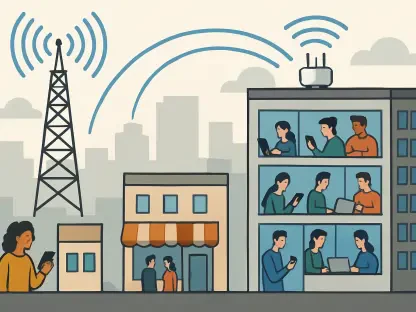
The practical application of OpenClaw on mobile and wearable hardware is currently restricted by several critical physical barriers, most notably in the realms of connectivity and heat dissipation. Maintaining a persistent, long-term data link using protocols such as WebSocket is computationally expensive and taxing on mobile network hardware. For a master agent to be truly effective, it must remain in a state of constant readiness, which requires a continuous stream of data exchange between the local device and any associated cloud services. This persistent activity leads to significant thermal management issues, particularly in the compact chassis of modern smartphones and the even smaller frames of AI glasses. When a device runs at high temperatures for extended periods, it inevitably triggers thermal throttling, which reduces the processor’s speed and causes the AI’s response time to lag, thereby degrading the user experience and the perceived intelligence of the agent.
Furthermore, the power consumption required to maintain these sophisticated agents is often at odds with the battery life expectations of modern consumers. The high computational overhead involved in processing natural language locally and managing multiple task modules leads to rapid battery depletion, often forcing users to choose between advanced AI functionality and all-day device endurance. Because of these constraints, many manufacturers are forced to rely on cloud-based deployment for their most complex “skills” and “toys.” While this protects the device’s battery and prevents overheating, it introduces a new set of problems regarding latency and local permissions. Cloud-based agents often lack the necessary authority to access private files or local messaging applications due to security protocols, which limits the scope of tasks they can perform. Solving this “power-performance” trade-off remains the primary objective for hardware engineers as they look to transition from cloud-reliant prototypes to fully autonomous local agents.
The Privacy Paradox: Navigating High-Level Permissions
A central theme in the rise of the OpenClaw framework is the inherent risk associated with granting high-level system permissions to automated software. For a “lobster” to function as intended, it requires deep access to the host operating system, including the ability to read private files, execute scripts, and navigate sensitive system settings. This creates a significant security vulnerability, as the same permissions that allow an agent to be helpful can also be exploited by malicious actors. Recent updates to the framework have occasionally caused widespread system instability and plugin failures, which has sparked an intense debate within the tech community regarding the ethics of marketing these tools to the general public. Critics argue that encouraging non-technical users to install software with such expansive permissions is inherently irresponsible, as it creates an attractive target for password theft, account hijacking, and sophisticated data breaches.
To mitigate these risks, the industry is moving toward more robust “environmental isolation” techniques, such as sandboxing and virtualized execution environments. These security measures are designed to ensure that even if an agent or a specific plugin is compromised, it cannot access the broader system or sensitive user data without explicit, case-by-case authorization. However, implementing these safeguards often comes at the cost of functionality, as a heavily restricted agent cannot perform the very cross-application tasks that make it valuable in the first place. This “privacy paradox” remains one of the most difficult challenges for developers to solve. Finding the perfect balance between giving an agent enough power to be useful and keeping the system secure enough to protect the user requires a fundamental rethink of operating system architecture. Until these security models are perfected, running a master agent on a primary office or personal computer will continue to be viewed as a high-risk activity by security professionals and cautious hobbyists.
Robotics and Industry Direction
Home Automation: Semantic Task Disassembly in Service Robots
The robotics sector has emerged as a natural environment for the implementation of OpenClaw, as demonstrated by the latest generation of service robots showcased at major electronics expos. Traditionally, home robots like vacuum cleaners operated on simple, reactive logic, bumping into walls and following pre-programmed paths to cover a floor surface. With the integration of the “lobster” framework, these machines are transitioning into true household butlers capable of semantic task disassembly. This breakthrough allows a robot to take a complex, high-level command—such as “clean up the living room after the party”—and break it down into a series of logical, sequential actions. The robot can independently identify different types of debris, distinguish between a piece of trash and a child’s toy, and determine the appropriate storage location for each item without requiring granular instructions or constant human supervision.
This advancement is made possible by the agent’s ability to interpret the environment through a combination of visual sensors and natural language understanding. By understanding the “intent” of the user rather than just following a list of coordinates, the robot becomes significantly more versatile and useful in a dynamic home setting. For example, if a robot encounters an unexpected obstacle like a sleeping pet, it can use its internal logic to decide whether to wait, navigate around it, or alter its cleaning schedule entirely. This level of autonomy is transforming the consumer perception of robotics from luxury novelties into essential household appliances. As the cost of the necessary sensors and processing hardware continues to decline, we are likely to see these intelligent agents integrated into a wider variety of domestic machines, from lawnmowers to kitchen assistants, all operating under a unified orchestration framework that ensures they work in harmony with the rest of the smart home.
Processing Challenges: Overcoming Latency in Social Hardware
Despite the impressive strides in semantic understanding, the implementation of intelligent agents in robotics still faces significant hurdles related to System on a Chip (SoC) limitations. Many companion and social robots are designed with a focus on aesthetics and mobility, which often leaves little room for the high-performance cooling and large batteries required for powerful local processors. As a result, many of these devices are forced to offload their conversational and emotional logic to the cloud. This reliance on remote servers introduces latency, which is particularly detrimental in robots intended for human-like interaction. In a social context, even a millisecond-level delay between a human’s comment and a robot’s response can shatter the sense of realism and disrupt the conversational flow. This “uncanny valley” of timing makes the agent feel like a lagging piece of software rather than a lifelike companion, limiting its effectiveness in providing emotional support or entertainment.
To address these latency issues, the industry is increasingly turning toward specialized AI acceleration hardware designed to handle natural language tasks with minimal power consumption. These dedicated neural processing units (NPUs) allow for more logic to be handled locally, reducing the dependence on the cloud and improving the speed of interaction. Furthermore, developers are working on optimizing the OpenClaw framework specifically for real-time applications, streamlining the way “skills” and “toys” are loaded and executed. The goal is to reach a point where a domestic robot can react to its environment and participate in a conversation with the same immediacy as a human. While the hardware is not yet at the level where it can run the most complex large language models entirely offline, the progress in NPU efficiency suggests that the gap is closing. For now, the challenge remains one of balancing the physical constraints of the robot with the high computational demands of its internal “lobster.”
The Master Agent Vision: Evolving Beyond the Search Era
The broader analysis of the OpenClaw movement reveals a fundamental paradigm shift in how users interact with technology, moving from an era defined by “search and click” to one defined by “intent and execute.” In the previous decade, the value of a device was often measured by the number of applications it could support and the quality of its display. Today, success in the hardware market is increasingly defined by how effectively a device can coordinate those applications to serve the user’s ultimate goals. This trend is breathing new life into stagnant hardware categories, such as the desktop PC, which has found a second act as a high-powered host for local AI agents. The hardware is no longer just a screen for viewing content; it has become an engine for executing complex workflows that previously required hours of manual labor. This reinvigoration of the market is providing a much-needed “killer app” for high-end components, justifying the premium prices that consumers are now willing to pay.
However, the path toward a universal master agent is still blocked by the fragmentation of the software ecosystem and the lack of a unified data-sharing standard. While the OpenClaw framework provides the orchestrator, the individual “skills” or plugins are often rudimentary or unstable, making them unsuitable for professional or mission-critical use. For the vision of the intelligent agent to be fully realized, the industry must move toward a model of open cooperation where data flows seamlessly between applications under the user’s control. This will require not only technical innovation but also a shift in the legal and commercial frameworks that govern digital privacy and competition. The current “incubation period” of the lobster phenomenon is a necessary stage in this evolution, allowing developers and users to explore the potential of automated orchestration while identifying the critical flaws that must be addressed before these systems can achieve mainstream maturity.
The Road Ahead: Navigating the Maturity of Intelligent Systems
The initial excitement surrounding the OpenClaw framework demonstrated a significant shift in the consumer hardware landscape, yet the journey toward a fully realized intelligent ecosystem was just beginning. Manufacturers successfully utilized the “lobster” trend to reinvigorate sales and prove that there was a massive appetite for local AI agents. However, the movement encountered persistent challenges regarding API cooperation and the inherent power limitations of portable hardware. These obstacles required a more collaborative approach between software developers and hardware engineers than had been seen in previous cycles. The industry realized that a master agent was only as effective as the environment in which it operated, leading to a renewed focus on building open standards for data exchange. This period of experimentation highlighted the necessity of balancing high-level automation with the fundamental human need for security and privacy in an increasingly connected world.
In the end, the transformation of the intelligent hardware market proved to be a marathon rather than a sprint. Brands that focused on creating isolated, proprietary agents often found themselves trailing behind those that embraced open frameworks and fostered a diverse library of stable, high-quality plugins. The “lobster” phenomenon served as the spark that ignited the next generation of human-computer interaction, but the fuel for its continued growth was found in the hard work of refining security protocols and optimizing local processing. Consumers eventually moved past the novelty of “raising lobsters” and began to demand agents that were not only smart but also reliable and safe for daily professional use. This shift in expectations forced the market to mature, leading to the development of robust, sandboxed environments that allowed for deep system integration without the catastrophic risks of the early days. The legacy of OpenClaw was ultimately found in its role as a bridge between the static tools of the past and the proactive, intelligent companions of the modern era.