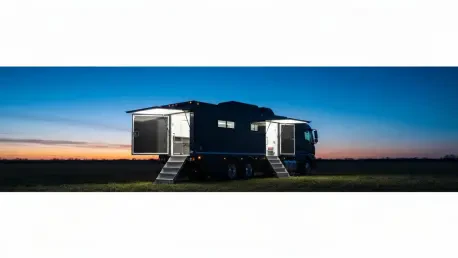

The final journey for livestock often involves significant stress, a deeply unsettling reality that is prompting a critical reevaluation of standard agricultural practices across the industry. Traditionally, animals are transported, sometimes over long distances, to centralized abattoirs where they face unfamiliar holding pens, the presence of strange animals, and a barrage of frightening smells and sounds that can induce fear and anxiety. In response to these welfare concerns, a different model has emerged—one that brings the processing service directly to the farm rather than the animal to the facility. This approach is rooted in the principle that minimizing distress at the end of an animal’s life is a fundamental ethical responsibility. A service operating out of Ulverston, south Cumbria, provides a compelling example of this philosophy in action, offering on-farm processing for private consumption and challenging the conventional methods that have long dominated the industry.
A Compassionate Service on Wheels
At the heart of this movement is a mobile abattoir service that prioritizes a humane approach to livestock processing for private consumption throughout the United Kingdom. Managed by Harry Griffiths and his partner Noush, the operation, named Harry’s Homekill, is built on a core commitment to minimizing animal stress by completely eliminating the need for transport. Instead of forcing an animal to endure a traumatic journey, the service travels directly to the farm, allowing the animal to remain in its familiar surroundings until the very end. This on-site model is not only a compassionate alternative but also a crucial service for farmers with lame animals, which conventional abattoirs will not accept. By processing these animals humanely on the farm, the service prevents them from being disposed of as fallen stock and instead allows farmers to fill their freezers. Operationally, the team’s dedication is evident as they travel extensively and often camp overnight at the farms they visit, a practice that enables them to diligently monitor the refrigeration trailer and ensure the carcass cools to the correct temperature.
An Enterprise with a Deeper Purpose
Beyond its focus on animal welfare, the mobile slaughter business has cultivated a distinct social mission centered on mental health awareness. Drawing from his own experiences, Griffiths utilizes the business as an unconventional yet effective platform to support this important cause within the agricultural community and beyond. The company actively champions its message by selling “mental health matters” merchandise, creating a visible and tangible way for customers and supporters to engage with the initiative. Demonstrating a firm commitment to tangible impact, the business donates 10% of all merchandise sales to the charity Andy’s Man Club. This unique fusion of ethical animal processing and community support demonstrated a new potential for small-scale agriculture. The model not only addressed a critical animal welfare issue but also illustrated how a business could become a powerful vehicle for social advocacy. It ultimately challenged the conventional boundaries between commerce and compassion, leaving a lasting impact on how both farmers and consumers viewed the final stages of the food production cycle.