
The rugged smartwatch market has long been a battlefield where durability and advanced functionality command a premium, with a few established brands setting the standard for what outdoor adventurers can expect. Unverified information circulating from a recent forum leak, however, suggests a new challenger is preparing to ascend the ranks with an aggressive push into this high-end territory. Details surrounding the purported Amazfit T-Rex Ultra 2 paint a picture of a device that is not merely an incremental update but a fundamental reimagining of the product line, engineered to compete directly with the segment’s most formidable players. If these leaks hold true, Zepp Health is orchestrating a significant strategic pivot, aiming to deliver top-tier features like advanced materials and satellite connectivity at a price point that could disrupt the current market hierarchy. While this information remains speculative until an official announcement, the sheer scope of the rumored upgrades points toward a transformative product designed to elevate the Amazfit brand into a new, more competitive sphere.
A Leap in Durability and Visuals
A centerpiece of the rumored upgrade is the potential transition to a 1.5-inch MicroLED display, a move that would represent a monumental leap in screen technology for the Amazfit line. This technology is said to be capable of achieving a staggering peak brightness exceeding 3000 nits, ensuring exceptional readability even in the harshest direct sunlight—a critical requirement for any serious outdoor-focused device. The display is also expected to be shielded by a sapphire crystal, a material renowned for its superior scratch resistance and clarity, which would provide robust protection against the rigors of climbing, hiking, and other demanding activities. Such a combination of MicroLED technology and sapphire glass is typically reserved for the upper echelon of the wearable market, and its inclusion would signal a clear intention to compete on visual performance and resilience. This enhancement goes beyond simple aesthetics, offering a more durable and functionally superior user experience that would set it apart from its AMOLED-equipped predecessor, the T-Rex 3 Pro.
Further underscoring its premium ambitions, the leaked specifications point to a substantial overhaul of the watch’s physical construction, with reports indicating a move to a full titanium case. While sources are conflicting on whether it will be TC4 or the more premium Grade 5 titanium, either choice would provide a superior strength-to-weight ratio compared to traditional materials, making the device both tougher and more comfortable for all-day wear. This commitment to robust materials is apparently complemented by a 316L stainless steel body and a modified “mud proof” button design, suggesting a meticulous focus on sealing the device against environmental intrusion. These enhancements are not just about improving durability; they are about building a device that feels and performs like a premium piece of equipment. The combination of these materials would create a formidable shell capable of withstanding extreme conditions, positioning the T-Rex Ultra 2 as a truly rugged tool for serious adventurers rather than just a lifestyle accessory.
Expanding Capabilities for Extreme Environments
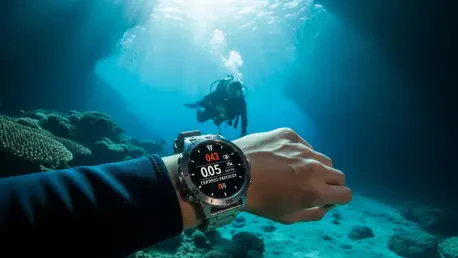
The functional upgrades detailed in the leak are arguably as significant as the material enhancements, particularly with the reported integration of satellite messaging and an SOS function. This feature would equip the T-Rex Ultra 2 with a critical off-grid safety net, allowing users to communicate from remote locations devoid of cellular coverage. The inclusion of an emergency SOS capability reflects a growing industry trend toward prioritizing user safety in extreme environments, a feature that has become a key selling point for high-end adventure smartwatches. Furthermore, the device’s water resistance is expected to receive a major certification upgrade. While maintaining its 10 ATM rating, the watch is reportedly being certified for 100-meter submersion under the EN13319 standard, a specific benchmark for dive accessories. This would officially validate its use for advanced diving activities, expanding its utility from surface-level water sports to more demanding underwater exploration and placing it in a new category of aquatic capability.
Internally, the T-Rex Ultra 2 is rumored to house a new and improved BioTracker sensor, promising greater accuracy in tracking vital health and fitness metrics. This enhancement is crucial for athletes and adventurers who rely on precise data for training and performance monitoring. Powering these advanced features is a reported increase in battery capacity to 700 mAh. This substantial power source is projected to deliver an impressive typical-use lifespan of 30 to 35 days on a single charge. Such endurance is a game-changer for users embarking on multi-day treks, ultramarathons, or expeditions where access to charging is limited or nonexistent. The combination of a more powerful sensor suite and extended battery life addresses two of the most critical demands of the target audience, ensuring the device is not only more capable but also significantly more reliable when it matters most in the field. This focus on core performance and longevity solidifies its potential as a dependable companion for the most grueling adventures.
Strategic Pricing and Market Impact
According to the leaked information, the pricing for the Amazfit T-Rex Ultra 2 is anticipated to fall within the $449 to $549 range. This represents a considerable price increase compared to its predecessors, reflecting the substantial upgrades in materials, display technology, and functionality. However, this strategic price point would still position the device as a highly competitive alternative to its direct rivals from established brands. Competing smartwatches offering similar premium features, such as a MicroLED display, titanium construction, and satellite connectivity, often carry price tags that are significantly higher. By delivering these high-end specifications at a more accessible cost, Zepp Health could effectively carve out a compelling value proposition in the premium rugged segment. The potential launch window is projected for the first quarter of the current year, suggesting that consumers may not have to wait long to see if this aggressive market strategy comes to fruition.
This calculated approach suggested a clear understanding of the market’s dynamics and a desire to disrupt the existing hierarchy. The potential release of the T-Rex Ultra 2 at this price point and with these features challenged the notion that top-tier performance must come with an exorbitant cost. It signaled a transformative moment for the Amazfit brand, moving it from a contender in the mid-range market to a serious player in the premium space. The leaked details painted a comprehensive picture of a product that was not just upgraded but completely redefined to meet the demands of the most discerning outdoor enthusiasts. The combination of advanced technology, robust construction, and strategic pricing ultimately positioned the device as a potential catalyst for change in the competitive landscape of rugged smartwatches, forcing established leaders to reconsider their own product and pricing strategies.