
The ubiquitous slab of glass and metal resting in the average person’s pocket has undergone a metamorphosis so profound that it now challenges the very necessity of dedicated gaming hardware. This shift did not occur overnight but rather through a decade of relentless refinement that transformed a simple communication device into a sophisticated engine capable of rendering complex virtual worlds. As specialized handheld consoles historically relied on proprietary architectures and physical retail models, they now face a competitor that benefits from the economies of scale and an annual hardware refresh cycle. The current era of interactive entertainment is defined by convergence, where the lines between casual mobile apps and high-fidelity gaming experiences have blurred into irrelevance. This transition represents more than just a change in platform; it signifies a fundamental reorganization of the gaming industry’s priorities, placing accessibility and versatile power at the forefront of the consumer experience. For most users, the device they already own has become the most logical choice for their gaming needs, leaving dedicated hardware manufacturers to defend a shrinking niche.
Technological Dominance in the Palm of Your Hand
Bridging the Performance and Visual Gap
The most significant factor in the rise of mobile gaming is the staggering pace of silicon development, which now operates on a schedule that traditional console manufacturers simply cannot match. While home and handheld consoles typically endure a lifecycle of five to seven years, smartphone chipsets are refreshed annually, leading to exponential gains in processing power and efficiency. Currently, the latest flagship systems-on-a-chip feature hardware-accelerated ray tracing and sophisticated neural processing units that handle lighting and physics with remarkable precision. These advancements allow mobile devices to achieve graphical fidelity that was once the exclusive domain of high-end desktop computers or specialized gaming rigs. By leveraging the latest nanometer-scale fabrication processes, manufacturers have successfully squeezed trillions of operations per second into a form factor that fits comfortably in a pocket, effectively ending the era when “mobile” meant “compromised.”
Beyond raw computing power, the visual experience on modern smartphones has objectively surpassed many dedicated handheld consoles through the widespread adoption of superior display technologies. Most high-end phones now utilize LTPO OLED panels that provide infinite contrast ratios and vibrant color gamuts that make traditional LCD screens look washed out and dated. Furthermore, the industry standard has moved toward high refresh rates, with 120Hz and 144Hz displays offering a level of motion clarity and responsiveness that is critical for fast-paced action and competitive play. This fluid visual feedback, combined with the extreme pixel density of modern screens, ensures that textures look sharper and animations appear smoother than on any previous generation of portable hardware. Consequently, the smartphone has become a premium canvas for developers who wish to showcase their artistic vision without being tethered to the limitations of aging, specialized hardware components.
Engineering Stability: Thermal Management and Longevity
A historical hurdle for mobile gaming was thermal throttling, which is the necessary reduction of performance to prevent internal components from overheating during intense sessions. Modern engineering has largely neutralized this issue through the implementation of sophisticated internal cooling solutions that were previously reserved for high-end laptops. We now see the integration of large-scale vapor chambers, graphite heat spreaders, and even active aerodynamic systems in specialized gaming-centric smartphones. These thermal designs allow the processor to maintain high clock speeds for extended periods, ensuring that the frame rate remains stable even during the most demanding segments of a game. By prioritizing heat dissipation, manufacturers have turned the smartphone into a reliable platform capable of sustained, high-fidelity performance that rivals the consistency of a traditional home console plugged into a wall outlet.
In addition to internal cooling, the market for external thermal accessories has matured significantly, providing professional-grade solutions for the most dedicated mobile gamers. Clip-on cooling fans equipped with Peltier tiles can now actively lower the surface temperature of a device by several degrees in a matter of seconds, preventing any dip in performance during competitive matches. This accessory ecosystem bridges the gap between a general-purpose utility device and a dedicated gaming machine, allowing users to “gear up” for long sessions. As battery technology has also improved to support higher discharge rates and faster charging, the anxiety surrounding power consumption has diminished. The result is a hardware environment where the smartphone is no longer just a temporary distraction but a robust platform capable of handling the same rigorous use cases as a dedicated handheld console, all while maintaining its primary function as a communication tool.
Breaking Physical Boundaries with Software
Cloud Infrastructure and Native Porting
While local hardware power continues to climb, the development of cloud gaming infrastructure has provided a secondary path to performance that essentially eliminates the hardware ceiling for mobile users. High-speed 5G networks now provide the low latency and massive bandwidth required to stream AAA titles directly from remote servers with minimal input lag. Services like NVIDIA GeForce NOW and Xbox Cloud Gaming allow a user to run the most demanding PC titles on a mid-range smartphone, delegating the heavy lifting to powerful data centers. This paradigm shift means that the physical specifications of the phone are becoming less of a bottleneck, as the device acts more like a high-quality portable monitor and controller. The ubiquity of high-speed internet has turned every smartphone into a potential portal for the entire library of modern gaming, regardless of the local silicon’s limitations.
Concurrent with the rise of the cloud is a significant trend in native software development, where major publishers are porting full-scale console games directly to mobile operating systems. Unlike the “mobile versions” of the past which were often stripped-down shadows of their counterparts, today’s ports are often the exact same software running on mobile-optimized engines. Games that were previously synonymous with high-end consoles are now available for direct download on mobile app stores, utilizing the same assets and complex gameplay mechanics. This shift indicates that the distinction between a “mobile game” and a “console game” is rapidly evaporating. Developers are increasingly treating the smartphone as a primary target platform rather than an afterthought, ensuring that the highest quality experiences are available to the broadest possible audience from the day of release.
Transforming Inputs with Physical Peripherals
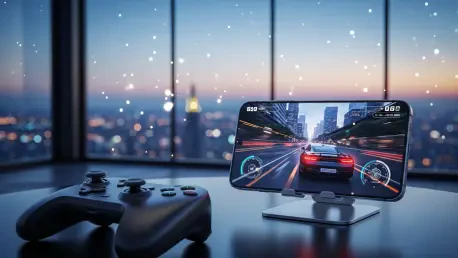
One of the most persistent arguments against the smartphone as a serious gaming device was the perceived inferiority of touchscreen controls, but this barrier has been dismantled by a sophisticated peripheral market. Third-party manufacturers have developed “wrap-around” controllers that physically connect to the smartphone via USB-C or Lightning ports, providing a zero-latency interface with tactile buttons and analog sticks. These devices effectively transform the smartphone into a handheld console that mirrors the ergonomics and input precision of a dedicated machine. For gamers who prefer a more traditional setup, the universal support for standard Bluetooth controllers means that a phone can be propped up on a table and paired with the same gamepad used for a home console. This flexibility allows users to customize their input method based on the specific requirements of the game they are playing.
The software side of this equation has also seen significant refinement, as mobile operating systems now include deep integration for controller mapping and haptic feedback. Modern mobile games are often built with “controller-first” mentalities, automatically detecting the peripheral and adjusting the user interface accordingly to provide a seamless experience. This level of hardware and software synergy ensures that a player never feels disadvantaged by using a smartphone instead of a dedicated console. Whether it is a precise first-person shooter or a complex role-playing game, the availability of high-quality physical inputs has leveled the playing field. This adaptability is perhaps the smartphone’s greatest strength, as it can function as a simple touch-based device for casual play and then instantly pivot to a professional-grade gaming setup when the situation demands it.
The New Gaming Ecosystem
Economic Evolution and Cultural Dominance
The transition of the smartphone into a dominant gaming platform is as much a cultural shift as it is a technological one, particularly in regions where mobile devices are the primary gateway to the digital world. In many parts of the globe, mobile e-sports have surpassed traditional PC or console gaming in terms of both viewership and active participation, leading to the creation of massive professional leagues. This cultural momentum has forced hardware manufacturers to treat gaming as a core feature rather than a secondary utility, resulting in optimizations for network stability and input latency. The social nature of the smartphone, which is always connected to a network, allows for a more integrated gaming experience where players can jump into a match with friends at a moment’s notice. This constant accessibility has solidified the smartphone’s role as the central hub of modern digital social life and competitive play.
From an economic perspective, the business models governing mobile gaming have moved beyond the polarizing “freemium” mechanics to include high-quality subscription services and premium, one-time purchases. Platforms like Apple Arcade and Google Play Pass offer curated libraries of ad-free, high-fidelity titles that cater to a more discerning audience seeking traditional gaming experiences. Meanwhile, the presence of major storefronts like Netflix Games has introduced a new wave of premium content to millions of subscribers who might not otherwise identify as gamers. This diversification of the market ensures that there is something for everyone, from the casual user playing a puzzle game during a commute to the hardcore enthusiast seeking a deep, narrative-driven adventure. The sheer volume of revenue generated by the mobile sector has effectively redirected the industry’s focus, making the smartphone the most lucrative and influential platform in the interactive entertainment industry.
Strategic Integration and Practical Considerations
The evidence suggested that the specialized handheld console had been largely absorbed into the multifaceted utility of the smartphone, creating a single-device solution for the modern consumer. Industry analysts observed that the convenience of having a high-powered gaming machine integrated with one’s primary communication tool outweighed the benefits of carrying a second, dedicated piece of hardware. This consolidation was driven by the realization that the smartphone could emulate nearly every positive attribute of a handheld console while offering superior connectivity and display technology. Users who previously invested in multiple portable systems found that a single flagship phone, paired with a few high-quality accessories, provided a more versatile and powerful experience. The market responded by pivoting toward software and services that treated the phone as the definitive portable screen, ensuring that the ecosystem remained vibrant and innovative for years to come.
Moving forward, individuals seeking the best portable gaming experience should prioritize devices with high-thermal-efficiency chipsets and displays featuring variable refresh rates to maximize both performance and battery longevity. It is also beneficial to invest in a dedicated physical controller attachment to overcome the inherent limitations of touch-based inputs for complex titles. As the boundary between mobile and home gaming continues to fade, consumers will likely find more value in cross-platform subscriptions that offer access to their library on any screen. The strategic move for gamers was to embrace the smartphone not just as a phone that plays games, but as a primary console that happens to be a phone. This mindset shifts the focus from hardware loyalty to software flexibility, allowing for a more fluid and accessible future where the best gaming experiences are always within reach, regardless of physical location or specialized hardware availability.