
The upcoming Welcome Home event in New York City marks a decisive shift as Apple attempts to unify its fragmented home automation products into a single, cohesive ecosystem. For years, users have navigated a landscape of disconnected experiences across the HomePod, Apple TV 4K, and the Home app, often finding the interface less intuitive than competing platforms. This October 13 launch represents a departure from the standard stage-and-screen presentation, opting for an immersive environment where participants can witness the synergy of a fully integrated living space. The pressure on the company is palpable as it seeks to demonstrate that its signature hardware-software harmony can finally master the intricacies of the modern smart home. By moving beyond simple accessory support to a holistic system, the tech giant aims to resolve the friction that has historically plagued household automation for mainstream consumers who value privacy and ease of use.
Reimagining the Domestic Ecosystem
Centralized Command: The Hub for Unified Interaction
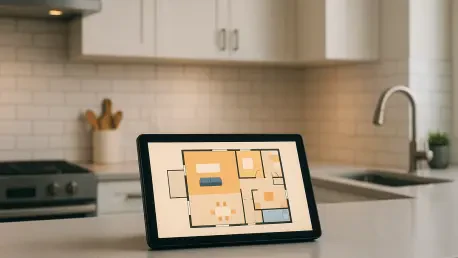
Central to this transformation is the rumored introduction of a new hardware category that serves as a dedicated command center for the entire property. This device, likely a sophisticated smart display, is designed to merge the auditory excellence of the HomePod with the visual richness of the Apple TV, creating a centralized touchpoint that manages everything from climate control to security feeds. Unlike previous iterations that functioned as peripheral add-ons, this new hub is expected to utilize advanced proximity sensors and localized processing to anticipate user needs based on their physical location within the room. By streamlining the interaction model into a single, elegant interface, the company intends to eliminate the need to hunt for various apps on a phone or tablet. This shift suggests a move toward ambient computing, where the technology fades into the background while remaining instantly accessible through natural voice commands or subtle gestures without requiring a screen.
Seamless Control: Software and Matter Standard Integration
Beyond the physical hub, the underlying software architecture is undergoing an overhaul to ensure that every device within the network speaks the same language. The historical fragmentation of the Home app has often been a point of contention for power users who require complex automation routines that trigger across multiple vendor products. By refining the HomeKit protocol and leaning into the Matter standard, the upcoming ecosystem promises a level of stability and responsiveness that was previously difficult to achieve in diverse hardware environments. This integration extends to the entertainment suite, where the Apple TV 4K will no longer just be a streaming box but a proactive participant in home management. For instance, doorbell notifications can trigger picture-in-picture video feeds automatically, while theater lighting adjusts based on the genre of content being played. This level of granular control positions the home as a living entity rather than a collection of separate gadgets.
Strategic Evolution: Hardware and Intelligence
Market Expansion: Expanding Into Proprietary Home Accessories
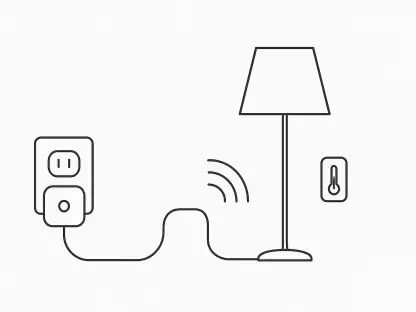
A critical component of this renewed strategy involves Apple entering the accessory market directly with its own branded hardware, such as smart thermostats, electronic locks, and security cameras. For years, the company relied on third-party manufacturers to populate its ecosystem, which frequently led to inconsistent build quality and varying degrees of setup difficulty. By producing these essential components in-house, they can guarantee the same simplicity that defines the iPhone and Mac experiences. These new peripherals are expected to feature deep integration with iCloud for secure video storage and utilize the U1 chip for precise spatial awareness, allowing locks to disengage as an authorized user approaches the door. This end-to-end control minimizes technical hurdles associated with pairing and maintaining smart devices, creating a more reliable environment that appeals to users who have stayed on the sidelines due to security or complexity concerns with current market options.
Tactical Partnerships: Advanced Intelligence and New Leadership
The integration of Google’s Gemini AI into the Siri ecosystem represents a major tactical pivot under the leadership of CEO John Ternus. By opting for a partnership model, the company avoided the extreme financial risks associated with training proprietary foundational models from scratch, focusing instead on its core strength of hardware integration. This hybrid approach successfully merged cloud-based generative power with on-device privacy, offering users a level of intelligence that was previously unavailable in the HomeKit environment. As the Welcome Home event concluded, it became clear that the brand’s future relied on creating a seamless, invisible layer of automation that prioritizes the user’s daily habits over technical novelty. Industry analysts observed that this strategy allowed the company to maintain its premium market position while effectively bridging the gap between hardware excellence and advanced artificial intelligence. The shift established a new blueprint for how tech giants could navigate the modern household.