
In a technology landscape saturated with devices demanding constant attention and daily charging, the resurrection of a beloved classic offers a compelling alternative rooted in intentional simplicity and remarkable endurance. The early 2026 relaunch of the Pebble smartwatch, now under the stewardship of a new entity named RePebble, represents a significant and deliberate counter-movement within the contemporary wearable technology market. With its new model, the Pebble Round 2, the company is not merely banking on nostalgia but is making a strategic wager on a growing consumer desire for sustainable, minimalist, and less intrusive technology. This revival eschews the feature-dense, power-intensive arms race dominated by giants like Apple, Samsung, and Google, instead aiming to capture a specific, underserved niche by refining a celebrated formula. By prioritizing exceptional battery life, a user-centric design, and only the most essential functionalities, Pebble’s return poses a fundamental question to the industry: has the relentless pursuit of more features come at the cost of a better user experience?
A Modern Classic: A Deep Dive into the Pebble Round 2
A Design Philosophy Reimagined
The Pebble Round 2 is positioned as a thoughtful and meticulous evolution of its 2015 predecessor, the Pebble Time Round, engineered to amplify its celebrated attributes while systematically addressing its historical shortcomings. Central to its modern appeal is a significant design overhaul focused on the display, which now features a 1.3-inch color e-paper touchscreen housed within a chassis that boasts a dramatic reduction in bezel size. This key innovation, achieved through custom glass shaping and integrated circuitry, rectifies one of the most prominent criticisms of the original’s aesthetic, creating a far more immersive and contemporary viewing experience that maximizes screen real estate. Despite the larger effective display area, the device maintains an exceptionally slim profile at just 7.5mm thick and a mere 28 grams in weight, solidifying its status as one of the most comfortable and unobtrusive smartwatches available for all-day wear, a stark contrast to the often bulky and heavy offerings from major competitors.
This commitment to a minimalist and user-friendly form factor extends beyond its dimensions and into its very construction. The modular band system allows for extensive customization, empowering users to adapt the device to their personal style effortlessly, reinforcing its role as a personal accessory rather than a rigid piece of technology. Furthermore, its water resistance of up to 50 meters ensures durability for everyday activities, from washing hands to swimming, without the anxiety often associated with delicate electronics. The design philosophy of the Pebble Round 2 is therefore holistic; it is not simply about creating a smaller or lighter device, but about engineering a wearable that integrates seamlessly into a user’s life. The always-on e-paper display contributes to this by mimicking the at-a-glance convenience of a traditional timepiece, ensuring that essential information is perpetually available without requiring a specific gesture or button press, further challenging the modern smartwatch paradigm that often demands active user interaction for basic functions.
Redefining Endurance and Functionality
The cornerstone of the Pebble Round 2’s entire value proposition is its revolutionary battery performance, a feature so significant it fundamentally redefines user expectations within the wearable market. In an industry where daily or every-other-day charging has become the accepted norm for high-end smartwatches, RePebble promises an astonishing endurance of up to two weeks on a single charge. This monumental leap from the original’s two-day lifespan is not an incremental improvement but a paradigm shift, liberating the user from the constant anxiety of battery management. This feat is accomplished through a synergistic combination of carefully selected, advanced low-power components, a custom-designed processor optimized exclusively for efficiency, and the inherent energy-saving properties of its 64-color e-paper display. This hallmark technology offers a vibrant, always-on, and sunlight-readable screen without the constant power drain associated with the OLED and LCD panels favored by competitors, which must often turn off or dim to conserve energy.
Functionally, the Pebble Round 2 rigorously adheres to a “less-is-more” philosophy, providing seamless compatibility with both iOS and Android platforms to deliver a curated set of essential features. It masterfully handles core tasks such as notifications for calls and texts, music controls, weather updates, and basic fitness tracking, including an integrated heart rate monitor. However, in a deliberate strategic move, it conspicuously eschews more advanced and power-hungry health sensors like ECG and blood oxygen monitoring. This calculated omission positions the Round 2 not as a comprehensive medical device but as a sophisticated digital companion, appealing directly to users seeking to disconnect from constant data overload and embrace a more focused form of digital minimalism. With a highly accessible price point of $199 and a global shipping date set for May 2026, the device is engineered to be a practical, durable, and deeply personal accessory for a new generation of tech users who value utility over ubiquity.
The Comeback Story: From Community Hero to Market Contender
A Legacy of Innovation and Loyalty
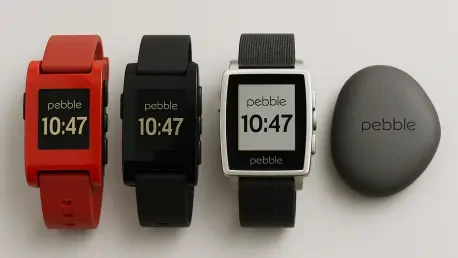
Pebble’s story is one of pioneering success, a sudden and precipitous decline, and a remarkable community-driven rebirth that is virtually unprecedented in the consumer electronics space. The original company famously burst onto the scene in 2012 as a Kickstarter phenomenon, raising over $10 million and effectively kickstarting the modern smartwatch era long before the industry’s current titans had entered the fray. Its e-paper displays, week-long battery life, and open platform for developers created a deeply passionate and loyal user base. However, by 2016, facing intense financial pressures and fierce competition, the company’s assets were acquired by Fitbit, which gradually sunsetted official support, including the cloud services essential for the watches’ full functionality. This left a dedicated global community of users orphaned, with devices that were destined to become little more than digital paperweights.
In the ensuing years, the brand’s legacy was kept alive not by a corporation but by the unwavering dedication of its most passionate users. A grassroots project, most notably Rebble, emerged from this community to provide a free, alternative, open-source server infrastructure that mimicked and replaced the defunct official Pebble services. This remarkable effort allowed hundreds of thousands of legacy Pebble watches to continue functioning with app stores, notifications, and firmware updates long after their official expiration date. This sustained community loyalty did more than just preserve a piece of tech history; it provided definitive proof of a latent, unserved market demand for Pebble’s unique ethos. The Rebble project laid the essential groundwork for the brand’s formal revival, demonstrating that the desire for a simple, long-lasting, and open smartwatch had not vanished but had instead been waiting for a champion.
The Rebirth of an Icon
This sustained community enthusiasm created the fertile ground from which the brand’s formal revival could grow. In 2025, RePebble was formed, a new venture composed of a core team of former Pebble engineers and devoted enthusiasts from the community, backed by a group of investors who recognized the proven market demand for Pebble’s unique philosophy. The launch of the Pebble Round 2 is therefore more than just a product release; it is the culmination of a turbulent, decade-long journey, representing a “reboot” that meticulously honors the brand’s original DNA while thoughtfully correcting the missteps that led to its initial downfall. The new company’s transparent communication and direct engagement with the legacy community have been instrumental in building goodwill and transforming latent nostalgia into palpable excitement for the new product.
The market’s reaction to the announcement has been overwhelmingly positive, reflecting a deep well of pent-up demand. Social media platforms like X have been flooded with widespread enthusiasm, with tech influencers and former users alike praising the return of Pebble’s “iconic DNA” and hailing the dramatically extended battery life as a genuine game-changer in a stagnant market. The consensus viewpoint, is that this revival is not merely a nostalgic cash grab but a carefully considered re-entry that addresses a genuine consumer pain point—the overwhelming complexity and demanding nature of modern wearables. By listening to the community that kept the flame alive, RePebble has crafted a product that feels both familiar and revolutionary, a modern classic designed for users who believe technology should serve them, not the other way around.
The David vs. Goliath Strategy
Carving a Niche in a Crowded Market
RePebble enters a smartwatch arena far more competitive and saturated than the one its predecessor helped create. The market is now a battleground of tech giants who have conditioned consumers to expect a vast and ever-expanding array of features, from mobile payments to advanced medical monitoring. In this context, RePebble’s strategy is necessarily one of careful and deliberate differentiation, targeting specific and often underserved market segments rather than attempting to compete head-on with the incumbents. Its primary audience includes a trifecta of consumer profiles: retro-tech enthusiasts nostalgic for the original Pebble experience, users profoundly frustrated with the daily charging ritual and perceived planned obsolescence of mainstream devices, and individuals aligned with the growing digital minimalism movement who seek technology that serves them without demanding constant attention and interaction.
The Pebble Round 2’s pricing at $199 is a key tactical element of this strategy, positioning it as an accessible premium device that significantly undercuts the flagship models from Apple and Samsung while offering a compelling, singular advantage that they cannot match: battery longevity. This focus on a core, high-impact feature allows it to carve out a distinct identity. Furthermore, RePebble is leveraging sustainability as a subtle but potent marketing angle. By creating a device built for longevity with a more repairable, modular design, the company appeals to an increasingly eco-conscious consumer base concerned about the environmental impact of electronic waste. This approach contrasts sharply with the sealed, difficult-to-repair designs common among market leaders, offering a vision of technology that is built to last rather than to be replaced annually.
The Hurdles Ahead
Despite a well-defined and compelling strategy, significant challenges lay ahead for the resurgent brand. The company’s most immediate and critical task was to overcome the deep-seated skepticism of consumers who were burned by the original brand’s collapse. This necessitated a transparent and robust commitment to long-term server stability and consistent software support, as rebuilding that fragile trust was paramount to converting nostalgic interest into sustained sales and lasting brand loyalty. Moreover, RePebble had to contend with the colossal marketing power of established players, whose multi-billion dollar advertising budgets could easily drown out the message of a smaller, niche competitor. The proliferation of low-cost smartwatch alternatives from a myriad of other manufacturers also posed a threat, potentially squeezing its position from the bottom of the market.
Ultimately, the success of the Pebble Round 2 depended on its ability to convince a significant niche of consumers that in the world of wearable technology, true innovation could sometimes mean stripping features away to perfect the fundamentals. Its launch was not just the revival of a beloved product; it stood as a critical referendum on the future direction of personal technology. It posed a fundamental question to the market: had the relentless pursuit of more features, more sensors, and more complexity finally reached a point of diminishing returns? The journey of RePebble represented a pivotal test case, one that would determine if a philosophy of simplicity, longevity, and user-centric design could not only survive but thrive in the shadow of Big Tech.