
Advanced AI-driven media editing tools now allow for sophisticated photo and video manipulation directly on the tablet without the need for external processing power. This technological leap reflects a broader shift in how professionals view mobile hardware in 2026. For years, the tablet was seen as a secondary screen, but the introduction of the Samsung Galaxy Tab S12 series has fundamentally altered that perception. By integrating desktop-grade processing with a touch-first interface, these devices aim to solve the persistent dilemma of choosing between portability and performance. The S12 Ultra and its sibling, the S12+, arrive at a time when the workforce is more mobile than ever, demanding tools that can transition from a flight to a boardroom without compromising on functionality. Samsung has refined the ecosystem to ensure that high-density multitasking is not just possible but intuitive, effectively challenging the traditional laptop dominance in professional spheres for the modern user.
Hardware Architecture: Silicon Evolution and Memory Capacity
For those wondering if a tablet can truly handle the heavy lifting of a PC, the answer lies in the strategic shift to the MediaTek Dimensity 9500 processor. Moving away from traditional chipsets, this new architecture is specifically tuned for high-intensity tasks like 4K video editing and professional-grade gaming. This silicon choice marks a significant departure for the flagship line, prioritizing sustained thermal performance and neural processing capabilities over simple clock speeds. Users are finding that the efficiency of the Dimensity 9500 allows for long stretches of resource-heavy work, such as rendering complex 3D models or compiling code, without the aggressive throttling often associated with thin devices. By optimizing the instruction sets for mobile workflows, Samsung has managed to bridge the performance gap that previously existed between ARM-based tablets and the more common x86 laptop architectures found in the current business market.
The hardware is further supported by significant memory configurations that rival high-end ultrabooks available today. The Ultra model offers up to 16GB of RAM, which is essential for maintaining fluid performance when dozens of browser tabs and creative applications are open simultaneously. Storage is equally impressive, with internal options reaching 1TB, which can be supplemented by a 2TB microSD slot for a total of 3TB of local space. This level of capacity is particularly beneficial for videographers and photographers who need to store large RAW files without relying entirely on cloud services. Such specifications ensure that the device does not become a bottleneck during intense production cycles. Furthermore, the inclusion of high-speed memory modules facilitates near-instantaneous file access and application switching, reinforcing the tablet’s role as a primary workstation rather than a mere media consumption slate for casual use.
Visual Engineering: Display Technology and Industrial Design
The visual experience remains the centerpiece of the Galaxy Tab S12 series, featuring Dynamic AMOLED 2X panels that outshine most standard laptop screens in the current market. The S12 Ultra boasts a sprawling 14.6-inch display, providing a canvas large enough for complex spreadsheets or detailed digital illustrations, while the 120Hz refresh rate ensures every motion is silk-smooth. This panel technology is capable of delivering deep blacks and vibrant colors that are critical for color-accurate work in design and video production. Furthermore, the high peak brightness allows for outdoor usage under direct sunlight, a feature where many traditional laptops still struggle to compete effectively. By reducing blue light emissions without compromising color integrity, Samsung has designed these displays for the professional who spends long hours in front of a screen, ensuring that visual fatigue is minimized during extended work sessions across various lighting conditions.
Despite these large screens, the engineering is remarkably thin and light, representing a pinnacle of modern industrial design. At just 5.1mm, the Ultra is thinner than the S Pen it utilizes, making it significantly easier to carry than even the lightest laptops on the market today. This slim profile does not sacrifice structural integrity, as the chassis is constructed from high-grade materials that provide a rigid and premium feel. The weight distribution is balanced to allow for comfortable handheld use during presentations or sketching sessions, which is a major advantage over the clamshell design of traditional notebooks. Carrying a device with this much power in a form factor that fits into a standard document folder changes the logistics of business travel and remote work. The reduction in physical bulk allows professionals to maintain a full workstation in their bag without the physical strain associated with traditional mobile computing hardware setups.
Productivity Suites: The Desktop Interface and AI Integration
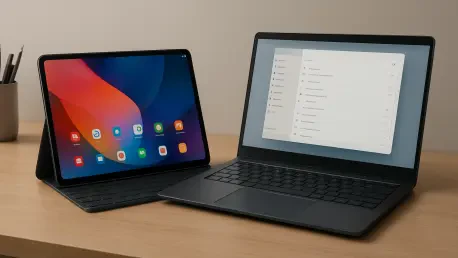
The most compelling argument for the Tab S12 as a laptop replacement is Samsung DeX, a software layer that transforms the Android interface into a familiar desktop environment. When connected to a keyboard or an external monitor, DeX provides a taskbar and floating windows, allowing users to manage files just as they would on a PC or a dedicated workstation. This is bolstered by a high-density 3-Split Multi Window feature, which lets you run a video conference, a web browser, and a document editor simultaneously without missing a beat or losing track of tasks. This software-driven versatility ensures that the user is not limited by the mobile nature of the operating system, providing the necessary tools for complex window management. The transition between a tablet-centric touch interface and a mouse-and-keyboard desktop experience is seamless, allowing for a hybrid workflow that adapts to the specific needs of the task at hand throughout the day.
Samsung has further enhanced productivity by embedding Galaxy AI into the core experience, acting as an intelligent partner that manages tasks like note summarization and battery optimization in real-time. This is paired with the inclusion of the S Pen in the box, immediately elevating the device’s utility for professionals who rely on handwriting or precision input for their daily tasks. The integration is supported by a robust suite of professional software, including the long-awaited Android debut of Notability and pre-installed versions of Adobe Photoshop. These partnerships ensure that the tablet is ready for professional creative work the moment it is unboxed, bridging the functional gap that often exists between mobile hardware and desktop software. The AI assists in refining handwritten notes and optimizing the drawing experience by predicting stroke paths, which makes the interaction feel more natural and responsive than many stylus-enabled laptop counterparts currently available.
Connectivity and Durability: Professional Standards and Next Steps
Staying productive on the go requires top-tier connectivity, and the S12 series delivers with the inclusion of Wi-Fi 7 on the Ultra model to ensure the fastest possible internet speeds. This ensures stable connections for cloud-based collaboration and large file transfers that are becoming standard in the remote work era of 2026. Furthermore, the Galaxy Connected Experience allows the tablet to function as a seamless extension of a user’s smartphone or laptop, enabling features like cross-device copy-pasting and instant file sharing. Beyond connectivity, both the S12+ and the Ultra carry an IP68 rating, making them resistant to dust and water submersion for up to 30 minutes in various environments. This durability means that whether working in a coffee shop, on a construction site, or in a transit hub, the device is protected against the common accidents that might sideline a traditional laptop, providing peace of mind for the busy modern professional.
The decision to adopt the Galaxy Tab S12 series depended on the specific balance between portability and power required for individual professional workflows. The Galaxy Tab S12+ offered a more compact 12.6-inch frame for those prioritizing mobility, while the Ultra model stood as the definitive no-compromise workstation for power users. Implementing these devices into a corporate or creative environment required a shift toward cloud-based assets and a commitment to mastering the DeX interface for maximum efficiency. It became clear that the hardware successfully challenged the necessity of the traditional clamshell laptop for a significant portion of the mobile workforce. For organizations looking to modernize their hardware fleet, evaluating the specific software needs of employees remained the most critical step. Transitioning to such a versatile platform allowed for greater flexibility in where and how work was performed, ultimately proving that the tablet form factor had matured into a primary computing tool.