
This year’s Consumer Electronics Show demonstrated a significant maturation of the smart home, moving beyond novelty gadgets to reveal a new generation of technology designed for genuine utility and autonomous operation. The most compelling innovations showcased were defined by a clear shift away from devices that are merely connected to those that are truly intelligent. Three core trends dominated the landscape: a dramatic increase in device autonomy that minimizes human intervention, the pervasive integration of generative artificial intelligence to create more personalized and predictive experiences, and fundamental improvements to power delivery and user experience that solve long-standing frustrations. These advancements signal a major leap forward, transforming our living spaces into more efficient, responsive, and self-sufficient environments where technology anticipates needs rather than simply reacting to commands. The focus has decisively pivoted from what a smart home can do to what it should do to make daily life simpler and more seamless.
The Dawn of Truly Autonomous Home Care
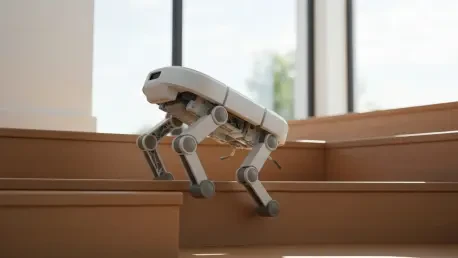
The evolution of home robotics has reached a pivotal milestone, with new devices conquering previously insurmountable physical and logistical challenges. Leading this charge is the Roborock Saros Rover, a revolutionary robot vacuum that finally solves the multi-floor cleaning dilemma. Instead of requiring manual transport between levels, the Saros Rover features a groundbreaking “wheel-leg” architecture. When it encounters a staircase, these legs extend to lift the robot’s body, allowing it to methodically climb or descend, cleaning each step along the way. Its advanced mobility even lets it crouch and tilt to navigate complex obstacles. Equally impressive is the Robotin R2, which carves out a new market niche as the first fully autonomous robot designed for deep cleaning carpets. Its ingenious modular design allows it to automatically swap its vacuum component for a dedicated carpet washing module, enabling it to scrub, wash, and dry carpets in a single, automated operation without any user intervention. These machines represent a significant step towards a future where home maintenance is almost entirely automated.
Beyond enhanced mobility, the latest generation of home robots exhibits a profound leap in intelligence and environmental awareness. The Narwal Flow 2, a sophisticated robot vacuum and mop, combines immense 30,000Pa suction power with an advanced AI system that transcends simple obstacle avoidance. This robot can actively identify misplaced items like toys, flag their precise locations on the cleaning map, and send a notification to the user, effectively acting as a home tidiness assistant. Its AI is also remarkably context-aware, capable of automatically reducing its operational noise when it detects it is cleaning near a sensitive area, such as a baby’s crib. This trend of reducing user maintenance extends beyond the home’s interior with the Beatbot AquaSense X, a robotic pool cleaner ecosystem. The system’s intelligent charging dock not only recharges the robot but also automatically cleans out its internal debris basket after each cycle, depositing the waste into a larger, self-contained bin. This innovation minimizes user interaction to simply emptying the main bin every few weeks, truly defining a new standard for hands-off convenience.
Redefining Access and Home Security
This year, smart lock technology saw a paradigm shift that addresses one of the most persistent frustrations for users: the need to replace or recharge batteries. The Lockin Veno Pro and V7 Max introduce a game-changing solution with AuraCharge technology, which completely eliminates the reliance on traditional batteries. This system utilizes an external transmitter plugged into a nearby outlet, which emits a safe and invisible beam of light to a receiver on the lock. This beam continuously and wirelessly powers the lock’s internal battery, ensuring it remains operational indefinitely without any manual maintenance. This breakthrough moves smart locks from a convenience with a recurring chore to a truly “set-it-and-forget-it” fixture. The Veno Pro, a deadbolt style common in the U.S., and the V7 Max, a more advanced Mortise lock with integrated cameras and displays, demonstrate how this fundamental innovation can be applied across different product tiers to enhance reliability and user peace of mind.
In addition to power innovations, the latest security devices offer a more intuitive and accessible user experience. The Aqara U400 smart lock leverages Ultra-Wideband (UWB) technology to provide a seamless, hands-free unlocking experience that is both intelligent and secure. As a user with a compatible smartphone approaches their door from the outside, the lock automatically unlocks. A sophisticated array of sensors allows it to determine the direction of approach, ensuring the door only opens for someone walking directly towards it, not for an individual merely passing by. This level of precision prevents accidental unlocking and enhances security. Recognizing that not all living situations accommodate traditional installations, the Botslab W101 Window Camera provides a clever, drill-free security solution ideal for apartment dwellers. Priced at an accessible $50, the device mounts easily to a window and features two 2.5K cameras: one facing outward to monitor for package deliveries and another facing inward (with a physical privacy cover) to keep an eye on pets or the home interior, making advanced security accessible to a broader audience.
The AI-Infused Living Environment
Generative artificial intelligence has officially graduated from a niche feature to a core component of the modern living space, most notably within the entertainment hub of the home. Google is significantly enhancing its Google TV platform with powerful capabilities driven by its Gemini model, set to roll out as a free over-the-air update. This update will transform the television from a passive content display into an interactive creative tool. Users will be able to perform advanced photo editing directly on their screen, such as turning a family portrait into a cartoon, and then use AI to generate a complete animated video based on that new style. Furthermore, the AI can produce concise, dynamic summaries of sporting events, complete with a professional visual layout and a narrator that mimics a sportscaster’s voice. This integration showcases how generative AI is set to make content consumption a more engaging, personalized, and interactive experience, moving far beyond simple voice commands for search and playback.
The fusion of artificial intelligence and home ambiance is creating environments that are both functional and deeply personal. The Govee Ceiling Light Ultra exemplifies this trend by transforming a standard fixture into a centerpiece of entertainment and design. It serves as a powerful primary light source with 5,000 lumens and an adjustable white temperature range, but its standout feature is an integrated 616-pixel matrix. This grid can display vibrant, dynamic designs, which can be selected from a library of presets or generated on the fly by AI, allowing it to adapt to any mood or occasion. Complementing this is the SwitchBot Weather Station, an elegant 7.5-inch E-Ink display that acts as a central information hub. It constantly shows the time, date, local air quality, and a weekly weather forecast, alongside AI-generated recommendations like a reminder to take an umbrella. Crucially, it integrates two physical automation buttons that can be programmed to trigger entire smart home scenes, bridging the gap between passive information display and active, tangible control over the connected home.
A Unified Vision for the Connected Home
The most forward-thinking concepts presented were those that treated the smart home not as a collection of individual gadgets, but as a single, cohesive ecosystem. Hisense provided a compelling vision of this with its ConnectLife Kitchen Suite, a family of smart appliances designed to work in concert to streamline meal preparation and management. This system established a collaborative workflow where a smart fridge tracked grocery inventory and expiration dates, suggested recipes based on ingredients that needed to be used soonest, and then automatically sent instructions to a smart oven to begin preheating to the correct temperature. Following the meal, a smart dishwasher then selected the appropriate wash cycle based on the type of food that was cooked. These interconnected AI agents demonstrated the ability to learn from user habits over time, promising an increasingly personalized and efficient kitchen experience that anticipated needs at every step.
This drive toward deeper interoperability expanded beyond a single brand and culminated in one of the most significant announcements of the show: the EcoFlow Ecosystem Alliance. Rather than unveiling a single product, EcoFlow revealed a strategic partnership with Homey by LG and an alliance with over 15 major smart home brands, including Shelly, Google Nest, and Bosch. This initiative was designed to break down the walled gardens that have long fragmented the smart home market, enabling EcoFlow’s home energy systems to communicate seamlessly with a vast array of third-party devices. The platform allowed users to create sophisticated automations for optimizing energy consumption and efficiency across their entire home. This collaborative approach marked a critical turning point, indicating that the future of the smart home depended less on any single device and more on a unified platform that allowed all devices to work together intelligently.