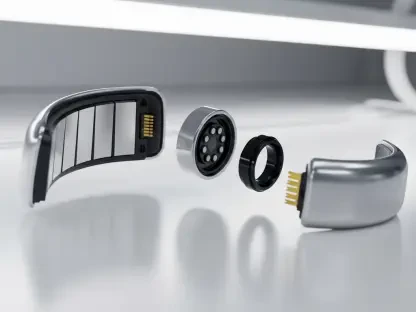

The traditional boundary separating high-end consumer gadgets from professional medical equipment is rapidly dissolving as we enter a new era of personal health monitoring. Modern smartwatches, rings, and dermal patches have transitioned from being novelty accessories used for counting daily steps to becoming sophisticated diagnostic companions capable of alerting users to potential life-threatening conditions. This shift is not merely a byproduct of more powerful processors or smaller sensors; it represents a fundamental change in how the medical community and the general public view the data generated by the devices on their wrists. Driven by a convergence of heightened user expectations for precision and a regulatory environment that has adapted to the pace of Silicon Valley, the wearable market is now positioned as a primary screening layer for the global healthcare system. As these tools become more integrated into clinical workflows, they are beginning to provide a continuous stream of physiological data that was previously only accessible through periodic, expensive visits to a hospital or specialist clinic.
Navigating the Regulatory Landscape
Defining the Dual-Track System: Balancing Innovation and Safety
The U.S. Food and Drug Administration has established a clear dual-track system to manage the influx of health-oriented consumer technology, ensuring that innovation does not come at the expense of patient safety. Under this framework, products are categorized based on their intended use and the level of risk they pose to the user. The “Wellness Track” is designed for low-risk features that promote a healthy lifestyle, such as activity tracking, sleep hygiene scores, and general stress management tools. Because these features do not claim to treat or diagnose specific diseases, they benefit from a streamlined regulatory path that allows manufacturers to iterate quickly and bring new software updates to the market without exhaustive premarket reviews. This flexibility has allowed the consumer tech industry to flourish, providing users with motivational data that encourages better daily habits and long-term health maintenance through consistent monitoring of non-critical metrics.
In contrast, the “Diagnostic Track” is reserved for features that cross the line into clinical territory by claiming to detect, monitor, or diagnose specific medical conditions like atrial fibrillation or sleep apnea. When a wearable device enters this category, it is legally classified as a medical device and must undergo rigorous validation through pathways such as the 510(k) clearance process. This requires manufacturers to provide empirical evidence that their sensors and algorithms are as safe and effective as existing clinical hardware. By maintaining this strict separation, regulators ensure that when a consumer receives a medical notification, it is backed by standardized testing and clinical-grade accuracy. This dual-track approach prevents the market from being flooded with unsubstantiated medical claims while simultaneously providing a structured roadmap for tech companies that are serious about contributing to the formal healthcare ecosystem through validated data.
Consumer Utility: From Data Collection to Actionable Insights
There has been a definitive shift in consumer behavior where users are no longer satisfied with abstract scores and are instead demanding data that carries clinical weight and actionable utility. In the current market, a generic “fitness score” is viewed as less valuable than a specific, validated report that can be discussed with a primary care physician during a checkup. This demand for integrity has forced wearable manufacturers to pivot their marketing and development strategies away from “sensor bloat”—the practice of adding numerous sensors without clear purposes—and toward the refinement of existing technologies. Consumers are looking for answers to specific, high-stakes questions about their cardiovascular health and respiratory efficiency, and they are increasingly gravitating toward brands that invest in third-party clinical studies to prove their reliability.
This transition from passive data collection to active health management is bridging the traditional gap between a patient’s daily life and the doctor’s office. Instead of relying on a single data point captured once a year during an annual physical, individuals can now present their doctors with weeks or months of continuous heart rate variability or oxygen saturation trends. This longitudinal data provides a far more comprehensive picture of a person’s baseline health, making it easier for medical professionals to identify anomalies that might be missed in a clinical setting. As the public becomes more health-literate, the market is rewarding companies that prioritize transparency in their data processing and offer easy-to-use tools for exporting medical-grade reports. This evolution is transforming the wearable from a solitary gadget into a collaborative tool that empowers patients to take a more proactive role in their own diagnostic journey.
Progress in Specific Diagnostic Features
Cardiovascular and Respiratory Monitoring: The Gold Standard of Wearables
Cardiovascular monitoring has become the most mature and clinically respected sector of the wearable market, largely due to the widespread adoption of single-lead electrocardiogram (ECG) technology in consumer watches. By allowing users to take an on-demand ECG by simply touching a button or a bezel, these devices have effectively democratized access to heart rhythm analysis. This capability has been particularly transformative for the detection of atrial fibrillation (AFib), a condition that is often intermittent and difficult to catch during a brief office visit. The ability of a consumer device to monitor for irregular rhythms in the background and prompt the user to take a manual recording has led to thousands of early diagnoses, potentially preventing strokes and other severe cardiac events. The medical community has largely embraced these tools as valuable screening mechanisms that serve as a first line of defense for at-risk populations.
While heart health monitoring has achieved a high degree of clinical acceptance, the diagnostic utility of respiratory features like blood oxygen (SpO2) and sleep tracking remains a subject of ongoing debate. Most consumer wearables use reflective pulse oximetry to estimate blood oxygen levels, a method that is generally reliable for identifying broad trends but can be sensitive to movement and skin temperature. These sensors are frequently used to provide insights into sleep quality, identifying potential disturbances that might suggest the presence of sleep apnea. However, it is important to distinguish these consumer-grade features from medical-grade polysomnography used in sleep labs. While a watch can highlight a pattern of oxygen desaturation that warrants further investigation, it is not yet a replacement for specialized home sleep testing equipment. The value of these features lies in their ability to act as a behavioral mirror, reflecting the impact of lifestyle choices on sleep and respiratory health rather than providing a definitive diagnosis.
The Frontiers: Metabolic Tracking and Technical Hurdles
The pursuit of non-invasive metabolic monitoring, specifically for blood pressure and glucose levels, remains the “holy grail” of the wearable industry, though it faces significant physical and biological challenges. Cuffless blood pressure monitoring is currently available in a limited capacity, often utilizing pulse wave analysis to estimate changes in pressure. However, these readings are frequently influenced by a variety of physiological factors, such as arterial stiffness and even the user’s posture, making it difficult to achieve the level of precision required for medical diagnosis without frequent recalibration against a traditional cuff. Despite these hurdles, the research and development in this space are moving at an incredible pace, with companies exploring new optical and acoustic sensors that could eventually provide continuous, calibration-free blood pressure tracking.
Similarly, the development of non-invasive glucose monitoring is one of the most anticipated technological leaps in the health-tech sector, yet it remains largely experimental. Currently, individuals with diabetes rely on continuous glucose monitors (CGMs) that involve a small filament inserted under the skin, providing highly accurate interstitial fluid readings. The challenge for wearable manufacturers is to replicate this accuracy using light-based sensors that can “see” through the skin to measure glucose concentrations. While several startups and major tech firms have showcased prototypes, as of 2026, no mainstream consumer smartwatch has received FDA clearance for non-invasive glucose monitoring that meets the standards for insulin dosing. This gap highlights the significant distance between consumer convenience and clinical necessity, as the margin for error in glucose sensing is incredibly small, and the consequences of inaccurate data can be immediate and severe.
Practical Application and Systemic Risks
The Smoke Alarm Philosophy: Redefining the Wearable’s Role
The most effective way to understand the current role of consumer wearables is through the “smoke alarm” philosophy of personal health. Just as a smoke alarm is designed to detect the early signs of a fire and alert the occupants to take action, a wearable device is intended to identify physiological anomalies and prompt the user to seek professional medical evaluation. This model acknowledges the inherent limitations of the hardware while maximizing its utility as a widespread screening tool. A wearable does not need to be a “fire department”—it doesn’t need to provide treatment or a final clinical verdict. By functioning as a persistent, low-power monitoring system that operates in the background of daily life, it can flag potential issues like an elevated resting heart rate or persistent sleep disturbances that the user might otherwise ignore or fail to notice.
This approach helps manage expectations for both the user and the healthcare provider, positioning the device as a supplemental source of information rather than a replacement for professional judgment. When a wearable “sounds the alarm,” the next logical step is for the user to transition into the formal medical system for diagnostic testing and expert consultation. This synergy between everyday data and clinical expertise creates a more resilient healthcare model where issues are identified earlier, leading to more effective and less invasive interventions. The success of this model depends on clear communication from manufacturers about what their devices can and cannot do. By framing wearables as proactive screening tools, the industry can avoid the pitfalls of over-promising and ensure that users maintain a healthy level of skepticism regarding the data while still benefiting from its early-warning capabilities.
Addressing Technological and Ethical Hurdles: Accuracy and Bias
As diagnostic features become more common, the industry must confront the critical issues of sensor accuracy and demographic bias that can skew health outcomes. Many of the optical sensors used in modern wearables rely on light-based technology that can be affected by physical characteristics such as skin tone, tattoos, and even the distribution of body fat. Historically, some heart rate and oxygen sensors have shown decreased accuracy on darker skin tones because of how different pigments absorb and reflect light. This creates a risk of digital health inequity, where certain populations may receive less reliable data or a higher rate of false readings. Manufacturers are now under increasing pressure to ensure their validation studies include diverse participant pools to guarantee that their diagnostic algorithms perform consistently across all demographics, ensuring that the benefits of wearable tech are accessible to everyone.
Beyond technical accuracy, the rise of “medical-grade” consumer tech introduces the risk of the “worried well”—individuals who become overly anxious due to constant monitoring and frequent notifications. False positives, where a device incorrectly flags a normal physiological variation as a medical issue, can lead to unnecessary doctor visits and put an undue burden on the healthcare system. Furthermore, there is the risk of “false confidence,” where a user might ignore physical symptoms of illness because their wearable indicates that their vitals are within the normal range. These psychological impacts necessitate a careful balance in how data is presented to the user. Finally, the collection of such sensitive health information raises profound privacy concerns. As wearables gather data that was once confined to medical records, the potential for this information to be misused by third parties, such as insurers or advertisers, becomes a significant ethical challenge that requires robust data protection frameworks and transparent user consent models.
Actionable Next Steps for a Mature Wearable Market
The maturation of consumer wearables into diagnostic tools has fundamentally altered the healthcare landscape, but the true value of these devices lies in how they are integrated into professional medical practice. To maximize the benefits of this technology, users should treat their wearable data as a conversation starter with their physicians rather than a definitive health report. Clinicians, in turn, need standardized workflows to review and validate the data coming from these devices, ensuring that they can distinguish between significant clinical trends and mere “noise” generated by consumer-grade sensors. The focus must remain on using these tools to enhance the patient-provider relationship, providing a continuous narrative of health that informs more personalized and proactive care strategies.
Looking forward, the industry must prioritize the development of cross-platform standards for health data exchange, allowing information to move seamlessly and securely between different devices and electronic health records. This interoperability will be essential for creating a holistic view of patient health that can be easily accessed by specialists and primary care teams. Additionally, continued investment in diverse clinical trials is necessary to eliminate the biases that currently limit the effectiveness of optical sensors for all populations. By focusing on data integrity, equitable sensor performance, and clear clinical communication, the wearable industry can move beyond the “fitness toy” era and become a permanent, trusted pillar of modern preventative medicine, turning the data from our daily lives into a powerful engine for long-term well-being.