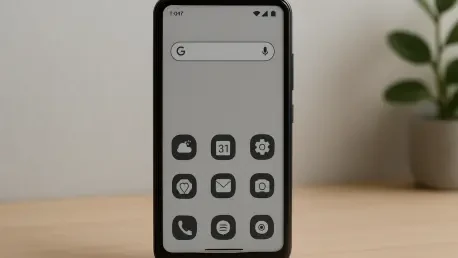

The persistent challenge for avid readers and professionals who spend hours on their smartphones has been the eye strain associated with emissive displays, a problem that e-ink technology has long promised to solve but has been held back by its own technical limitations. Beijing-based DASUNG Technology is now addressing this issue head-on with an upgraded version of its Link device, a product designed not as a standalone e-ink phone but as a sophisticated accessory described as an “e-ink screen mobile phone display.” This innovative 6.7-inch screen functions by mirroring a smartphone’s display in real time, effectively converting the vibrant, backlit interface into a high-refresh-rate e-ink experience. Fundamentally, the DASUNG Link is a streamlined device consisting of a screen and a dedicated battery. It intentionally omits any internal processor, camera, or other standard smartphone components, instead relying entirely on the connected phone’s CPU, RAM, and software to drive its functionality. This design choice means that user interaction is dictated by the power and fluidity of their existing smartphone, simply rendered on a more comfortable, paper-like panel.
A New Paradigm in E-Ink Technology
The most significant innovation in the new DASUNG Link is the company’s proprietary 60Hz ultra-high refresh rate technology, representing a monumental leap forward for a display medium traditionally suited for static content like e-books. Historically, the slow refresh rates of e-ink have made tasks like smooth scrolling, watching videos, or playing games nearly impossible, leading to frustrating ghosting and lag. DASUNG claims its new technology effectively closes this performance gap, delivering a user experience that approaches the fluidity of a conventional LCD screen. This breakthrough allows for dynamic content and swift navigation, overcoming one of the most critical limitations of e-ink displays. Crucially, this advancement is achieved while preserving the core benefits that draw users to e-ink in the first place. The screen, which features a crisp 300 PPI resolution, maintains its paper-like appearance by reflecting ambient light rather than emitting its own, significantly reducing eye fatigue during prolonged use and offering excellent readability even in direct sunlight.
Functionality and Future Considerations
While the promise of a fluid, high-refresh-rate e-ink experience is compelling, its practical execution and market reception will hinge on both performance and software integration. The device, officially named the “Link (Ultra-high refresh rate wireless version),” is scheduled to enter the market on January 5, 2026, though the company has not yet announced its pricing structure. Potential users remain cautiously optimistic, as previous analysis of the first-generation Link highlighted certain limitations, particularly concerning software compatibility with the latest versions of Android and iOS. Since the Link acts as a pure display mirror, its seamless operation depends heavily on stable and well-maintained software that can keep pace with frequent operating system updates from major smartphone manufacturers. The success of this new model will ultimately depend on DASUNG’s ability to deliver not only on its hardware promises but also on providing the robust software support necessary to ensure a reliable and frictionless user experience across a wide range of devices.