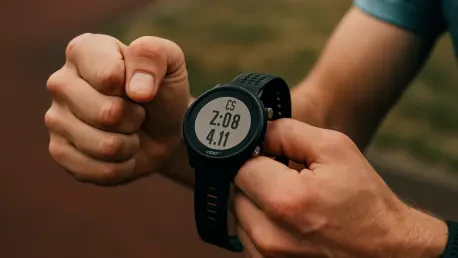

The recent wave of technical inconsistencies affecting the Garmin Forerunner series has fundamentally compromised the relationship between professional athletes and their biometric tracking equipment. Since the deployment of firmware version 27.09 across the Forerunner lineup, a growing segment of the user community has reported persistent malfunctions that undermine the primary utility of these devices. While initial reports surfaced earlier in the current year, the lack of a definitive resolution has sparked a secondary surge of grievances on various technical forums and social platforms. The central issue revolves around the degradation of core sensor accuracy, specifically affecting optical heart rate monitors and barometric altimeters. This failure is not merely a cosmetic inconvenience; it fundamentally disrupts the data-driven methodology that defines modern endurance training. When a premium watch fails to capture the nuances of a threshold workout, the subsequent training metrics become a source of confusion rather than clarity for the individual.
Impact on Physiological Metrics and Training Analysis
The systematic failure of these sensors extends far beyond simple numerical errors, as the Garmin ecosystem relies on accurate raw data to generate advanced physiological insights. When the barometric altimeter records ghost elevation gains on a perfectly flat running track, the software incorrectly adjusts the perceived effort and intensity of the session. These inaccuracies cascade through the algorithm, skewing critical metrics such as VO2 Max estimates, training load calculations, and suggested recovery times. For serious marathoners and triathletes, these metrics are the foundation of their preparation cycles, and the introduction of unreliable data makes it impossible to gauge true fitness levels or avoid overtraining. Moreover, the heart rate sensor fluctuations reported by many users further complicate the issue, as heart rate variability data is essential for determining daily readiness scores. This degradation of core functionality essentially transforms a high-end diagnostic tool into a basic timepiece.
Frustration among the user base has been exacerbated by a perceived imbalance in how the manufacturer has prioritized technical support across its product range. While the entry-level Forerunner 165 received a targeted patch to mitigate these specific glitches, owners of the flagship Forerunner 255, 265, 955, and 965 models continue to wait for a comprehensive fix. This disparity has created a sense of inequity, as those who invested more heavily in premium hardware feel their concerns have been sidelined in favor of newer or lower-tier devices. The silence from official support channels regarding a timeline for a broader firmware rollout has only deepened the divide between the brand and its most loyal customers. As the competitive season progresses, the lack of a uniform response suggests a fragmentation in software development that could have long-term implications for brand loyalty. Athletes who rely on these devices for professional endeavors are now forced to consider alternative ecosystems to ensure their data remains consistent.
Hardware Variability and the Path Toward Technical Resolution
Despite the prevalence of these complaints, the performance issues have not manifested uniformly across the entire Forerunner population. Many individuals reported that their devices continued to operate flawlessly under version 27.09, suggesting that the bugs might be tied to specific hardware production batches or unique environmental triggers. This inconsistency presents a significant challenge for software engineers, as identifying the root cause becomes significantly more complex when the error cannot be replicated consistently in a controlled laboratory setting. Factors such as individual skin tone affecting optical sensors, local atmospheric pressure shifts impacting barometers, or even specific sequences of third-party application usage could be contributing to the instability. This variability indicates that a one-size-fits-all software patch may be insufficient to address the underlying problems. Until the manufacturer can isolate the specific conditions that trigger these failures, the community remains in a state of technical limbo.
The situation ultimately served as a vital lesson for users and developers alike regarding the fragility of the modern wearable technology infrastructure. To navigate these challenges, owners of affected devices adopted a more proactive stance by disabling automatic updates and manually calibrating their sensors before major training sessions. It became clear that maintaining a backup log of manual heart rate checks and GPS-verified elevation maps provided a necessary safeguard against firmware-induced data corruption. Furthermore, the community encouraged direct engagement with technical support to ensure that specific hardware serial numbers were recorded in the ongoing investigation. Looking forward, the emphasis shifted toward demanding more rigorous beta testing cycles that included a wider variety of real-world environmental stressors. The resolution of this crisis required a transparent communication strategy that prioritized stability over the rapid release of new features. By reinforcing the necessity for reliable biometric foundations, the market pushed for a future where data integrity remained the paramount concern.