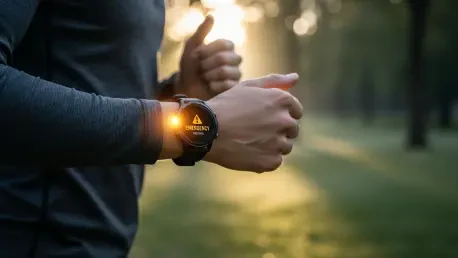

For residents in high-risk seismic zones, the difference between safety and catastrophe often depends on receiving a warning just a few seconds before the ground begins to shake. Google has addressed this critical need by transitioning Wear OS from a passive notification mirror into a proactive life-saving instrument through the latest Google Play Services update, specifically version 26.07. Previously, smartwatch users were tethered to their smartphones, as earthquake alerts were merely duplicated from a paired handset via Bluetooth. If a phone was charging in another room or had its battery depleted, the wearable remained silent. This significant technical shift allows Wear OS devices to communicate directly with Google’s emergency infrastructure. By decoupling these alerts from the mobile handset, the ecosystem ensures that safety information reaches the user’s wrist regardless of the status of their primary mobile device. This evolution highlights a broader industry movement toward making wearables autonomous health and safety hubs that function reliably in isolation. This update is particularly vital for those who may not always carry a phone, such as athletes or individuals in professional environments where mobile devices are restricted, yet safety remains paramount.
The Mechanics: How Crowdsourced Seismic Detection Functions
The technological foundation of this feature is the Android Earthquake Alerts System, which represents the world’s largest crowdsourced seismic detection network. Every modern Android device, including those running Wear OS, contains highly sensitive accelerometers capable of detecting the initial, subtle vibrations of an earthquake. When these sensors identify a specific pattern of movement that matches a seismic event, the device transmits a burst of data to Google’s centralized detection servers. The system then aggregates data from thousands of nearby devices to confirm the event’s location and magnitude with extreme precision. Once the system verifies the threat, it broadcasts a high-priority warning to every compatible device in the projected impact area. For a smartwatch user, this means receiving a haptic pulse and a visual warning that provides those precious seconds needed to drop, cover, and hold on. This process bypasses the latency often associated with traditional geological sensors, providing a decentralized layer of protection that complements government-run seismic networks. The speed of these digital alerts often outpaces the physical travel of seismic waves, giving individuals a critical head start.
Future Integration: Enhancing Wearable Autonomy and Safety
While the transition to standalone alerts marks a milestone, the current implementation highlights specific connectivity prerequisites that users must consider for maximum reliability. The standalone functionality is most robust on LTE-equipped watches with an active cellular plan, though Wi-Fi-connected devices also benefit when within range of a known network. Moving from 2026 to 2028, the industry expects a deeper integration of satellite-based emergency messaging to fill the gaps in areas without cellular coverage. Manufacturers should prioritize optimizing battery management to ensure these background safety services remain active without compromising daily usability. Users were encouraged to verify their Google Play Services version and ensure that Location Services remained active, as geographic data is essential for accurate alert routing. This development proved that smartwatches could serve as more than just fitness trackers or notification centers, evolving instead into essential emergency hardware. By establishing this independent alert pathway, the ecosystem shifted toward a more resilient architecture that prioritized human safety over device dependency, setting a new standard for the wearable market.