
Holding a device that feels more like a polished shard of glass than a complex computer remains the ultimate tactile goal for mobile enthusiasts who are tired of the brick-like silhouettes dominating the current market. While the industry has spent years chasing larger screens and heavier camera modules, a quiet rebellion has formed against the bulk. This shift marks a departure from the traditional “Lite” moniker, which usually implies watered-down internals. Instead, a new “Air” aesthetic is emerging, promising the full power of a flagship without the physical burden that usually accompanies it.
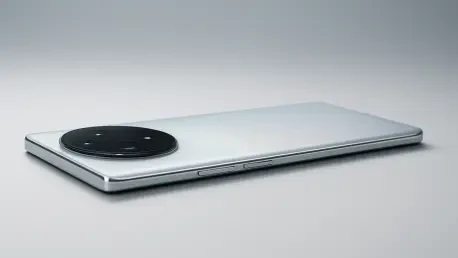
The Honor Magic 8 Pro Air is currently leading this charge, boasting a 6.1mm profile that seems to defy the established laws of smartphone physics. In a landscape where premium handsets frequently exceed 8mm and weigh down pockets with nearly 200 grams of metal and glass, this device stands out as a lightweight anomaly. At just 155 grams, the engineering behind it disrupts the status quo, offering a tactile difference that is immediately apparent. It serves as a reminder that portability should not be a secondary consideration in a world where we carry our digital lives in our palms for hours on end.
The 6.1mm Revolution: Challenging Smartphone Physics
The fascination with ultra-thin profiles has returned with a vengeance, but the context has shifted from mere vanity to sophisticated ergonomics. For a long time, the industry was locked in a race for larger batteries and more complex cooling systems, which inevitably led to thicker frames. However, the Magic 8 Pro Air proves that a 6.1mm chassis can house a top-tier experience without feeling fragile or underpowered. This specific measurement is being hailed by designers as the “sweet spot” where a phone feels impossibly thin yet remains structurally sound enough for daily rigors.
When a user picks up a device that weighs only 155 grams, the psychological barrier between the person and the technology begins to fade. Unlike the heavy flagship models from the last few years, this design doesn’t cause the familiar pinky fatigue or pocket sag that users have come to accept as a necessary evil. By focusing on weight distribution as much as thickness, the engineering team has created a tool that feels balanced regardless of how it is held. This disruption is forcing other manufacturers to reconsider their reliance on “bigger is better” design philosophies.
Beyond the Compromise Trap: Slim Mobile Design
The history of thin smartphones is littered with high-profile failures and disappointing trade-offs. Both Apple and Samsung have historically struggled to maintain a slim aesthetic while providing the battery life and thermal stability that professional users demand. This “Compromise Trap” usually sees the battery capacity slashed or the camera sensors downgraded to fit the narrow physical constraints. Consequently, consumers have grown wary of slim devices, often associating them with “Lite” performance or midday charging anxiety.
There is, however, a growing segment of the market that refuses to accept these limitations. Modern consumers want “Pro” specifications—fast processors, high-resolution screens, and versatile cameras—in a form factor that doesn’t bulk up a suit pocket or a small purse. The Magic 8 Pro Air addresses this specific demand by refusing to settle for inferior hardware. It challenges the notion that a slim phone must be a secondary device, positioning itself instead as a primary flagship that can handle intensive workloads without the literal weight of its competitors.
Solving the Thin-Phone Puzzle: Engineering Innovation
Solving the dilemma of internal space required a complete rethink of how energy is stored. By utilizing third-generation silicon-carbon battery technology, engineers managed to squeeze a 5,500mAh capacity into a frame where rivals struggle to fit even 4,000mAh. This leap in energy density means that the 6.1mm thickness does not come at the cost of endurance. Users can expect all-day battery life, supported by 80W wired and 50W wireless charging speeds that keep the device topped up without generating the excessive heat that often plagues thinner designs.
Miniaturizing the optics was the next hurdle in the quest for a slim flagship. Rather than opting for a single, mediocre lens, the device leverages a specialized triple-camera array derived from foldable hardware technology. This includes a 50MP main sensor, a 50MP ultra-wide, and a 64MP telephoto lens, ensuring that photography remains a priority. A dedicated color spectrum sensor and a 50MP selfie camera further prove that a thin profile can coexist with professional-grade imaging. This hardware stack allows for high-resolution parity with much bulkier devices.
The choice of the MediaTek Dimensity 9500 chipset was a strategic move to balance raw power with thermal efficiency. Unlike other processors that require massive vapor chambers and bulky cooling fins to stay stable, this silicon is optimized for high performance with a lower thermal footprint. By selecting a processor that runs cooler, the designers were able to maintain a slim chassis without risking the “throttling” that usually occurs when a thin phone gets too hot. This synergy between hardware and software ensures that the device remains snappy during gaming or multitasking.
Industry Perspectives: The Honor Design Philosophy
Market analysts have noted that the $725 price point for such a specialized device is a significant disruptor. In an era where “ultra-thin” or “special edition” usually commands a massive premium, offering flagship specs at this price suggests a shift in how these devices are positioned. Comparisons against rumored upcoming models like the iPhone Air or the Galaxy S25 Edge show that the Magic 8 Pro Air is already hitting benchmarks that others are still aiming for. It isn’t just a design experiment; it is a viable market contender.
The ergonomics of 6.1mm are being scrutinized as the new benchmark for hand-feel. Experts argue that while some companies might try to go even thinner, doing so would likely compromise the structural integrity or the ability to include a periscope lens. By staying at this specific thickness, the design maintains enough internal volume for high-end components while still providing that “wow factor” when first seen. This balance is what separates a gimmick from a tool that can truly replace a standard-sized flagship.
The Five Pillars: Building a Successful Ultra-Thin Flagship
The first pillar of this new design era is the total elimination of the “Lite” stigma. A successful slim device must remain a true primary phone, capable of matching the software and hardware capabilities of the largest models. Secondly, prioritizing high-density battery materials is non-negotiable; silicon-carbon anodes are now the standard for preventing the battery anxiety that killed previous thin-phone generations. Without reliable power, a slim design is merely a beautiful paperweight.
Thirdly, the integration of pro-grade optics through miniaturized camera stacks ensures that users don’t feel they are losing out on the “Ultra” experience. The fourth pillar involves finding the perfect thickness-to-feature ratio to protect internal structural integrity, ensuring the phone doesn’t bend or break under pressure. Finally, balancing weight distribution ensures a premium hand-feel. A phone that is thin but poorly balanced feels cheap; one that is weighted correctly feels like a piece of high-end jewelry.
The arrival of the Magic 8 Pro Air shifted the conversation from what had to be removed to what could be reimagined. Engineers moved beyond the traditional constraints of mobile hardware by embracing silicon-carbon energy and miniaturized optical arrays. This development forced the rest of the industry to look at the slim category as a space for high-end innovation rather than cost-cutting. Future designs will likely follow this blueprint, focusing on high-density internals to satisfy the modern user’s desire for both elegance and endurance. Manufacturers began prioritizing the tactile experience, realizing that a phone’s physical presence is just as important as the pixels on its screen.