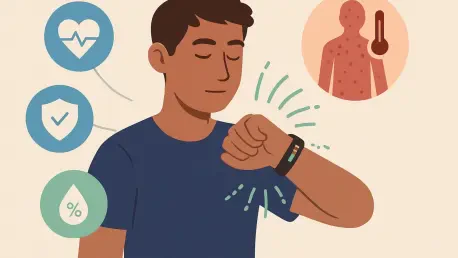

The traditional reactive medical model relies on isolated data snapshots that often fail to capture the dynamic and fluctuating nature of human biology during the early stages of infection. This limitation is rapidly becoming a relic of the past as modern wearable technology shifts the paradigm from intermittent checkups to continuous monitoring. Devices that once functioned as simple step counters have evolved into medical-grade sensors capable of tracking cardiovascular and metabolic markers with surgical precision. By establishing a digital fingerprint of an individual’s unique physiological state, these devices identify subtle deviations that signal the onset of a viral threat days before a fever appears. This proactive approach transforms the user’s wrist into a frontline diagnostic tool, allowing for early intervention that was once impossible. The resulting longitudinal dataset provides a comprehensive view of how the body navigates the transition from health to illness, offering foresight that traditional clinical methods simply cannot replicate.
Identifying the Body’s Early Warning Signs
When a pathogen enters the bloodstream, the immune system launches an immediate, albeit invisible, counteroffensive that consumes significant biological energy. This increased metabolic demand is frequently reflected in a subtle rise in the overnight resting heart rate, often occurring forty-eight to seventy-two hours before physical symptoms manifest. The heart must pump more blood to distribute white blood cells and cytokines, creating a detectable cardiovascular signature of inflammation. While a user might feel perfectly healthy, their wearable device notices that their heart is beating five to ten times more per minute during deep sleep than it was a week prior. This physiological “pre-symptom” is the body’s internal alarm system sounding an early warning. By capturing these minute shifts in real-time, wearables provide a window into the preclinical phase of infection, where the virus is replicating but has not yet overwhelmed the host’s defenses or triggered a symptomatic response.
Beyond simple heart rate increases, the metric of heart rate variability offers a sophisticated glimpse into the state of the autonomic nervous system. A healthy body typically exhibits high variability, indicating a flexible and responsive system capable of handling environmental changes. However, when the body begins to fight an infection, the sympathetic nervous system—responsible for the “fight or flight” response—takes control, leading to a significant and measurable drop in variability. This decline indicates that the body is under systemic stress and is prioritizing the immune response over other functions. When combined with minor elevations in skin temperature and disruptions in the architecture of REM sleep, these signals form a robust statistical profile of impending illness. This multi-metric analysis allows for a level of diagnostic sensitivity that far exceeds the capabilities of a thermometer or a subjective self-assessment of how one feels on any given morning.
The Logic of Algorithmic Detection
The underlying logic that enables this predictive capability is rooted in sophisticated machine learning models that function as anomaly detectors. Unlike traditional medical benchmarks that compare an individual to a broad population average, these algorithms focus on a personalized baseline established over several weeks of consistent wear. For instance, a resting heart rate of seventy beats per minute might be clinically normal for the general population but could be highly abnormal for an athlete whose baseline is usually fifty-five. The software creates a dynamic model of what is “normal” for each specific user, taking into account their unique circadian rhythms, typical activity levels, and recovery patterns. When the incoming data stream drifts significantly away from this established 30-day baseline, the system flags the deviation as a potential health risk. This personalized approach ensures that the technology can detect the earliest whispers of disease without being misled by the wide variability found across the human species.
To achieve this level of precision, the computational pipeline must effectively filter out massive amounts of environmental and physical noise. Wearables primarily utilize photoplethysmography, which involves shining light into the skin to measure changes in blood volume. However, this method is highly susceptible to interference from physical movement, ambient light, and even variations in skin tone or the tightness of the strap. Advanced signal processing techniques are employed to strip away these external artifacts, ensuring that the detected changes are purely biological in origin. Furthermore, the algorithms must distinguish between a temporary spike caused by a strenuous workout and a sustained elevation indicative of a systemic viral load. By applying recursive filters and temporal analysis, the technology can isolate the clean physiological data required to make accurate predictions. This technical rigor is essential for maintaining user trust and preventing the “crying wolf” effect of frequent false positives in a health-monitoring context.
Overcoming Hurdles in Biological Data
One of the most significant challenges facing the current generation of wearables is the problem of non-specific stress signals. The human body responds to various forms of strain—such as excessive alcohol consumption, intense mental stress, or severe sleep deprivation—in ways that can mimic the early stages of a viral infection. A high resting heart rate and low heart rate variability are clear indicators of physiological distress, but they do not inherently specify the cause of that distress. Developers are currently working to refine these models by incorporating contextual data, such as calendar events or self-reported lifestyle factors, to help the algorithm differentiate between a late night at the office and the onset of the seasonal flu. The goal is to move beyond simple detection toward a more nuanced interpretation of systemic biological signals. By narrowing the gap between generalized stress and specific pathological signatures, the technology becomes a more reliable advisor for both personal health management and public health surveillance.
The transition toward edge computing represents a pivotal shift in how this sensitive health data is processed and protected. By performing complex algorithmic analysis directly on the wearable hardware rather than uploading raw data to a centralized cloud server, manufacturers can significantly enhance user privacy while reducing latency. This localized processing allows the device to provide near-instantaneous feedback to the user, such as a prompt to rest or a suggestion to take a diagnostic test, at the exact moment an anomaly is detected. Furthermore, keeping the data on the device mitigates the risks associated with large-scale data breaches, which is a critical consideration as these tools become more integrated into formal healthcare ecosystems. As processing power continues to increase within the small form factors of watches and rings, the ability to run sophisticated neural networks locally will further refine the speed and accuracy of illness detection, making proactive health monitoring a seamless and secure part of daily life.
Future Considerations: The Path Forward
The next evolutionary step for this technology involves sensor fusion, where disparate data streams are integrated to create a holistic and multi-dimensional view of human health. Current devices are expanding their sensor arrays to include sweat-based biomarkers and continuous glucose monitoring, which provide direct insights into the body’s chemical and metabolic state. For example, changes in the concentration of electrolytes or specific proteins in sweat can act as early indicators of dehydration or systemic inflammation, complementing the cardiovascular data already being collected. By correlating a sudden rise in skin temperature with a shift in chemical markers, the system can achieve a much higher confidence level in its predictions. This multi-layered approach reduces the likelihood of false positives and allows the technology to pinpoint the nature of a physiological disturbance with greater accuracy. The result is a comprehensive biological dashboard that moves beyond surface-level metrics to monitor the deep, underlying processes of the human body.
The transition toward proactive health monitoring represented a fundamental shift in the relationship between humans and their biological data. By moving away from reactive snapshots, these technological advancements allowed individuals to reclaim control over their wellness through the power of early detection. Developers successfully addressed the challenges of data specificity by integrating multi-modal sensors that cross-referenced cardiovascular dynamics with chemical biomarkers. This evolution proved that the combination of personalized baselines and edge computing was the most effective way to protect privacy while providing actionable health insights. As these tools became more deeply embedded in the healthcare infrastructure, they established a new standard for preventative medicine that prioritized foresight over response. The lessons learned from this transition suggested that the future of public health would depend on the continued refinement of these digital sentinels. Ultimately, the integration of wearable technology into daily life provided the critical head start needed to manage systemic illness effectively.