
The persistent frustration of a smart light bulb failing to respond while your smartphone sits inches away remains a modern ritual that underscores the gap between technological promise and the daily reality of domestic life. For years, the dream of an automated residence has been hindered by a fragmented market and unreliable hardware that requires constant intervention. However, Apple’s upcoming strategic announcement on October 13 suggests a definitive pivot toward making the smart home a standard utility rather than an expensive, glitchy hobby. This shift involves more than just new hardware; it represents a fundamental overhaul of how devices communicate and how users interact with their private environments.
By integrating deeper software control and more robust networking standards, the tech giant aims to resolve the friction that has plagued the industry for nearly a decade. The upcoming developments indicate a focus on stability and longevity, addressing the common complaints that have kept smart technology from achieving true household ubiquity. As the market moves from 2026 to 2028, the emphasis will likely shift from novelty toward invisible, background operation.
Moving Beyond the Hobbyist Phase of Home Automation
For years, the promise of a seamless smart home has felt more like a tech enthusiast’s troubleshooting nightmare than a modern convenience. Despite the proliferation of connected bulbs and plugs, the experience remains plagued by dropped connections and confusing setups that require significant technical knowledge to resolve. Most current systems demand that the user acts as a part-time system administrator, constantly rebooting routers or re-pairing devices that have mysteriously vanished from the network.
Apple’s upcoming strategic push suggests the company is finally ready to move these tools out of the niche hobbyist category and into the realm of essential, reliable household utilities. This evolution reflects a growing realization that automation must be as invisible and dependable as the electrical wiring in the walls. By standardizing the interface and the backend connectivity, the goal is to create a “set it and forget it” environment that appeals to the average consumer rather than just the early adopter.
The Challenge: Why Your Current Smart Home Feels Fragmented and Unreliable
The fundamental problem with today’s smart home is the “lifespan gap” and the lack of a unified language. Most consumers find that their expensive smart appliances fail long before the traditional versions they replaced, often due to software obsolescence or weak networking. A standard refrigerator might last twenty years, but a smart version often loses its primary features within five years as apps are discontinued or servers are shut down.
Furthermore, the reliance on standard Wi-Fi has created congested routers and “dead zones” that make simple tasks—like turning off a light—frustratingly inconsistent. When dozens of small devices compete for bandwidth with high-definition streaming and gaming, the resulting latency often breaks the automation logic. This fragmentation forces users to manage a chaotic assortment of proprietary bridges and third-party apps that rarely communicate effectively with one another.
Connectivity Solutions: The Technical Shift Toward Thread and a Unified homeOS
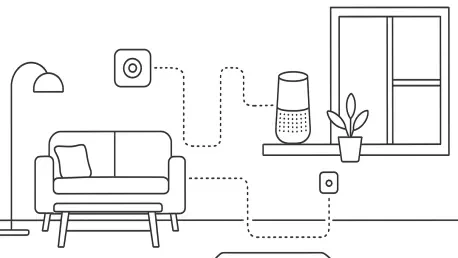
To solve the connectivity crisis, Apple is championing the transition to the Thread protocol, a low-power, wireless mesh networking system. Unlike traditional setups, a Thread-based network is “self-healing,” meaning if one device goes offline, the rest of the network reconfigures itself to stay active. This architecture eliminates the single point of failure that often cripples modern smart homes, ensuring that a broken light switch does not take down the entire security system.
This shift, combined with the rumored “homeOS,” aims to create a centralized software layer that bridges the gap between various hardware types. This new operating system would reinvigorate the “Works with Apple Home” program, providing a seamless experience across different brands. By moving away from cloud-dependent processing and toward a localized software hub, the system achieves faster response times and greater reliability during internet outages.
Data Security: Prioritizing Privacy and Durability in an Insecure Market
While many smart device manufacturers treat user data as a secondary revenue stream, Apple is positioning Siri’s privacy-focused architecture as a critical differentiator. By processing commands locally with a focus on security, the company addresses a major barrier to adoption: the fear of domestic surveillance. In a market where smart televisions and cameras are frequently caught harvesting personal data, a commitment to encrypted, local processing offers a necessary alternative.
This commitment to security, paired with partnerships with industry giants like LG and Schneider Electronics, suggests a future where smart locks and security cameras are both physically durable and digitally protected. These collaborations aim to produce hardware that matches the physical lifespan of the home itself. Trust became the foundation of the modern ecosystem, ensuring that convenience did not come at the cost of personal safety or digital integrity.
Future Readiness: How to Prepare for the Transition to a Centralized Apple Home
Transitioning to this new ecosystem involved moving away from proprietary bridges and toward multi-functional hubs. The strategy focused on utilizing a revamped Apple TV, a new HomePod, or even a dedicated iPad home hub to act as the primary brain of the house. By looking for the “Works with Apple Home” certification and prioritizing devices that supported the Matter and Thread standards, users began building a network designed for longevity and ease of use.
This proactive approach simplified the maintenance process and ensured that the household remained functional as technology evolved. Consumers who invested in these unified standards found that their devices integrated more naturally into their daily routines without the need for constant manual updates. Ultimately, the move toward a centralized homeOS provided a roadmap for a domestic environment that was both more intelligent and significantly more reliable than the fragmented systems of the past.