
The landscape of consumer electronics in the United Arab Emirates has undergone a radical transformation where high-quality wearable technology is no longer reserved for those with significant disposable income. While the market frequently sees premium releases that push the boundaries of luxury and performance, a new segment of hyper-affordable bundles is emerging to challenge the status quo of entry-level gadgets. Retailers are now leveraging aggressive promotional strategies to capture the attention of a demographic that prioritizes basic functionality and immediate value over brand prestige or long-term ecosystem integration. This shift is most visible in recent promotional campaigns that bundle essential peripherals together for a price point that was previously unthinkable for functional hardware. By offering a complete wearable ecosystem for less than the cost of a standard dinner in Dubai, these deals are redefining what it means to be a connected consumer in a competitive digital economy.
The Economic Impact of High-Value Wearable Bundles
Market Positioning of the X.Cell G12 Bundle
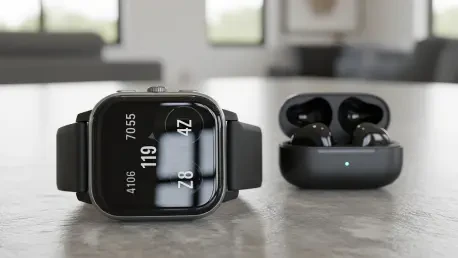
The recent promotional activity surrounding the X.Cell G12 Professional Smartwatch and Apollo 7 Truly Wireless Earbuds represents a significant pivot in how electronics are marketed to the budget-conscious segment. Originally positioned at a higher retail price point, the current reduction to AED 89 creates a dramatic value proposition that is difficult for competitors to match without compromising on the hardware selection. This aggressive pricing strategy is not merely a clearance sale but a tactical move to dominate the sub-AED 100 bracket, an area where consumers often hesitate due to concerns about reliability and feature sets. By providing both a visual timepiece and an audio solution in a single package, the bundle removes the friction of multiple purchases and offers an immediate, out-of-the-box experience for the user.
This specific bundle targets a diverse range of users, from students who need basic connectivity to workers who require a hands-free audio solution during their commute. The X.Cell G12 itself adopts a professional aesthetic with a blue finish, moving away from the overly sporty look that often characterizes cheap fitness trackers. This design choice allows the device to fit into more formal or office environments, broadening its appeal beyond the gym. When paired with the Apollo 7 earbuds, the package provides a level of utility that is rarely found at this price, effectively lowering the barrier to entry for modern wearable technology. It serves as a litmus test for the market, proving that there is a massive demand for functional, no-frills hardware that fulfills the basic requirements of the digital age without requiring a major investment.
Value Comparison Against Industry Standards
When evaluating this deal against the broader tech landscape, the financial advantages become even more apparent because most reputable standalone earbuds or basic fitness trackers start at a significantly higher price. For less than AED 100, a consumer typically expects a generic device with limited support; however, this bundle offers two distinct pieces of hardware that interact with a smartphone via standard Bluetooth protocols. While premium brands like Samsung or Xiaomi offer superior displays and deeper health metrics, they do so at a cost that is several times higher than this promotional offering. The savings of AED 110 from the original price point provide enough room for the consumer to consider these as low-risk experimental purchases or practical gifts that do not carry a heavy financial burden.
Furthermore, the existence of such bundles forces a conversation about the democratization of technology and the actual cost of manufacturing basic sensors and audio drivers. By 2026, the technology behind heart rate monitoring and wireless audio has matured to the point where even budget-tier components can offer a respectable level of performance for the average user. This deal highlights the saturation of the mid-range market, pushing retailers to find creative ways to move inventory by bundling complementary items. For the savvy shopper, the primary benefit is not just the low price but the realization that high-end features are often luxuries rather than necessities for daily life. The package provides the core essentials—notifications, fitness tracking, and wireless music—at a fraction of the cost associated with flagship ecosystems.
Technical Realities and Practical Considerations
Performance Expectations for Entry-Level Hardware
Prospective buyers must approach these highly discounted bundles with a realistic understanding of the hardware limitations inherent in budget-friendly electronics. The X.Cell G12 provides essential fitness tracking and notification support, but users should not expect the precision of medical-grade sensors or the ultra-smooth refresh rates found on OLED-equipped premium watches. The display quality is designed for functional legibility rather than high-definition visuals, and the battery life will likely require more frequent charging cycles than more expensive alternatives. Despite these trade-offs, the device remains a capable tool for those who simply want to monitor their step count or receive call alerts on their wrist without reaching for their phone constantly. It represents a functional baseline for what a modern digital watch should achieve.
The Apollo 7 earbuds follow a similar philosophy by focusing on the core experience of wireless audio through an ergonomic in-ear design that provides passive noise isolation. While they lack the active noise cancellation and sophisticated sound staging of high-end audio brands, they offer a stable connection for music playback and voice calls. The build quality is utilitarian, prioritizing durability and light weight over premium materials like brushed aluminum or specialized glass. For the user, this means the earbuds are excellent for daily commuting or casual listening where the risk of loss or damage is high. Understanding these technical constraints is vital for consumer satisfaction, as the value lies in the utility of the devices rather than their ability to compete with professional-grade hardware or luxury accessories.
Navigating Brand Support and Long-Term Use
A critical factor that often goes overlooked in the excitement of a major discount is the level of after-sales support and software longevity provided by regional brands. Unlike global tech giants that offer extensive service networks and frequent firmware updates, X.Cell operates on a more localized scale, which may mean that troubleshooting and repairs are handled differently. Potential owners should verify the warranty terms provided by the retailer to ensure they have recourse in the event of a hardware failure. Additionally, the companion apps for budget smartwatches are often more simplified, offering basic data visualization without the deep community features or third-party integrations seen in more established fitness platforms. This simplicity can be an advantage for users who prefer a straightforward interface without the clutter of unwanted features.
Choosing to invest in this bundle should be seen as a strategic decision based on immediate needs rather than long-term future-proofing. As we move from 2026 to 2028, the evolution of wearable sensors will continue to move rapidly, making today’s budget tech feel dated sooner than premium alternatives. However, for those who require a reliable set of earbuds and a basic tracker right now, the low entry price mitigates the risk of rapid obsolescence. It is an ideal solution for temporary use cases, such as a backup device for travel or a primary wearable for children and seniors. By acknowledging the limited scope of technical support and the specialized nature of the software, users can better appreciate the functional reliability that these devices offer for their specific price bracket, ensuring the purchase meets their practical expectations.
Strategic Directions for Smart Consumers
The decision to acquire the X.Cell G12 and Apollo 7 bundle should be driven by a clear assessment of individual needs versus the allure of a significant discount. For individuals seeking a robust entry point into the world of wearables, this package offers a functional foundation that allows for the exploration of smart features without a long-term financial commitment. Moving forward, consumers should prioritize checking the compatibility of the companion applications with their current mobile operating systems to ensure a seamless setup process. It is also advisable to treat these devices as introductory tools; if the health tracking and notification features become indispensable, the user can later upgrade to more advanced systems with a better understanding of which specific functions they value most.
Looking ahead, the trend of extreme bundling is likely to expand, suggesting that shoppers should remain vigilant for similar offers that pair complementary technologies. For those who find the technical specifications of this bundle too limiting, exploring standalone mid-range options remains a viable path toward higher performance. However, for the majority of casual users, the current deal represents a peak in price-to-performance ratio that is unlikely to be surpassed in the near term. The best next step for an interested buyer is to visit a physical retail location to verify the build quality and comfort of the watch and earbuds firsthand. This practical approach ensures that the physical ergonomics meet personal standards before finalizing a purchase that, while inexpensive, should still provide a reliable and enjoyable user experience.