
Nia Christair stands at the cutting edge of mobile innovation and hardware architecture, having spent her career refining the way users interact with complex digital ecosystems. As Microsoft prepares for its most ambitious pivot yet with the unveiling of “Project Helix,” her expertise in bridging the gap between mobile gaming, app development, and hardware design offers a unique lens through which to view the future of the industry. We sat down to discuss how the upcoming “Xbox Mode” on Windows 11 serves as a foundational blueprint for a new era of unified gaming.
Our conversation explores the strategic shifts Microsoft is making to centralize its gaming platforms, focusing on the transition from traditional console branding to a versatile “play anywhere” ecosystem. We delve into the technical nuances of adapting a PC interface for handheld use, the influence of the ROG Ally on modern UI design, and the logistical challenges posed by the global chip market. Nia also provides a roadmap for the developer prototypes scheduled for 2027 and explains how early user data from this year’s April rollout will dictate the trajectory of the next generation of hardware.
“Xbox Mode” is set to launch on Windows 11, featuring a controller-friendly interface similar to current handheld gaming PCs. How will this shift the way users navigate their desktops, and what specific UI elements are being adapted to ensure that navigating with a joystick feels as fluid as using a mouse?
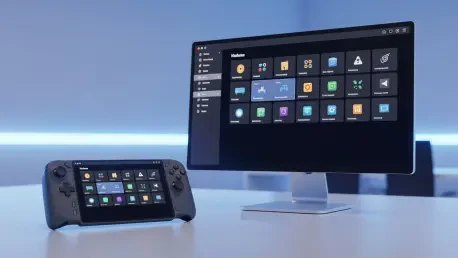
The rollout of Xbox Mode in select regions this April marks a departure from the traditional, mouse-heavy desktop experience to a streamlined, controller-first environment. We are focusing on removing the friction of a standard operating system by creating a space where the Xbox controller feels like a natural extension of the player’s intentions. The interface draws heavy inspiration from the ROG Xbox Ally models, prioritizing high-visibility tiles and a simplified sidebar that eliminates the need to navigate tiny, precision-based desktop icons. Success is being measured by the “frictionless entry” metric, where we track how quickly a user can move from a cold boot to active gameplay without ever needing to touch a keyboard. By completely sequestering the user from the standard desktop mode, we can ensure that every trigger pull and joystick flick corresponds to a meaningful, snap-to-grid action that feels both tactile and responsive.
Future hardware under the name “Project Helix” is expected to run both standard console games and PC titles. What are the primary technical challenges in creating a single device that bridges these two environments, and how will developers need to optimize their games for this hybrid hardware?
The primary hurdle lies in achieving architectural harmony so that native PC titles and optimized console software can coexist without the user experiencing a dip in performance or stability. When we start shipping prototypes to developers in 2027, they will be tasked with solving the complexities of variable hardware scaling within a fixed console footprint. I recall early discussions where the challenge wasn’t just about raw processing power, but how the operating system handles the background bloat typical of PCs that is usually absent on a console. To succeed, studios will need to leverage the unified interface to ensure their games can dynamically adjust settings based on the Helix’s unique hybrid environment. It is a delicate dance of balancing the “play anywhere” philosophy with the high-fidelity graphical expectations that living room gamers have come to demand.
With Xbox Mode rolling out in select regions this April, Microsoft is using Windows 11 as a testing ground before prototypes reach developers in 2027. How will the data gathered from these early PC users shape the final design of the next console, and what specific feedback are you looking for regarding the side-oriented navigation?
This April rollout serves as a massive, real-world laboratory that allows us to see how diverse gaming habits interact with a side-oriented navigation bar in the wild. We are specifically looking for “friction points” where a user might feel lost in a menu or where the controller sensitivity doesn’t quite match the UI’s movement. By tracking how millions of users navigate these early ROG-style menus, we can refine the ergonomics of the digital space years before the physical Project Helix hardware is finalized. For instance, if data shows users are consistently ignoring certain social features because of their placement in the sidebar, we can iterate on that layout dozens of times before the 2027 developer kits are even manufactured. This iterative process ensures that the final console feels like it was built specifically for the community’s ingrained muscle memory.
The move toward a more centralized interface suggests a departure from traditional console branding in favor of a “play anywhere” ecosystem. How does this strategy help capture gamers who are currently undecided between building a PC or buying a console, and what features will make this interface stand out against competitors like Steam’s Big Picture mode?
This strategy is a direct evolution from the “This is an Xbox” campaign, effectively making the hardware secondary to the ecosystem itself. By creating a UI that feels more natively integrated than Steam’s Big Picture mode, we offer a seamless transition for the undecided gamer who wants the power of a PC with the simplified “plug-and-play” nature of a console. Our interface is designed to be a fundamental part of the Windows operating system rather than a third-party overlay, which provides a level of stability and speed that other launchers simply cannot match. We are moving toward a reality where the “Xbox” is no longer just a box under your television, but a consistent software experience that follows you across every screen you own. It captures the market by removing the “choice paralysis” often associated with custom PC builds and offering a curated, high-performance alternative.
Global chip shortages are making it increasingly difficult to launch high-performance gaming hardware at an affordable price point. Given these economic hurdles, how can a premium hybrid console remain competitive in the market, and what cost-saving measures can be taken without sacrificing the power needed to run PC titles?
Navigating the current economic landscape is incredibly tough, especially when we are committed to delivering a machine that effectively bridges two different gaming worlds. While ongoing chip shortages make aggressive low pricing seem unlikely, we remain competitive by focusing on the massive value proposition of a “two-in-one” device that replaces the need for both a mid-range PC and a dedicated console. We have to make calculated trade-offs, perhaps focusing on more efficient software optimization and cloud-integrated features to offset the soaring costs of high-end silicon. The goal is to avoid the lackluster reception of previous hardware generations by ensuring the Project Helix hardware feels premium and future-proof, even if the entry price reflects the reality of the global supply chain. It is a constant balancing act of providing enough raw power to satisfy PC enthusiasts while maintaining the accessibility that is the hallmark of the Xbox brand.
What is your forecast for the future of unified gaming ecosystems?
I predict that by the end of this decade, the traditional distinction between a “console gamer” and a “PC gamer” will have nearly evaporated. As we move past the 2027 prototype phase, the industry will shift entirely toward platform-agnostic experiences where your library, your saves, and your social circles are tethered to your digital identity rather than a specific piece of plastic. Project Helix is the catalyst for this convergence, and we will soon see a market where high-performance hardware is defined by its ability to disappear into the background, leaving only the gameplay. The “Xbox Mode” we are seeing today is the first definitive step toward a future where premium gaming is as ubiquitous and accessible as streaming a movie, regardless of the device you choose to hold.