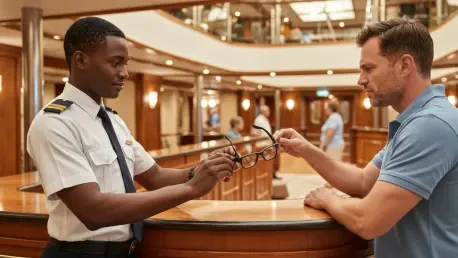

In a decisive move that underscores the growing tension between personal technology and public privacy, MSC Cruises has implemented a comprehensive ban on the use of smart glasses in all public areas aboard its fleet. This new policy, now formally integrated into the company’s list of prohibited items, specifically targets advanced augmented reality (AR) devices from manufacturers like Meta and Xreal, which possess the ability to discreetly record audio and video. The decision has sent ripples through both the travel and technology industries, sparking a critical conversation about the delicate balance between embracing innovation and protecting the fundamental right to privacy in shared, communal environments. This policy highlights a mounting apprehension over the potential for surreptitious surveillance, a fear that has been amplified by the rapid sophistication and increasing consumer adoption of inconspicuous smart wearables, forcing a societal reckoning with where the line should be drawn.
The Ban in Detail Rules and Rationale
The policy enacted by MSC Cruises is unequivocal in its language and enforcement, leaving no room for ambiguity. Passengers are now strictly forbidden from wearing or using smart glasses in any public space on the ship, a broad definition that encompasses everything from lounges and dining halls to pool decks and entertainment venues. The use of such devices is now confined solely to the privacy of a passenger’s own cabin. The cruise line has made it clear that non-compliance will not be taken lightly, with penalties beginning with the temporary confiscation of the device, which will be held by ship security for the remainder of the voyage. In instances of repeated or more egregious violations, the policy aligns with broader maritime security protocols, creating the potential for the passenger’s disembarkation from the vessel at the next available port of call. This stringent framework is designed to eliminate any gray areas and send a clear message that the protection of guest privacy is a non-negotiable priority for the cruise line, positioning it as a leader in addressing this modern ethical challenge.
The primary motivation for this sweeping ban is the inherently stealthy design of modern smart glasses. Unlike smartphones or conventional cameras, where the act of recording is typically conspicuous and obvious to those nearby, devices such as Meta’s Ray-Ban smart glasses and the latest models from Xreal are engineered to be virtually indistinguishable from standard eyewear. They empower users to capture high-definition photos, record video clips, and in some cases, initiate live streams with minimal or no discernible outward indication. This capability effectively makes it possible to film other individuals without their knowledge, let alone their consent, raising substantial red flags regarding data protection and personal security. The policy represents a proactive and decisive measure by MSC to preserve what it deems an essential atmosphere of relaxation and safety, ensuring that guests do not feel as though they are under the constant, covert surveillance of their fellow passengers. The concern is far from theoretical, as the emergence of apps that can reportedly identify strangers and access personal information when paired with smart glasses has transformed public spaces into potential arenas for significant privacy erosion.
An Industry Wide Response
MSC’s firm and comprehensive stance appears to be one of the strictest within the entire cruise industry, setting it notably apart from its main competitors and establishing a new benchmark for addressing wearable technology. While other major cruise lines, including Royal Caribbean and Carnival, acknowledge the existence and use of wearables, their current policies are significantly more targeted and far less prohibitive. These operators typically permit the use of smart glasses in general public areas but enforce specific restrictions that prohibit recording in traditionally sensitive locations, such as casinos, onboard spas, and changing rooms, where an expectation of privacy is already well-established. In a similar vein, Norwegian Cruise Line has opted for a strategy that focuses more on promoting passenger etiquette and responsible use regarding recording, rather than implementing an outright, fleet-wide ban on the devices themselves. This places MSC, along with its luxury sister brand, Explora Journeys, in a more conservative and risk-averse position, prioritizing collective guest comfort over individual technological freedom.
This more rigorous approach adopted by MSC and Explora Journeys may be influenced by a historically cautious corporate culture that places a high premium on proactive risk management, particularly when it comes to integrating emerging and potentially disruptive technologies into its controlled environments. The cruise industry at large has long maintained extensive lists of prohibited items—ranging from drones and certain powerful electronics to more mundane items like clothing irons—all justified in the name of ensuring passenger safety, security, and overall comfort. This new policy on smart glasses can be viewed as a modern extension of that long-standing principle, specifically tailored to confront the unique and nuanced threat posed by what some have termed “luxury surveillance.” This term encapsulates the complex ethical dilemmas that arise from the ability to discreetly record others without their explicit consent in public or semi-public settings. The decision could also be interpreted as a strategic reaction to recent high-profile privacy scandals and significant public backlash involving other wearable recording devices, such as camera glasses that drew intense criticism for enabling secret live-streaming due to a lack of visible recording indicators.
The Passenger Perspective
The reaction from the public and prospective passengers has been intensely polarized, reflecting the deeply contentious nature of this intersection between technology and personal boundaries. A substantial segment of travelers has enthusiastically applauded MSC’s decision, viewing it as a necessary and welcome safeguard against the invasive potential of modern surveillance technology. For these individuals, the policy reinforces the cruise ship’s role as a sanctuary—a place where they can fully relax and disengage from worldly pressures without the lingering fear of being unknowingly filmed or having their private moments captured and potentially shared without their permission. This sentiment underscores a belief that the right to privacy and peace of mind on vacation outweighs the convenience offered by such devices, and that the cruise line has a responsibility to protect that environment for the collective good of all its guests. They see it not as a restriction but as a protection of the very essence of a holiday experience.
Conversely, the ban has ignited considerable frustration and anger among tech-savvy travelers and the community of early adopters of wearable technology, who feel the policy is a disproportionate overreach that unfairly penalizes responsible users. These passengers argue that smart glasses are not inherently surveillance tools but are multifaceted extensions of their smartphones, offering a wide array of practical benefits that can significantly enhance a cruise vacation. Across social media platforms, users have lamented the loss of valuable features, such as hands-free navigation on sprawling, complex ships, real-time language translation during port excursions in foreign countries, and the potential for immersive augmented reality tours of historical sites. A particularly poignant criticism has highlighted the unintended negative consequences for accessibility; certain models of smart glasses provide crucial audio-enhancement features that are a lifeline for hearing-impaired travelers, a benefit that is now rendered inaccessible in all public areas on MSC ships. This backlash reveals a fundamental and widening chasm in perception regarding the primary function and societal role of these emerging personal devices.
Broader Implications and the Path Forward
MSC’s policy has served as a significant and tangible case study for the burgeoning wearable technology sector, vividly highlighting a critical disconnect between raw technological capability and broader social acceptance. While industry giants like Meta, Xreal, and Google continue to push the boundaries of augmented reality and artificial intelligence, this ban has underscored a growing societal pushback that could profoundly influence future product design and marketing strategies. Industry experts have suggested that to preempt such restrictive policies in the future, technology developers must pivot to prioritize user-centric and privacy-forward design principles. Potential solutions that have been floated include integrating non-discretionary, clearly visible recording indicators that cannot be disabled, developing automated “privacy modes” that use geofencing to disable camera and microphone functions in designated sensitive zones, or building explicit consent-based sharing protocols directly into the core operating systems of the devices. The policy has also created an immediate operational challenge for MSC, as crew members are now tasked with the difficult job of distinguishing between sophisticated smart glasses and conventional prescription eyewear, a task made more complex by increasingly sleek and integrated designs.
Ultimately, the controversy surrounding MSC’s ban on smart glasses encapsulated a larger, ongoing societal negotiation over the rules of digital etiquette in the 21st century. It revived long-dormant debates that first emerged with the introduction of Google Glass over a decade ago, which faced similar prohibitions in theaters, bars, and other private establishments concerned with privacy. The core ethical conflict has pitted the user’s desire for personal convenience and technological enhancement against the community’s collective expectation of privacy and security. As advanced, AI-powered features become more seamlessly integrated into these devices—with upcoming models promising even more subtle and powerful capabilities—these privacy dilemmas were expected only to intensify. This policy acted as a catalyst, prompting a wider conversation that could lead regulatory bodies and industry associations, such as the Cruise Lines International Association (CLIA), to develop standardized, harmonized guidelines for the use of wearables throughout the travel sector. MSC Cruises’ proactive, albeit controversial, stance firmly placed the issue on the industry’s agenda, charting a course that influenced how enclosed, community-oriented environments would regulate the powerful technologies of the future.