
The sophisticated landscape of health-tracking technology often hides a frustrating secret: even the most expensive smart rings are currently destined for the landfill once their tiny internal batteries inevitably lose the ability to hold a charge. While these high-end wearables provide unparalleled health metrics, they face a silent, built-in expiration date due to the chemical degradation of lithium-ion cells. After several hundred charge cycles, even the most premium tracker can transform from a multi-day companion into a device that barely survives a single night of sleep monitoring.
Oura’s latest patent filing suggests the company is moving toward a future where a dying battery no longer marks the end of a device. This shift reflects a growing realization that hardware longevity must match the data-driven value these rings provide. By reimagining the physical structure of the ring, the manufacturer aims to decouple the lifespan of the electronics from the finite cycles of the power source.
The Problem: Planned Obsolescence in the Ring Category
Smart rings occupy a unique market niche that demands high-cost precision and extreme miniaturization. Unlike smartphones or smartwatches, the compact, resin-sealed nature of these wearables makes traditional battery service nearly impossible for the average consumer. This design often forces users to discard the entire unit once the power cell reaches its limit, creating a significant barrier for those hesitant to spend hundreds of dollars on a product with a predictable two-year lifespan.
This “disposable” model has long drawn criticism from environmental advocates and tech enthusiasts alike. As the industry matures, the pressure to move away from non-repairable designs has intensified. Oura appears to be answering this call by exploring a structural evolution that could redefine how users interact with their hardware over long periods.
Modular Architecture: Separating Sensors From Power
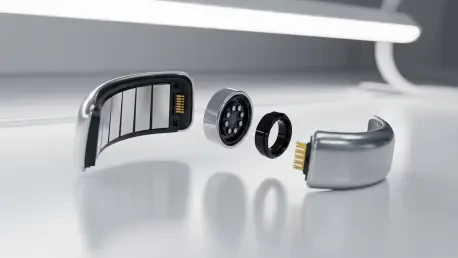
The patent filing outlines a sophisticated structural shift, moving away from a single solid unit toward a multi-layered modular design. The inner ring assembly remains the high-value brain of the device, containing the sensor array and sensitive electronics shielded from the user. This core component is intended to remain functional for years, independent of the energy storage method used.
A curved, removable outer portion serves as the battery housing, wrapping around the main body to provide power while acting as a protective casing. Specialized electrical contacts and mechanical retention elements—such as sockets and coupling structures—ensure that the modular battery remains securely attached. These components must maintain conductivity even during high-intensity movement or varied environmental conditions.
Strategic Advantages of User-Replaceable Hardware
Engineers and industry analysts view modularity as a primary solution for the sustainability crisis in compact electronics. By allowing users to swap out a depleted power module, Oura can extend the functional life of its rings well beyond the typical 24-month battery decay window. This approach significantly reduces electronic waste and lowers the long-term cost of ownership, positioning the brand as a leader in sustainable premium tech.
Furthermore, this strategy streamlined maintenance processes by simplifying logistics for both the brand and the end-user. Instead of shipping entire replacement rings for battery-related warranty claims, the company theoretically provided affordable battery kits. Such a move transformed the product from a temporary accessory into a long-term health investment.
Implementing a Modular Wearable Strategy
For a user-replaceable battery system to succeed, design teams had to navigate several complex hurdles. Maintaining water resistance was paramount, requiring electrical contacts and coupling points to remain sealed against moisture and sweat without needing professional tools for access. Achieving this balance required innovative gasket designs and precision engineering to ensure the ring’s integrity remained uncompromised.
Optimizing the form factor presented another challenge, as engineers balanced the added bulk of mechanical fasteners with a sleek, minimalist aesthetic. The focus shifted toward establishing a component ecosystem where replacement modules were readily available. This development marked a turning point in wearable design, ensuring that health-tracking hardware evolved toward a more durable and repairable future.