
The transition from static glass slabs to dynamic, multi-folding surfaces has fundamentally altered how professionals engage with digital content while on the move, marking a significant departure from traditional mobile constraints. With the official release of the Samsung Galaxy Z TriFold, the technology industry has moved beyond incremental updates to embrace a total transformation of the smartphone form factor. This device functions as a bold showcase for advanced mechanical engineering, specifically designed for power users who require the portability of a standard handset alongside the expansive canvas of a premium tablet. By utilizing a first-of-its-kind dual-folding design, the hardware provides a seamless bridge between casual communication and intensive professional workflows. This launch serves as a critical milestone in the pursuit of a singular device that can replace both a phone and a laptop, offering a level of versatility that was previously restricted to experimental prototypes or bulky specialized equipment. As mobile ecosystems become increasingly complex, the demand for hardware that can adapt to different environments has never been higher, and this specific model attempts to satisfy that need through sheer structural innovation and raw computing power.
Architectural Ingenuity: The Mechanics of the Dual-Hinge System
At the heart of this technological leap is a complex dual-hinge system that allows the primary screen to be divided into three distinct segments, each contributing to a varied user experience. When the device is completely folded, it operates as a premium smartphone featuring a 6.5-inch outer cover screen that does not feel like a compromise. This external display is equipped with a smooth 120 Hz refresh rate and a high-resolution panel, ensuring that everyday interactions such as quick messaging, navigation, and notification management remain as fluid as they are on a traditional flagship. The engineering required to align these panels without creating excessive bulk is a testament to the progress made in hinge durability and miniaturization. The tactile feedback of the folding mechanism has been refined to provide a sturdy yet smooth transition, allowing the user to feel the precision of the interlocking gears as the device transforms from a handheld phone into a broad digital workspace.
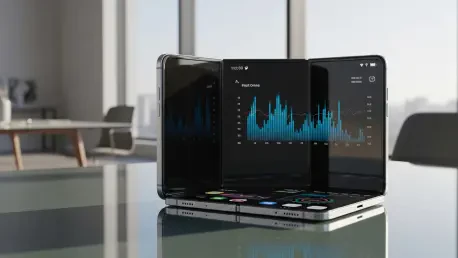
The true potential of the hardware is realized when the panels are fully extended to reveal a massive 10-inch internal display, effectively turning the smartphone into a high-performance tablet. This expansive screen maintains a high refresh rate and color accuracy, providing an immersive viewing experience for everything from detailed spreadsheets to high-definition video editing. A key design choice involves the inward-folding orientation of the main display, which serves as a vital protective measure for the delicate screen surface. By folding the flexible glass against itself, the device shields the most expensive component from external threats like keys, coins, or accidental drops when the unit is stored in a pocket or briefcase. This structural strategy ensures that the large-format display remains pristine over years of use, addressing one of the primary concerns that long-term users have historically had regarding the longevity of flexible screen materials.
Power Optimization: Managing Battery Efficiency and Device Thinness
Developing a device that folds in two separate locations introduced significant challenges regarding internal component placement, specifically in terms of battery density and weight distribution. To maintain a balanced feel in the hand, the power system was re-engineered into a partitioned setup that distributes a 5,600 mAh capacity across three individual battery cells. One cell is positioned within each of the three panels, a configuration that allows the internal hardware to manage power delivery and thermal regulation more effectively across the entire surface area. This distributed architecture is what enables the device to remain incredibly thin, measuring only 3.9 mm when fully unfolded. Such a slim profile is necessary to ensure the device does not become uncomfortably heavy or thick during extended use in tablet mode, where the ergonomics of holding a 10-inch screen become a primary factor for professional productivity and user comfort.
While the thinness in tablet mode is a marvel of modern design, the three overlapping panels naturally result in a thicker profile when the device is closed, reaching a total thickness of 12.9 mm. While this is certainly more substantial than a standard rigid smartphone, it remains within the limits of what fits comfortably in a pocket or a small bag. To protect the sophisticated internal components from user error, the hinges are embedded with advanced sensors that can detect if the device is being forced or folded in an incorrect direction. If the sensors detect an improper movement, they immediately trigger haptic vibrations and visual alerts on the cover screen to warn the user. This fail-safe mechanism acts as a critical line of defense, preventing mechanical stress from damaging the internal display or the intricate gear systems that facilitate the folding motion, thereby preserving the integrity of the hardware throughout its operational lifespan.
Performance Standards: High-End Hardware for Professional Multitasking
To ensure that the software experience matches the ambitious physical design, the internal components are centered around the high-performance Snapdragon 8 Elite processor. Combined with 16 GB of dedicated RAM and storage configurations reaching up to 1 TB, the device is built to handle the most demanding computational tasks without any noticeable latency or performance throttling. The software layer has been specifically optimized to take full advantage of the 10-inch canvas, allowing for a multitasking environment where up to five applications can run simultaneously in a split-screen or floating window arrangement. This capability moves the device beyond the realm of a simple media consumption tool and positions it as a legitimate alternative to a laptop for traveling executives and creative professionals. The ability to cross-reference data from a browser while editing a document and participating in a live conference call represents a level of mobile efficiency that was previously unattainable.
The photographic capabilities of the device have also been prioritized to ensure that professional users do not need to carry a separate camera for high-quality content creation. The primary camera array features a 200 MP main sensor capable of capturing extreme detail, supported by ultra-wide and telephoto lenses that provide versatility in various shooting environments. Furthermore, the device utilizes a dual-camera approach for front-facing duties, with one lens located on the outer cover for quick selfies and a second, more advanced camera integrated into the large internal display. This internal camera is specifically calibrated for professional video conferencing, offering a wider field of view and enhanced low-light performance. When the device is propped up in a partially folded state, it functions similarly to a laptop with an integrated webcam, providing a stable and professional angle for virtual meetings without the need for additional stands or accessories.
Strategic Implementation: Durability Challenges and Market Positioning
Despite the inclusion of high-strength materials such as titanium frames and reinforced aluminum hinges, the structural complexity of a tri-folding device presents unique challenges in terms of environmental resistance. The current model carries an IP48 rating, which indicates a high level of water resistance but also highlights a lingering vulnerability to fine particles like dust and sand. Because the dual-hinge mechanism requires hundreds of moving parts to function correctly, the entry of small debris could potentially compromise the smooth operation of the folding panels over time. To mitigate these concerns and build consumer trust, specialized repair programs have been introduced that offer expedited screen replacements and comprehensive hinge maintenance. These service initiatives are designed to reassure early adopters that their investment is protected, acknowledging the reality that pioneering hardware often requires a more proactive approach to maintenance than traditional mobile devices.
The market positioning of the Galaxy Z TriFold reflects its status as a luxury productivity tool, carrying a premium price of $2,899 at launch. This valuation is a direct result of the immense research and development costs associated with perfecting the multi-link hinge and the specialized manufacturing processes required for the triple-panel assembly. Availability was initially concentrated in major markets such as the United States and South Korea, targeting a demographic that values cutting-edge innovation over mass-market affordability. Looking back at the rollout, the industry recognized that this device successfully proved the viability of multi-fold designs as a permanent fixture in the mobile landscape. For developers, the next logical step involved optimizing application interfaces to handle dynamic aspect ratios that change instantly. Organizations began integrating these devices into their executive fleets to reduce the need for multiple pieces of hardware, effectively streamlining the professional toolkit into a single, pocketable workstation that redefined the boundaries of mobile computing.