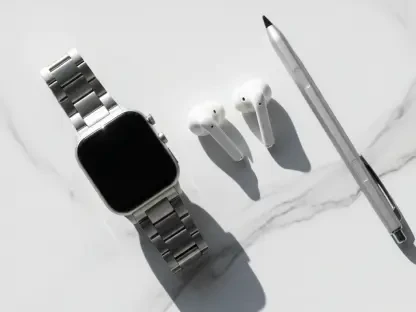

The conversation surrounding personal health technology is undergoing a fundamental transformation, shifting its focus from the data-rich but often intrusive smartwatch to the subtle yet powerful intelligence of the smart ring. This evolution marks a significant change in consumer priorities, indicating a move away from multi-purpose interactive devices toward specialized, passive data collectors designed to deliver profound physiological insights with minimal disruption. For a growing number of individuals who value unobtrusive, continuous tracking of sleep, recovery, and stress, the smart ring has firmly established itself as the essential tool for optimizing long-term wellness and understanding the body’s intricate signals. It represents not just a new gadget, but a new philosophy of personal health management, where actionable data is gathered seamlessly in the background of daily life, empowering users to make informed decisions without being tethered to a screen.
The Advantage of Anatomy and Engineering
The core technological superiority of the smart ring lies not in a single breakthrough sensor but in its elegant and highly effective form factor. A smart ring maintains a snug, stable fit on the finger, ensuring constant and reliable contact with the dense network of arteries just beneath the skin. This unwavering connection provides an ideal location for optical sensors to capture high-fidelity data, a feat that wrist-worn devices often struggle to achieve due to frequent movement, shifting on the arm, and pressure variations during sleep. This inherent stability eliminates the signal interference and data gaps that can compromise the accuracy of smartwatches, resulting in more consistent and research-grade health metrics. The design itself becomes the technology’s greatest asset, creating a perfect environment for sensitive instruments to perform their function without interruption, transforming a simple piece of jewelry into a sophisticated diagnostic tool that works silently and continuously.
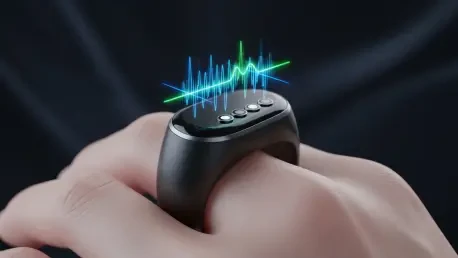
Within this compact and lightweight chassis, often weighing less than four grams, is a powerful suite of advanced sensors working in concert to paint a detailed picture of the user’s physiological state. At the heart of this system are Photoplethysmography (PPG) sensors, which utilize both red and green LED lights to measure blood flow with remarkable precision. This allows for accurate tracking of critical metrics such as heart rate, heart rate variability, and blood oxygen saturation. Complementing the PPG sensors are three-axis accelerometers that meticulously monitor physical movement, enabling automatic activity detection and step counting. Furthermore, highly sensitive temperature sensors continuously track minute fluctuations in skin temperature, offering vital clues about impending illness, post-workout recovery, and even hormonal cycles. An advanced onboard microprocessor then analyzes this stream of raw data, converting it into actionable health insights that are transmitted via Bluetooth Low Energy to a companion smartphone application for review and analysis.
Mastering the Pillars of Foundational Wellness
Sleep tracking is the domain where the smart ring has truly established itself as the gold standard in the consumer wearable market, delivering a level of detail that few other devices can match. Its superior sensor stability on the finger allows for unparalleled accuracy in sleep stage analysis, capably distinguishing between wakefulness, light sleep, restorative deep sleep, and REM sleep. This granular insight empowers users to move beyond merely tracking the duration of their sleep to actively improving their “sleep architecture”—the cyclical pattern of sleep stages that is essential for both physical and mental restoration. By identifying how lifestyle factors like late-night meals, stress, or alcohol consumption impact specific sleep stages, users can make targeted behavioral changes to enhance the overall quality and efficiency of their rest, leading to tangible improvements in daytime energy, cognitive function, and mood.
Alongside sleep, Heart Rate Variability (HRV) analysis stands as another cornerstone of the smart ring’s capabilities, offering a direct and non-invasive window into the state of the autonomic nervous system. By meticulously measuring the tiny, millisecond-level variations in the intervals between heartbeats, the ring provides a powerful indicator of the body’s resilience, recovery status, and cumulative stress levels. A consistently high HRV signifies a well-rested and adaptable system, while a declining HRV can be an early warning sign of overtraining, fatigue, or impending illness. A major technological leap for modern smart rings is the ability to capture reliable HRV data continuously throughout the day, not just during periods of sleep. This 24/7 monitoring provides a dynamic view of how daily activities and stressors impact the nervous system, allowing individuals, particularly athletes and high-performers, to make informed, data-driven decisions about training intensity, work demands, and recovery needs based on their body’s real-time readiness to perform.
A New Philosophy for Health and Fitness Monitoring
When it comes to tracking physical fitness, smart rings have deliberately adopted a different philosophy from their smartwatch counterparts. Their primary focus is not on providing real-time coaching or performance metrics during a workout, but on passive, automatic activity detection and comprehensive post-session analysis. Leading smart ring models can now identify and log dozens of different exercise types—from running and cycling to weightlifting and yoga—without requiring any manual input from the user, meticulously tracking calorie expenditure, duration, and intensity in the background. Their true strength lies in monitoring long-term trends in daily activity and cardiovascular fitness, primarily through the tracking of resting heart rate (RHR). Over weeks and months, a decreasing RHR serves as a key indicator of improving heart health. This positions the smart ring as an ideal recovery and daily wellness tool, not as an active training companion for athletes who require immediate feedback on pace, heart rate zones, or GPS-based distance.
Beyond these foundational metrics, the modern smart ring has evolved into a proactive health guardian capable of providing early warnings about potential health issues. The continuous monitoring of body temperature, for instance, has proven effective in predicting the onset of illness, with some devices capable of detecting the subtle thermal signs of an infection or fever up to three days before the user feels any symptoms. Integrated blood oxygen (SpO2) monitoring offers valuable insights into respiratory function, especially during sleep, which can be an indicator of conditions like sleep apnea. Furthermore, advanced algorithms are now leveraging this rich dataset to provide sophisticated features such as women’s health cycle prediction and even estimations of a user’s cardiovascular age. This powerful suite of passive monitoring tools transforms the ring from a simple activity tracker into a sophisticated early-warning system, enabling users to take a more preventative and informed approach to their overall health and well-being.
A Maturing Market and an Informed Consumer
The consumer wearable market has demonstrated a clear and decisive shift, moving toward device specialization as users become more educated about their specific health priorities. This trend has fueled the explosive expansion of the smart ring sector, which has grown from a niche category into a multi-billion dollar industry projected to continue its rapid ascent. This maturation was a direct response to consumer demand for a device that prioritizes foundational health metrics—sleep quality, stress resilience, and recovery status—in a discreet, comfortable, and long-lasting form factor. The decision-making framework for consumers is now clearer than ever. The smart ring has become the optimal choice for individuals focused on long-term wellness and passive data collection, while the smartwatch remains the superior option for those who prioritize real-time fitness coaching and extensive smartphone connectivity. This divergence has created a robust ecosystem where devices are chosen based on specific needs rather than a one-size-fits-all approach, and the smart ring has masterfully filled the void for deep, actionable health insights without the constant notifications and distractions of a wrist-worn screen.