
The era of the Internet of Things as a mere network of passive data collectors is decisively over, giving way to a new paradigm where intelligence is embedded directly into the fabric of the physical world. This profound evolution is not a distant forecast but a present reality, driven by a powerful convergence of technological maturation, expanding connectivity, and an increasingly stringent global regulatory environment. The simple concept of connecting devices to the internet has been replaced by a far more ambitious goal: creating a distributed, intelligent ecosystem capable of autonomous, real-time action. For organizations navigating this landscape, the old rulebook is obsolete. Success is no longer measured by the number of connected endpoints but by the ability to harness localized processing, leverage robust cellular backbones, and build security into the very DNA of every product. These new rules are not just shaping the future of individual devices; they are fundamentally redefining industries and setting the stage for the next wave of digital transformation.
The Architectural Shift to Decentralized Intelligence
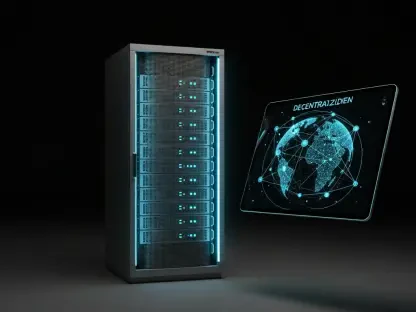
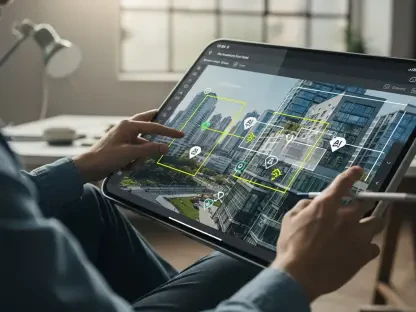
The most significant transformation underway is the architectural migration from a centralized, cloud-dependent model to a distributed framework where data processing and decision-making occur at the “Edge.” This shift is a direct response to the critical need for real-time responsiveness and operational autonomy in modern applications. Instead of streaming telemetry data to distant cloud servers for later analysis, the new generation of IoT systems is defined by its capacity to act on information instantaneously, close to where it is generated. This is already being realized in industrial factories, where intelligent sensors can predict equipment failures before they happen, and in urban traffic systems that dynamically adapt to changing conditions without human intervention. Similarly, sophisticated healthcare devices now monitor patients with clinical precision, making immediate adjustments or triggering alerts autonomously. This evolution transforms IoT devices from passive data collectors into active, intelligent agents that drive efficiency and safety.
This fundamental move toward the Edge is powered by a symbiotic relationship between advanced computing, sophisticated algorithms, and next-generation connectivity. Edge computing provides the localized processing power necessary for devices to analyze data on-site, eliminating the latency inherent in cloud communication. This capability is amplified by Artificial Intelligence (AI) algorithms, which are increasingly embedded within the devices themselves to derive insights and trigger actions without external commands. Completing this triad is the ever-improving connectivity that ensures a reliable data flow when communication with other systems or the cloud is still required. This synergy is what allows for the creation of truly smart environments. The focus has moved beyond simple data collection to enabling real-time, actionable intelligence, making the physical world more responsive, adaptive, and efficient. It represents a foundational change in how digital systems interact with and influence our physical surroundings.
Cellular Connectivity as the Engine of Growth
The primary enabler for these mission-critical and scalable IoT deployments is the global cellular network, which has become the de facto backbone for the industry’s momentum. The growth in cellular M2M connections serves as a key indicator of the market’s rapid expansion, a surge fueled by decreasing costs for both hardware components and connectivity plans. This trend is further accelerated by the strategic rollout of cellular technologies tailored specifically for IoT, including Narrowband-IoT (NB-IoT), LTE-M, and various specifications of 5G. The numbers quantify this explosion, with global cellular IoT connections growing from 710 million in 2017 to an estimated 3.8 billion by 2024. While industry forecasts place this figure around 8 billion by 2031, the cellular segment’s rapid expansion positions it to become the dominant choice for applications demanding high quality of service, inherent mobility, and the reliability of standardized solutions. The IoT world is increasingly “going mobile,” mirroring the trajectory of the broader telecommunications industry.
However, the expansion of IoT is not uniform across the globe, revealing significant regional differences that will shape corporate strategy for years to come. The Asia Pacific (APAC) region stands as the undisputed leader, accounting for approximately 3 billion cellular M2M connections. Within APAC, China represents a market of unparalleled scale, with its exponential growth curve dwarfing all other nations and granting it substantial influence over the development of global standards and supply chains. In contrast, established markets like Germany and the United States exhibit a more measured, steady expansion. Their growth is driven by different vertical priorities, such as advanced applications in the automotive sector, logistics and supply chain management, and the development of smart energy grids. A snapshot of this disparity for the end of 2024 illustrates the landscape: Europe with nearly 362 million connections, the Americas with 316 million, and the Middle East & Africa with almost 85 million, underscoring the need for regionally tailored strategies.
Navigating a Complex Technological and Regulatory Landscape
This surge in connections is accompanied by a profound technological migration within the cellular ecosystem, creating a complex and heterogeneous environment. In 2017, 4G was the dominant technology, with 2G and 3G still holding significant market share. By 2024, the landscape had been dramatically reconfigured, with 5G connections emerging as the largest segment, a trend largely driven by hyperscale deployments in China. Despite the rise of 5G, 4G remains essential for its ubiquity and proven reliability across diverse geographies. Furthermore, legacy technologies, particularly 2G, persist in specific niches like long-lived, low-power endpoints or in highly cost-sensitive markets. This reality means that enterprises must design their solutions for a “Multi-Radio Access Technology” (Multi-RAT) world, requiring a sophisticated strategy that balances the widespread availability of 4G with the unique advantages of 5G, such as deterministic low latency and network slicing for guaranteed performance.
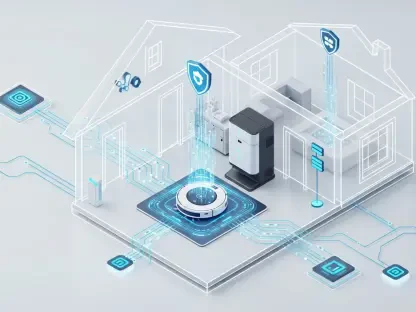
Regulation is rapidly evolving from a peripheral concern to a central pillar shaping the IoT market, forcing a global push toward making security a non-negotiable, built-in component of product design. This “security by design” principle is being enforced through concrete legislation. In the United States, the FCC’s Cyber Trust Mark and upcoming federal procurement mandates will effectively make security labeling a prerequisite for market access. Similarly, Europe’s Cyber Resilience Act, alongside global ETSI-based frameworks, is compelling manufacturers to implement auditable product lifecycles and transparent vulnerability disclosure processes. Alongside these compliance pressures, the GSMA’s eSIM standard (SGP.32) has become a critical capability for enterprises. This technology allows them to orchestrate and manage connectivity for their IoT fleets across different carriers and international borders, an essential feature for achieving the massive scale required by global deployments numbering in the tens of millions.
A New Paradigm for Industrial Transformation
The industrial landscape was reshaped by a trio of interconnected principles: intelligence, integration, and responsibility. The organizations that thrived were those that fully embraced the synergy between Edge and Cloud computing, moving beyond simple data collection to enable real-time, autonomous action. They successfully leveraged new integration standards like eSIM to orchestrate massive, global fleets with unprecedented flexibility, overcoming the logistical hurdles that had previously constrained scale. Most importantly, these leaders treated security not as a feature to be added but as a fundamental design discipline mandated by a tightening regulatory environment. The transformation of industries by the Internet of Things was no longer a future possibility but a present reality. Ultimately, the pivotal factor for businesses was not whether to engage with this new paradigm, but how quickly and effectively they adapted to its new rules to lead the next wave of digital innovation.