
Today we’re speaking with Nia Christair, a leading voice in mobile technology and smart home integration. With a rich background spanning app development, hardware design, and enterprise mobile solutions, Nia brings a unique perspective to the challenges and triumphs of creating a connected home. We’ll explore the practical steps for upgrading a home’s intelligence, moving beyond basic gadgets to create seamless, automated systems. Our discussion will touch on perfecting smart lighting, the nuances of automated window coverings, simplifying a fragmented device ecosystem, and enhancing home security in a truly modern way.
Many users experience issues like inconsistent brightness or poor connectivity with their first smart bulbs. What specific problems have you faced, and what steps would you take to create a seamless, fully automated lighting system throughout an entire home? Please share your ideal process.
It’s an incredibly common frustration. You get excited about the technology, but the reality is a light that randomly turns on at 15% brightness, which is barely a glow. You end up having to tell Alexa twice—once to turn it on, and a second time to make it bright enough to actually see. I’ve seen this happen with Wi-Fi-based bulbs, where one lamp in a pair struggles to connect while the other works fine. To build a truly seamless system, the first step is committing to a single, reliable ecosystem. From there, it’s about creating automated scenes and schedules that match your life, not just controlling individual bulbs. The goal is to walk into any room and have the lighting adapt to you, whether through voice or pre-set routines, so you never have to think about it again.
Automating window coverings can be tricky, as some curtain drivers struggle with heavy drapes or unreliable sensors. Why are integrated smart blinds often a better solution, and what is your ideal setup for automating them with daily sunrise and sunset schedules?
This is a classic case of an add-on solution not quite hitting the mark. I’ve dealt with a smart curtain driver that couldn’t handle the thickness of the curtain rod and was paired with a motion sensor that was supposed to detect sunrise but almost never worked. It’s a frustrating experience that makes you want to give up on the whole concept. Integrated smart blinds, like some of the newer Matter-compatible models, are a far more elegant solution because the motor is designed specifically for the weight and mechanics of the shade itself. My ideal setup is one that runs entirely on a schedule. The blinds should rise silently with the sunrise and close at sunset, all without any manual input. This offers the convenience I originally wanted from the curtain driver but with the reliability of a purpose-built system.
Smart homes can end up with a mix of devices from various brands, causing ecosystem conflicts. How does this fragmentation impact daily use, and why might replacing smart plugs with integrated smart outlets provide a more convenient and streamlined experience? Describe the benefits of this approach.
The fragmentation issue is something many tech enthusiasts face. You end up with a drawer full of smart plugs from different manufacturers, and you have to remember which one works best with Apple HomeKit, which is best for Samsung SmartThings, and which ones play nicely with your preferred assistant, like Amazon Alexa. It creates a messy, disjointed experience. The switch to integrated smart outlets is about creating uniformity and convenience. Instead of constantly plugging and unplugging devices from a bulky smart plug, the intelligence is built right into the wall. This allows you to control each socket individually or group them through a single app or voice assistant. It’s a much cleaner look and a far more streamlined way to manage your electronics without the clutter and confusion of multiple brands.
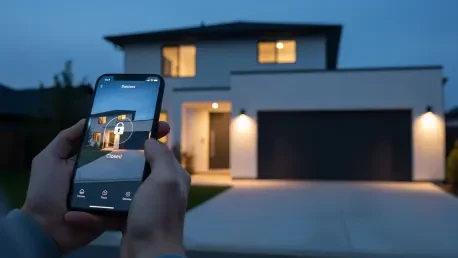
Forgetting to close a garage door is a common security concern. How can a smart garage door opener address this anxiety, and what specific features, like remote status checks or temporary visitor codes, would you prioritize for enhancing both security and daily convenience?
That sinking feeling you get when you’re miles from home and can’t remember if you closed the garage door is a powerful source of anxiety. A smart garage door opener directly solves this. The most critical feature I would prioritize is the ability to remotely check the door’s status from a phone and, of course, close it if it was left open. This alone is a massive security upgrade. Beyond that, adding a smart keypad is essential for convenience. Instead of giving out one code to everyone, you can create temporary codes for visitors, delivery people, or contractors. This way, you maintain control over who has access to your home without compromising your primary security code. It turns the garage from a potential vulnerability into a secure, manageable entry point.
What is your forecast for the smart home industry?
I believe the industry is moving past the initial “gadget” phase and into an era of true, seamless integration. For years, the focus was on individual devices—a smart bulb here, a smart plug there. The future is about creating a cohesive, background intelligence where the home anticipates your needs. We’ll see fewer disparate apps and more unified platforms, with Matter being a huge catalyst for this change. The most successful smart homes won’t be the ones with the most devices, but the ones where the technology works together so flawlessly that you almost forget it’s there. It will be less about conscious control and more about ambient, predictive automation that genuinely makes life easier.