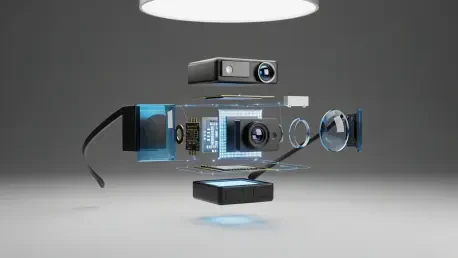

The rapid evolution of wearable technology has ushered in an era where digital information is seamlessly woven into our direct line of sight, with AI-powered smart glasses emerging as the vanguard of this transformation. Once relegated to the realm of science fiction, these sophisticated devices are now at the forefront of a burgeoning market, signaling a fundamental shift in human-computer interaction. The global market for AI smart glasses, which stood at a valuation of USD 2.8 billion in 2024, is on a trajectory of explosive growth, with projections indicating it will reach an impressive USD 7.1 billion by 2034. This expansion, representing a compound annual growth rate of 10.9%, underscores a powerful trend toward more integrated and intuitive technology. At their heart, these devices are wearable computers equipped with an array of sensors, high-resolution cameras, microphones, and advanced connectivity modules, all orchestrated by artificial intelligence. They function as a real-time digital assistant, capable of identifying objects, translating languages on the fly, providing turn-by-turn navigation, and overlaying contextual data through augmented reality, offering a hands-free window to the digital world.
The Engines of Innovation and Demand
The primary force propelling the AI smart glasses market forward is the relentless pace of innovation in both artificial intelligence and augmented reality. These technological advancements are fundamentally enhancing the capabilities of smart glasses, making them more powerful, responsive, and intuitive for the end-user. As AI algorithms become more adept at understanding context and processing visual data, and as AR displays achieve higher fidelity and seamless integration, the overall user experience improves dramatically. This continuous cycle of improvement unlocks novel applications and makes the technology increasingly compelling for a broader audience, moving it beyond niche use cases and toward mainstream adoption. The convergence of more efficient on-device processing and powerful cloud-based AI is creating a new class of wearables that can deliver sophisticated assistance and immersive experiences without being tethered to another device, representing a significant leap in personal computing.
Complementing this technological progress is the critical expansion of enabling infrastructure and a surge in investment across the broader wearable technology sector. The global rollout of 5G networks is a pivotal enabler, providing the high-speed, low-latency connectivity essential for real-time data processing and the rendering of complex, interactive AR overlays. This robust connectivity ensures that smart glasses can offload intensive computations to the cloud, preserving battery life and allowing for sleeker, more lightweight designs. Concurrently, substantial capital investment in the wearables industry is fueling the research and development necessary to create more sophisticated components, from micro-displays to energy-efficient processors. This financial backing not only accelerates the innovation cycle but also helps drive down production costs over time, gradually making these advanced devices more accessible. Furthermore, a growing demand for hands-free solutions in professional settings like manufacturing, logistics, and healthcare is creating a strong commercial pull, as companies seek to enhance worker safety, efficiency, and collaboration.
Navigating the Hurdles on the Road to Mainstream Adoption
Despite the strong tailwinds, the path to widespread adoption of AI smart glasses is not without significant obstacles, the most formidable of which is the high cost associated with their production. The intricate process of integrating a multitude of advanced components—including miniaturized sensors, powerful AI processors, high-resolution cameras, and 5G modems—into a compact, lightweight, and aesthetically pleasing frame is both complex and expensive. This elevated price point currently positions the technology as a premium product, primarily limiting its market to enterprise clients and early tech adopters who are willing to invest in cutting-edge solutions. The high manufacturing costs create a substantial barrier to entry for new companies and slow the pace of mass-market penetration, making it challenging for smart glasses to compete with more established consumer electronics categories on price.
Beyond the economic challenges, developers grapple with considerable technical and design hurdles that impact both functionality and user experience. Achieving the delicate equilibrium between high-end performance, a comfortable and ergonomic design, and sufficient battery life remains a persistent engineering puzzle. Users expect a device that is both powerful enough to handle demanding applications and lightweight enough to be worn for extended periods without discomfort, all while lasting a full day on a single charge. The cost of the specialized components required to meet these demands further inflates the final retail price, compounding the affordability issue. Moreover, significant concerns surrounding data privacy and social acceptance loom large. The capacity for these devices to constantly capture visual and audio data raises valid questions about user privacy, data security, and the potential for misuse. Building consumer trust by implementing transparent data policies and robust security measures will be paramount to overcoming social resistance and ensuring the technology is embraced rather than feared.
A Closer Look at Market Segments and Regional Dominance
An in-depth analysis of the market reveals that voice interaction has emerged as the dominant and most crucial feature driving the adoption of AI smart glasses. In 2024, this segment captured the largest share of the market, a trend attributed to the incredibly intuitive and natural user experience afforded by voice commands. This functionality provides a genuinely hands-free method of operation, which not only enhances user comfort but is also a critical safety feature in environments where visual focus and manual dexterity are paramount, such as in industrial, logistics, and healthcare sectors. The widespread preference for voice interaction is further bolstered by significant advancements in natural language processing (NLP), which have made voice recognition systems remarkably accurate and responsive. As AI assistants become more conversational and capable of understanding complex queries, their integration into smart glasses facilitates seamless communication and control over other connected devices, broadening their appeal to both enterprise and consumer users alike.
In terms of specific applications, the consumer electronics segment stood as the market leader in 2024 and is projected to continue growing at the highest rate in the coming years. This dominance is fueled by strong and growing consumer demand for versatile wearable technology that integrates seamlessly into the fabric of daily life, combining fitness tracking, immersive entertainment, and hands-free communication into a single, unobtrusive device. Consumers are particularly drawn to features like real-time language translation, which breaks down communication barriers, and the ability to consume media or control smart home devices without ever reaching for a smartphone. The proliferation of digitally active lifestyles has amplified the demand for multi-functional wearables that can keep pace. In this context, AI smart glasses are increasingly perceived not just as a gadget but as a natural extension of the smartphone, offering a more engaging, immediate, and less intrusive method for accessing digital information and services on the go.
The Race to Define the Future
Geographically, North America established itself as the dominant region in the AI smart glasses market in 2024, a leadership position underpinned by a confluence of favorable factors. High consumer demand for cutting-edge wearable technology, coupled with significant local technological advancements and a robust ecosystem of leading technology companies and AI-focused startups, has created fertile ground for growth. Major industry players such as Microsoft, Meta, and Google are headquartered in this region and are actively channeling immense resources into the development of smart glass technology, which in turn drives innovation in both hardware features and user experience software. Furthermore, the strong integration and early adoption of AI smart glasses in key sectors, including enterprise solutions, healthcare, and education, have accelerated market expansion. The region’s large, tech-savvy population is quick to embrace new devices that promise to enhance productivity and entertainment, creating a substantial and growing consumer base for these next-generation wearables.
The competitive landscape of the AI smart glasses market is characterized by its dynamic and fiercely contested nature, featuring established technology titans vying for dominance against innovative and agile specialized firms. Key players shaping the market include Meta, OrCam, Xreal, Lucyd, Goertek, Vuzix, RealWear, Microsoft, Epson, Rokid, Lenovo, and Magic Leap. These companies have been actively engaged in a flurry of strategic initiatives, from high-profile partnerships to major product launches, all aimed at strengthening their market position and capturing consumer attention. Recent strategic developments have highlighted the industry’s significant forward momentum. In March 2024, Vuzix launched its next-generation Ultralite OEM platform, targeting enterprise applications with enhanced waveguide optics. More recently, Meta announced plans to launch its Ray-Ban smart glasses in new markets, while Google signaled a renewed push with a prototype of its Android XR glasses. Microsoft also revealed its strategic ambitions through patent applications for CoPilot AR smart glasses, detailing a spatial computing device focused on AI-assisted environmental interaction. These moves underscore the intense race to innovate and define the future of this transformative technology.