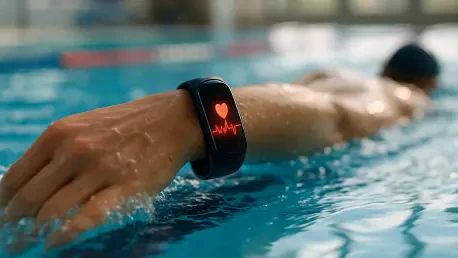

The wearable technology market has reached a fascinating crossroads, with the increasing buzz around smart rings challenging the long-standing dominance of traditional wrist-worn devices. Despite this emerging competition, the classic fitness tracker continues to demonstrate remarkable resilience, preserving its relevance by offering users an accessible, affordable, and straightforward method for monitoring a comprehensive suite of health and wellness metrics. This enduring appeal has become particularly significant in a landscape where major players like Fitbit have a slower release cadence, with their next major innovations anticipated later this year. This gap has created a powerful opportunity for other innovative manufacturers to capture consumer attention. Companies such as Xiaomi, Huawei, and Amazfit have decisively stepped into this space, not merely filling a void but actively pushing the boundaries of what consumers can expect from entry-level and mid-range wearables, setting new standards for both functionality and value.
The Reigning Champion in Budget Fitness Tracking
In the highly competitive analysis of the 2025-26 wearable market, the Xiaomi Smart Band 10 emerged as the year’s best new device, successfully defending the brand’s reputation as the undisputed leader in the budget fitness tracker segment. This accolade was not awarded lightly; the device is recognized as a remarkably complete package that fundamentally challenges the compromises often associated with its low price point. It delivers a user experience that feels decidedly premium, with very few discernible flaws to detract from its overall excellence. The design and construction represent a significant leap forward, featuring a more solid and substantial build that dispels any notion of flimsiness. This commitment to quality hardware is a clear indicator that the line between “budget” and “premium” is becoming increasingly blurred, with this device setting a new benchmark for what can be achieved without a hefty financial investment, making advanced health monitoring more accessible than ever before.
The technical advancements integrated into the Xiaomi Smart Band 10 are central to its award-winning status, showcasing a thoughtful evolution of the product line. A key upgrade is its larger punch AMOLED display, which is not only brighter and more vibrant but also features a significantly smaller bezel, maximizing screen real estate for clearer data visualization. Functionally, the device incorporates a sophisticated new nine-axis sensor, a pivotal addition that greatly enhances the precision of activity tracking, particularly for complex movements like swimming. Furthermore, its heart rate monitoring capabilities have been substantially improved, now offering greater accuracy and the ability to broadcast data to external devices such as bike computers or treadmills. The sleep tracking analysis has also been refined, providing users with richer, more detailed insights into their sleep patterns. While its exceptional battery life remains a core strength, minor drawbacks were noted, including a companion app that could benefit from further refinement and a higher price for the premium Ceramic model.
The Rise of the Hybrid Wearable
The selection of runners-up highlights a dominant and transformative trend within the wearables industry: the convergence of dedicated fitness trackers and full-featured smartwatches. The first runner-up, the Huawei Watch Fit 4, perfectly embodies this hybrid nature, having also secured an award as the year’s best budget smartwatch. This dual recognition underscores its versatile appeal, positioning it as an exceptional choice for users who desire the advanced functionality and sophisticated aesthetic of a smartwatch without the premium price tag. Its design, which bears a resemblance to the popular Apple Watch, combined with a rich feature set, makes it a compelling alternative for consumers. It effectively bridges the gap between two distinct product categories, offering robust fitness tracking capabilities alongside smartwatch essentials like notifications and app integrations, demonstrating that users no longer need to choose between a focused health device and a connected lifestyle accessory.
Following this same trend, the second runner-up, the Amazfit Bip 6, further cements the idea that smartwatch features are no longer exclusive to high-end devices. This model stands out by packing an impressive array of advanced capabilities into an exceptionally accessible fitness tracker format. For a price point well under the $100 mark, it provides users with a large, vibrant AMOLED screen that rivals more expensive competitors. Its feature list extends far beyond basic step counting, incorporating highly practical smartwatch functions such as Bluetooth calling directly from the wrist, which allows for greater convenience on the go. Moreover, the inclusion of offline maps and support for transit cards elevates its utility as a daily companion, transforming it from a simple health monitor into a powerful and versatile tool. This combination of affordability and advanced functionality makes it a formidable contender in the market, appealing to budget-conscious consumers who refuse to compromise on features.
Navigating the Evolving Wearable Landscape
The 2025 awards ultimately painted a clear picture of a market defined by specialization and the dissolution of traditional product boundaries. The analysis revealed that the conversation was no longer about a single “best” device for everyone, but rather about a diverse ecosystem of wearables designed to meet specific user needs and budgets. The success of a highly focused, affordable tracker like the Xiaomi Smart Band 10 proved that a dedicated, high-quality fitness monitoring experience remains incredibly valuable. Simultaneously, the strong performance of hybrid devices from Huawei and Amazfit demonstrated a growing consumer appetite for multi-functional gadgets that blend health tracking with the conveniences of a smartwatch. The landscape that unfolded was one of unprecedented choice, where the lines between fitness tracker and smartwatch became productively blurred, empowering consumers to select a device that precisely matched their lifestyle.