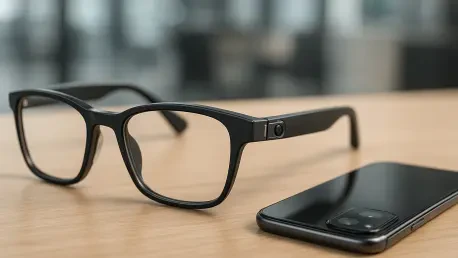

The move toward ambient computing seeks to provide information exactly when and where it is needed without breaking physical flow. For over a decade, the handheld screen has served as the primary portal for digital life, but this centralized model has reached an operational ceiling that creates a persistent barrier between individuals and their physical surroundings. As artificial intelligence migrates from remote cloud servers to localized hardware, the necessity of a glass rectangle in one’s palm is being challenged by the emergence of high-performance AI eyewear. These devices prioritize contextual awareness, allowing users to interact with their digital environment through voice and vision rather than touch. By integrating intelligence directly into the user’s field of perception, the industry is moving toward a future where technology is felt rather than seen, reducing the cognitive load of switching between the physical and digital worlds. This transition represents a significant pivot in consumer electronics, moving from a culture of constant distraction toward a more streamlined, hands-free experience that keeps the user engaged with the reality around them.
Categorizing the Spectrum: Augmented Reality Versus Artificial Intelligence
Understanding the current market requires a clear distinction between the various types of head-worn hardware that have emerged recently. Virtual Reality systems offer complete immersion, making them ideal for specialized gaming or simulation but largely impractical for the movement and social interaction required in daily life. In contrast, display-based Augmented Reality attempts to project high-definition visuals onto the wearer’s environment, but these units frequently suffer from excessive bulk, short battery life, and high price points. The most significant growth is currently seen in display-free AI eyewear, which strips away the heavy glass optics in favor of lightweight, fashionable frames equipped with multimodal processing capabilities. These devices focus on audio-based information delivery and point-of-view data capture, allowing the technology to blend seamlessly into traditional fashion. By prioritizing utility over complex visual overlays, manufacturers have successfully created a category that people are actually willing to wear for sixteen hours a day without physical fatigue.
The success of these display-free devices lies in their ability to serve as a persistent intelligent assistant that observes what the user sees and hears. Unlike traditional smartphones that require a user to unlock a screen and navigate an interface, AI smart glasses utilize “always-on” microphones and cameras to provide instantaneous support. For example, if a user looks at a menu in a foreign language or identifies a specific plant in a park, the internal AI can provide a translation or a botanical description via bone-conduction audio. This approach emphasizes the transition from active searching to passive assistance, where the hardware anticipates needs based on environmental context. By removing the visual display, developers have solved the primary ergonomic issues that plagued earlier attempts at smart eyewear, resulting in frames that look indistinguishable from standard prescription glasses. This shift ensures that the technology serves the user as a subtle tool rather than a bulky, social-distancing headset, paving the way for wider cultural acceptance and long-term integration.
Engineering for Comfort: Balancing Weight and Performance
The engineering requirements for face-worn technology are significantly more demanding than those for devices kept in a pocket or on a wrist. Because the human face is incredibly sensitive to weight and pressure, even a few extra grams can cause chronic discomfort or headaches over several hours of use. Modern designs have addressed this challenge by utilizing advanced materials such as titanium alloys and high-grade polymers that offer durability without the mass. Engineers have also moved toward a distributed architecture, where the batteries, circuit boards, and sensory components are strategically balanced along the temple arms rather than concentrated on the bridge of the nose. This careful distribution shifts the center of gravity closer to the ears, providing a more stable and comfortable fit that mimics the feel of premium traditional eyewear. These refinements are crucial because if a device is not comfortable enough to be forgotten by the wearer, it will never successfully replace the convenience of a smartphone that can simply be put away.
Thermal management and energy efficiency are equally critical factors that dictate the viability of smart glasses in a professional or social setting. Since running sophisticated AI models locally generates a measurable amount of heat, manufacturers must employ creative cooling solutions to ensure the frames do not become uncomfortably warm against the wearer’s skin. Many current models utilize passive heat sinks and low-power silicon specifically designed for wearable applications to maintain a neutral temperature. Furthermore, the battery technology has evolved to support a full day of intermittent AI processing while remaining small enough to fit inside the narrow frame of the glasses. Charging solutions have also become more integrated, with many protective cases doubling as high-capacity power banks that use induction to keep the glasses ready for use. These technical milestones have allowed smart glasses to move beyond the experimental phase and into the realm of reliable daily-use tools, providing a robust platform for the next generation of personal computing.
Privacy and Ethics: Establishing Trust in a Connected World
The widespread adoption of wearable cameras and microphones naturally raises significant concerns regarding privacy and social etiquette in public spaces. To mitigate these issues and foster trust, the industry has standardized the inclusion of non-overrideable privacy LEDs that glow brightly whenever the camera or microphone is active. These physical signals are hard-wired to the sensor’s power source, ensuring that software hacks cannot bypass the notification system. Moreover, there is an increasing move toward edge computing, where the majority of visual and auditory data is processed locally on the device rather than being uploaded to a corporate cloud. This architectural choice ensures that the wearer’s surroundings are analyzed for context without creating a permanent, accessible record of their private life. By prioritizing local processing, manufacturers can offer the benefits of an intelligent assistant while minimizing the risks associated with data breaches or unauthorized surveillance, which is essential for mainstream adoption.
In addition to technical safeguards, the industry is developing clear social protocols to govern the use of AI eyewear in sensitive environments. Many workplaces and public venues are implementing guidelines that recognize the difference between assistive AI use and intrusive recording. This social negotiation is vital as the technology becomes more prevalent in schools, hospitals, and private gatherings. Users are also being given greater sovereignty over their data through transparent management interfaces that allow them to see exactly what information the AI is using to provide its services. As these devices collect more contextual data than any previous piece of technology, the burden of security falls on the manufacturers to prove that their systems are both helpful and respectful of boundaries. The establishment of these ethical frameworks is as important as the hardware itself, as public perception will ultimately determine whether smart glasses are viewed as a revolutionary tool or an unwelcome intrusion.
Redefining the Relationship: The Smartphone as an Essential Hub
While AI eyewear is rapidly gaining capabilities, it is not currently positioned to eliminate the smartphone entirely, but rather to change its fundamental role. The smartphone is evolving into a high-performance central hub that remains in the user’s pocket, handling the heavy computational lifting and data storage while the glasses serve as the primary interface. This synergy allows for a “best of both worlds” scenario where the user enjoys a hands-free experience for ninety percent of their daily tasks, such as navigation, messaging, and quick information retrieval. When more complex tasks arise—such as editing a document, viewing high-resolution photos, or playing a demanding game—the smartphone screen is still available as a specialized tool. By acting as a filter for digital noise, smart glasses help reduce the “phone itch,” or the reflexive habit of checking one’s screen, because the most important notifications are delivered through subtle audio or visual cues.
This cooperative ecosystem ensures that the transition to wearable computing is additive rather than purely disruptive. Developers are focusing on seamless hand-off features that allow a task started on the glasses to be continued on a phone or tablet without any loss of progress. For instance, a user might use their glasses to identify a product in a store and add it to a digital shopping list, then later use their smartphone to complete the purchase and review detailed specifications. This multi-device approach respects the reality that different tasks require different interface modalities. As the AI in the glasses becomes more sophisticated, the frequency of needing to pull out a phone will continue to decrease, eventually relegating the handheld device to a secondary, supportive role. This evolution reflects a broader trend in technology where the interface moves closer to the human body, leaving the bulkier hardware to function as a silent powerhouse in the background.
The Actionable Path Forward: Strategic Implementation of Wearables
The transition toward AI-centric eyewear was solidified when the technology sector successfully addressed the fundamental balance between utility and aesthetics. Leading organizations prioritized the development of open-source standards for wearable communication, which allowed different devices to interact within a unified ecosystem. This strategic move prevented the fragmentation that had hindered previous generations of mobile technology, ensuring that users were not locked into a single proprietary hardware stack. Furthermore, developers focused on creating “intent-based” interfaces that minimized the need for manual input, relying instead on the AI’s ability to interpret gaze and voice commands accurately. These advancements meant that the technology worked for the user, rather than the user having to learn how to work the technology. This period of rapid innovation demonstrated that the most effective digital tools were those that disappeared into the fabric of daily life while providing a constant stream of value.
The widespread adoption of these devices was further supported by a shift in how personal data was managed and protected. Manufacturers recognized that long-term success depended on user sovereignty, leading to the implementation of robust, user-controlled privacy toggles and localized encryption. These steps moved the industry away from a data-harvesting model toward a service-oriented one, where the primary value was the quality of the AI assistance provided. For individuals and businesses looking to integrate these tools, the focus turned toward optimizing workflows that benefited from real-time, heads-up information. The legacy of this shift was a significant reduction in the cognitive barrier between human thought and digital action. By looking back at how these systems were integrated, it became clear that the objective was always to enhance human capability without sacrificing the quality of real-world interactions. This era established that the true potential of artificial intelligence lay in its ability to facilitate a more present and engaged human experience.