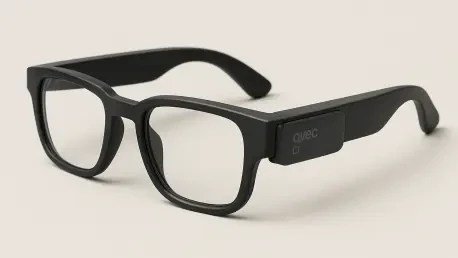

When it comes to the intersection of mobile technology and personal hardware, few have the breadth of experience as Nia Christair. With a background that spans mobile app development, hardware design, and enterprise solutions, she possesses a unique insight into what makes a new gadget truly connect with consumers. We sat down with her to discuss the Povec C1, a device that strips smart eyewear back to its functional core.
The article notes Povec C1’s electrochromic technology comes from the automotive world. What specific challenges did you overcome in adapting this technology for a small wearable frame, and could you walk us through the step-by-step process of that miniaturization?
That’s the core of the engineering challenge. In a vehicle like the Audi E5 Sportback, you have ample space and power. On sunglasses, you have neither. Our biggest hurdle was shrinking the components while maximizing power efficiency. The process involved developing an ultra-thin electrochromic film that wouldn’t cause optical distortion and designing a power system that draws almost zero energy when the tint is static. Integrating the invisible touch-sensitive panel into the sleek frame was the final, crucial piece to make it feel effortless.
You’ve emphasized a simple swipe gesture for instant tint control. Could you share an anecdote from user testing that shaped this design? What specific metrics did your team use to define a “smooth and immediate” transition for the wearer?
In early prototypes, we actually tried a double-tap system. During user testing with cyclists, we quickly saw it was a flawed idea, as bumps in the trail would trigger accidental tint changes. One tester bluntly told us, “I need something I can do deliberately, even with gloves on.” That feedback led directly to the intuitive swipe gesture. For defining “immediate,” we measured the transition latency, but the real metric was qualitative. We kept refining it until users described the feeling as “magical” rather than just fast, ensuring there was no perceptible lag.
The C1 is aimed at athletes dealing with shifting light. Beyond tint adjustment, what specific durability and performance features—like impact resistance or grip—did you engineer into the sunglasses to meet the rigorous demands of activities like cycling and skiing?
The tint control is the headline, but it’s nothing if the glasses can’t survive the sport. We engineered the frames from a lightweight, high-impact polymer to withstand drops and flexing. For performance, we integrated a soft, textured grip material on the nose pads and temple tips to ensure they stay locked in place, even with heavy sweat during a run or a sharp ski turn. We built the C1 to be a reliable piece of performance gear first, knowing that for our target users, equipment failure can be a real safety hazard.
Achieving up to 28 days of battery life is a key feature. What were the most critical engineering decisions that led to this power efficiency? Please break down how different usage patterns, from frequent swiping to static use, affect that 28-day estimate.
The breakthrough was a system that only consumes significant power during the actual tint change. Holding a specific tint level is a near-zero-power state. That’s how we achieved up to 28 days of life. This estimate is based on average use—adjusting the tint a few times per day. A user who sets it once in the morning could go even longer. Conversely, someone constantly swiping might see closer to two weeks. But even then, the standard USB-C charging makes it incredibly convenient to top up.
Unlike competitors who focus on color, Povec prioritizes tint control. What market research convinced you to focus on function over novelty? How does that decision justify the premium $250-$350 price point for your planned May 2026 release?
Our research showed that while novelties like color-changing are fun, they don’t solve a core problem for serious users. We talked to athletes, and their number one frustration was managing unpredictable light—like a cyclist emerging from a shaded path into blinding sun. We focused on solving that single problem perfectly. This turns the C1 from a gadget into a tool. That functional advantage is how we justify the $250-$350 price; it’s an investment in high-performance equipment that enhances experience and safety, not just a fashion accessory.
What is your forecast for the smart eyewear market?
My forecast is that the market will mature by focusing on “invisible” technology that solves real problems without being intrusive. The future isn’t about putting a computer screen on everyone’s face. Instead, we’ll see more function-driven innovations like ours seamlessly integrated into frames. Imagine automatic tint control with the speed and precision of a manual swipe, or discreet bone-conduction audio for navigation that eliminates earbuds. The products that succeed will be the ones that use technology to make traditional eyewear fundamentally better at its job.