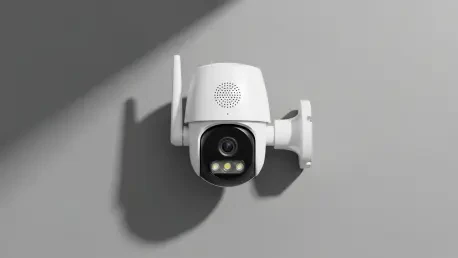

Modern homeowners frequently face the frustrating paradox of security systems that offer constant surveillance yet fail to provide meaningful protection due to an overwhelming influx of false alarms. This pervasive issue of notification fatigue often leads users to ignore alerts, rendering even the most advanced equipment virtually useless during a real emergency. The introduction of the Smart Wi-Fi Turret Camera, specifically the NHC-IF20T model, addresses this specific challenge by shifting the paradigm from passive monitoring to intelligent, proactive defense. At the heart of this innovation is a high-performance 5MP 2K+ resolution sensor that delivers exceptional visual clarity, ensuring that every detail is captured with forensic precision. By integrating a sophisticated AI-driven human figure filter, the device successfully distinguishes between actual threats and benign movements like pets or shifting shadows, thereby restoring the user’s trust in mobile notifications. This technological advancement ensures that the security system acts as a vigilant sentry rather than a source of digital noise. Furthermore, the inclusion of a motion-activated 400-lumen LED light provides a powerful visual deterrent that can illuminate a room instantly. This combination of high-definition optics and localized artificial intelligence sets a new benchmark for indoor monitoring solutions.
Strategic Integration: The Path to Comprehensive Domestic Safety
Beyond its visual capabilities, the hardware serves as a central hub for interactive security through its robust connectivity options and ecosystem compatibility. The integration of the ONVIF protocol allows the camera to work seamlessly with various third-party management systems, providing users with the flexibility to build a customized security network that is not locked into a single proprietary environment. This interoperability extends to popular voice-controlled ecosystems such as Amazon Alexa and Google Home, enabling hands-free management and real-time viewing on compatible smart displays. For immediate intervention, the unit is equipped with a 60 dB built-in siren and a two-way audio system that facilitates clear communication from anywhere in the world via a smartphone. These features transform the camera from a silent observer into an active communication tool that can warn intruders or assist family members in real time, bridging the gap between physical presence and remote oversight. Moreover, the inclusion of color night vision ensures that the transition from daylight to total darkness does not result in a loss of detail, as the system utilizes its internal light source to maintain a full-spectrum image. This layered approach to hardware design emphasizes that true security is found in the ability to respond to events as they unfold.
Evaluating the long-term viability of this security solution revealed that its success depended heavily on the balance between physical durability and data flexibility. The implementation of an IP54 weather-resistance rating ensured the device remained functional even in challenging indoor or semi-outdoor environments where dust or moisture might have compromised lesser hardware. Data management was handled through a dual-storage approach, utilizing both secure cloud services and localized microSD slots that supported up to 128 GB of footage. This redundancy provided a safety net against network outages and ensured that critical evidence remained accessible at all times. Looking forward, homeowners should prioritize hardware that supports open standards and edge-based AI processing to minimize latency and maximize privacy. Investing in systems that offer granular control over alert sensitivity and storage protocols became a necessary step for those seeking to future-proof their domestic environments. These strategic choices empowered users to move away from reactive habits toward a model of autonomous, data-driven protection. Ultimately, the adoption of such integrated technology shifted the focus from simple recording to active prevention, providing a clear roadmap for the evolution of smart home safety through the rest of 2026 and into 2028.