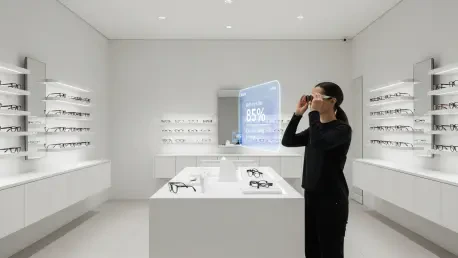

The long-predicted era of ambient computing has arrived with such force that the once-ubiquitous ritual of staring down at a glowing rectangle in one’s palm is rapidly becoming a social and technical anachronism. As we navigate the landscape of 2026, the transition from handheld screens to sophisticated augmented reality eyewear represents more than just a hardware upgrade; it is a fundamental shift in the human-data interface. Leading tech conglomerates and agile startups have moved past the era of bulky, socially isolating headsets, delivering instead lightweight frames that blend seamlessly into daily fashion. This pivot year is defined by the convergence of miniaturized optics and high-performance silicon, allowing digital overlays to coexist naturally with the physical world. While the smartphone served as the primary gateway to the internet for nearly two decades, its limitations in ergonomics and presence have finally paved the way for a more integrated, “heads-up” lifestyle that prioritizes direct engagement with one’s surroundings.
Strategic Innovations: Transforming the User Interface
The current dominance of augmented reality is largely underpinned by the maturation of multimodal artificial intelligence, which has replaced traditional touch-based navigation with contextual and conversational interaction. Systems like Google’s Gemini are now embedded directly into lens hardware, enabling a user experience that anticipates needs based on visual input and environmental cues rather than manual commands. Instead of a user stopping to type a search query or pull up a navigation app, the glasses provide real-time, semi-transparent overlays that offer directions, translate foreign signage instantly, or provide biographical snippets during professional networking. This shift toward “intelligent overlays” means that the digital world is no longer a destination one visits through a screen but a persistent layer of information that enhances physical reality. By moving the interface from the pocket to the eye line, manufacturers have successfully reduced the friction of information retrieval and delivery.
Competitive pressure from Apple and Snap has further accelerated this transition by creating a diverse ecosystem of applications that cater to both professional and social needs. Apple’s entry into the lightweight eyewear space has triggered a massive wave of developer activity, ensuring that essential services like iMessage, health tracking, and productivity suites are fully optimized for a spatial interface. Simultaneously, Snap has successfully transitioned its popular social filters into persistent “lenses” that allow users to modify their personal environment or share collaborative AR experiences in real-time. This dual-track development—where one side focuses on high-utility productivity and the other on social expression—has created a robust market that appeals to a broad spectrum of users. While premium devices offer full-field-of-view immersion, affordable alternatives from companies like Xreal have made the technology accessible, ensuring that AR becomes a standard part of the modern digital landscape.
Market Normalization: Scaling Adoption and Accessibility
One of the most significant catalysts for the widespread adoption of AR in 2026 is the strategic partnership between technology giants and established optical retailers. The collaboration between Google and Warby Parker has effectively bridged the gap between “tech gadget” and “daily necessity” by placing smart frames in thousands of standard retail locations. This move allows consumers to receive professional eye exams and have their AR hardware fitted with prescription lenses in a single visit, treating the technology as a standard vision correction option rather than a niche luxury. By integrating augmented reality into the existing eyewear market, companies have bypassed the “social awkwardness” phase that plagued earlier iterations of smart glasses. Consumers are now choosing their frames based on style and fit first, with the digital capabilities being viewed as a standard feature set. This normalization is reflected in recent sales data, which shows a significant uptick in adoption among demographics.
As the industry moved beyond the experimental phase, the focus shifted toward securing the ethical and privacy frameworks necessary to sustain a world of constant visual recording and data overlay. Regulators and tech leaders collaborated to establish “privacy-first” hardware standards, such as visible recording indicators and on-device processing for sensitive visual data. For organizations looking to capitalize on this hardware shift, the immediate priority became the auditing of existing digital assets for spatial compatibility. This involved converting traditional 2D content into 3D models and developing conversational AI interfaces that could handle complex voice and gesture commands. Looking forward, the next logical step for the industry involved the refinement of haptic feedback systems and biometric integration to make the AR experience even more immersive and personalized. By treating the smartphone as a legacy device, forward-thinking enterprises began to build infrastructure that supported a truly decentralized digital experience.