
The persistent evolution of immersive technology has reached a critical juncture where the industry no longer pursues a singular, all-encompassing device for every demographic. Instead, a distinct bifurcation has emerged, separating the market into high-fidelity professional workstations and lightweight, specialized consumer peripherals. This shift, visible throughout 2026, marks the end of the experimental era where prototypes were often marketed as finished products to see what might stick with the public. Major players are now forced to choose between the high-margin, low-volume professional sector and the low-margin, high-volume consumer space. Companies like Apple and ByteDance are doubling down on spatial computing as a replacement for traditional desktop environments, while others focus on personal cinema or basic information overlays. This strategic split reflects a more mature understanding of how different users actually interact with augmented and extended reality in their daily lives. As the novelty of digital objects fades, the demand for utility has taken center stage.
The Rise of High-Fidelity Professional Workstations
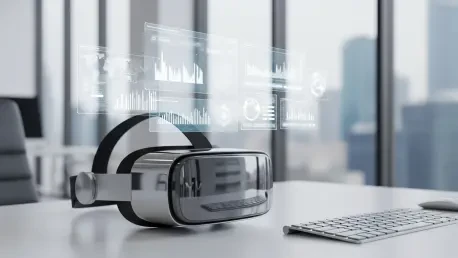
ByteDance’s Pico has fundamentally shifted its trajectory with the unveiling of Project Swan, a move that signals a direct confrontation with the established premium XR landscape. This hardware is not designed for casual gaming or social media browsing but is instead optimized for high-fidelity content creation and complex professional workflows that require significant local processing power. The move reflects a broader industry consensus that for AR to succeed in the corporate world, the hardware must function as a legitimate workstation replacement rather than an interesting accessory. By focusing on productivity-first features, Pico is betting that professionals are willing to pay a premium for devices that can replace multi-monitor setups with a singular, high-resolution immersive experience. This strategy aims to capture the high-end market by offering a robust alternative to the current dominant players, ensuring that professionals have the tools necessary for demanding tasks like 3D modeling and data visualization.
The departure of high-level hardware leaders from OpenAI and their subsequent migration to other XR ventures highlights a volatile but necessary talent shuffle that is reshaping the professional sector. This movement of intellectual capital suggests that while the hardware itself is becoming more capable, the software and AI integration required to make these workstations truly useful is still in a state of rapid flux. The primary challenge for high-end XR now lies in project continuity, as the constant churn of key engineers can lead to fragmented development cycles. However, this same churn also facilitates cross-pollination of ideas, leading to innovative solutions for spatial computing interfaces that were previously thought to be years away. For the professional user, this means that the reliability of the platform’s software ecosystem is becoming just as critical as the resolution of the micro-OLED displays. As these devices become more integral to business operations, the focus remains on providing a stable and scalable environment.
Consumer Market Dynamics and the Commodity of Personal Cinema
While the high-end market targets the office, companies like Xreal are successfully pushing toward the commoditization of AR through devices like the 1S at a price point of four hundred and forty-nine dollars. This aggressive pricing strategy is designed to move augmented reality away from being a niche enthusiast product and toward becoming a standard personal cinema accessory for the average traveler or commuter. By focusing on a narrow use case—portable high-definition screen mirroring—these manufacturers are avoiding the high costs and technical hurdles associated with full spatial awareness and complex environmental tracking. This approach has proven effective in building a larger user base, yet it exposes a growing divide in how consumers perceive the technology. For many, AR is no longer a futuristic promise of digital-physical integration, but rather a practical way to watch media on a massive virtual screen without the bulk of a physical monitor. This shift toward single-use cases is a defining characteristic of the current consumer bifurcation.
A significant hurdle facing this consumer expansion is what industry analysts have dubbed accessory fragility, a problem exemplified by the sudden cancellation of specialized hardware like the Neo dock. This development reveals a critical weakness in the current AR ecosystem where, despite the advancement of headset optics, the necessary peripheral and connectivity infrastructures remain frustratingly unstable. Early adopters often find themselves in a precarious position, relying on a delicate chain of adapters and docks that may be discontinued at any moment due to shifting corporate priorities. This uncertainty deters potential buyers who are looking for a cohesive gaming or professional experience that works seamlessly across multiple devices. Without a stable roadmap for accessories, the consumer AR market risks becoming a collection of isolated gadgets rather than a thriving and interconnected ecosystem. To overcome this, manufacturers must prioritize long-term compatibility and platform stability over the rapid release of slightly improved hardware iterations.
Strategic Restructuring and the Path toward Sustainable Growth
Snap’s recent decision to spin off its AR glasses unit into an independent subsidiary serves as a stark reminder of the financial pressures and agile development cycles required to stay competitive. This move signals that even established tech giants are finding it difficult to fund the massive research and development costs of AR within their traditional corporate structures. By seeking external capital and operating with more autonomy, these spun-off units can focus exclusively on hardware innovation without being bogged down by the core business’s social media or advertising priorities. This trend of structural separation suggests that the industry is moving toward a more disciplined and focused approach to hardware development, where success is measured by technical milestones rather than user engagement metrics. This allows for a more targeted exploration of specific AR features, such as waveguide display efficiency or battery life optimization, which are essential for the next generation of wearable tech.
The transition of the AR and XR market during this period proved that the industry could no longer survive on the promise of general-purpose devices that attempted to serve every possible user. Instead, the most successful companies focused on the hard choice between premium, high-capability tools for the professional sector and affordable, single-use-case glasses for casual consumers. Decision-makers in the industry shifted their focus toward building stable, long-term ecosystems that prioritized accessory roadmaps and price accessibility over mere display specifications. Investors and developers alike recognized that the survival of a platform depended on its ability to offer a reliable and specialized experience rather than a broad, experimental feature set. This era demonstrated that a disciplined hardware strategy, backed by consistent peripheral support, was the only way to ensure the sustainable growth of spatial computing. Moving forward, the industry adopted a more pragmatic view of innovation, ensuring that releases addressed specific market needs.