
The digital landscape of 2026 has witnessed a remarkable shift in how cultural heritage and high-octane gaming intersect, particularly through the ambitious lens of EverStone Studio’s latest project. This title attempts to bridge the gap between traditional Chinese storytelling and the rigorous demands of a global, high-fidelity open-world audience, moving far beyond the typical constraints of the martial arts genre. By grounding its narrative in the “Wuxia” tradition—a genre defined by chivalrous protagonists and superhuman martial feats—the game seeks to provide a definitive simulation of the wandering hero’s life during a period of profound political instability. It is not merely an exercise in historical fiction but a sophisticated technical achievement that challenges the established dominance of premium Western and Japanese RPGs. This endeavor is supported by NetEase Games, signaling a significant investment in a “prestige” experience that prioritizes player agency over the linear, often restrictive quest structures found in many contemporary mobile-first titles. The result is a sprawling, living world that feels reactive to the player’s presence, where every interaction contributes to a larger tapestry of honor, betrayal, and self-discovery.
The Architectural Foundation: A Living Wuxia World
The ambition driving this project is most evident in its rejection of the standardized mobile gaming blueprint, opting instead for a scale that feels natively designed for high-end PCs and next-generation consoles. Set against the backdrop of a fractured ancient China, the environment serves as more than just a stage for combat; it is a meticulously crafted historical sandbox filled with political intrigue and secret societies. Players are cast into the role of a nameless wanderer whose choices dictate the flow of the world, whether through diplomatic intervention in local conflicts or by remaining a silent observer of the crumbling dynasties. This focus on “living” systems ensures that the world does not feel static or scripted, as NPCs react to environmental changes and the player’s growing reputation. This approach naturally leads to a sense of true immersion, where the lack of a rigid, guided path encourages players to find their own motivation within the chaos of the era, effectively revitalizing the core tenets of the wandering hero fantasy for a modern audience.
Beyond the macro-level political drama, the world-building excels in its granular attention to detail and cultural authenticity. Every village, mountain pass, and metropolitan hub is saturated with the weight of history, blending mythological elements with grounded social realism. This duality allows the game to explore complex themes of loyalty and personal freedom without veering into pure fantasy, maintaining a tension that keeps the narrative stakes feeling personal and urgent. For example, stumbling upon a hidden ruin is not just a gameplay loop for loot; it often provides historical context for the current state of the empire, linking the player’s immediate actions to the broader historical timeline. This depth of exploration is a primary pillar of the experience, rewarding those who stray from the main objectives with meaningful environmental storytelling and unique encounters. Consequently, the game manages to sustain interest over dozens of hours by ensuring that the act of traversal is as much a part of the storytelling as the cinematic cutscenes themselves.
Mechanical Depth: The Evolution of Martial Combat
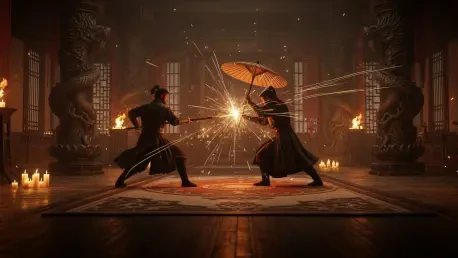
At the center of the experience lies a “classless” combat philosophy that prioritizes player creativity and tactical flexibility above static skill trees or predetermined roles. In contrast to traditional RPGs that lock a character into a specific archetype early on, this system allows players to switch seamlessly between a wide array of weapons, including traditional longswords, spears, and more unconventional implements like iron-ribbed fans or heavy umbrellas. Each weapon category is defined by its own distinct rhythmic signature, requiring players to learn specific animation frames and recovery times to maximize efficiency in battle. This versatility ensures that combat remains a dynamic puzzle rather than a repetitive chore, as different enemy types demand specific approaches to break their defenses. By removing the barriers of rigid classes, the game empowers players to develop a truly bespoke fighting style that evolves alongside their mastery of the game’s core mechanics, mirroring the growth of a real martial arts master.
This fluid weapon system is further enhanced by the inclusion of “Mystic Arts” and intricate defensive maneuvers that elevate the gameplay beyond simple button-mashing. Success in high-level encounters—particularly against the game’s formidable bosses—is predicated on the player’s ability to execute precise parries, dodges, and counter-attacks in real-time. These supernatural techniques are not mere visual flourishes; they are strategic tools that can be used to manipulate the environment or exploit an opponent’s elemental weaknesses. The integration of these abilities feels organic to the Wuxia setting, capturing the cinematic grace of classical martial arts films while maintaining a high level of mechanical challenge. This depth creates a rewarding progression loop where players feel a tangible sense of improvement, moving from frantic survival in the early game to total battlefield dominance as they refine their timing and positioning. This focus on skill-based expression ensures that even the most difficult encounters feel fair, providing a satisfying payoff for those who invest the time to master the nuances of the system.
Technical Performance: Optimization and Visual Fidelity
Visually, the title pushes the boundaries of cross-platform graphical fidelity, utilizing advanced lighting techniques and high-resolution textures to create a truly breathtaking representation of ancient China. The environment covers a diverse range of biomes, from the misty, serene peaks of sacred mountains to the damp, crowded streets of major urban centers, each rendered with a level of detail that rivals dedicated console exclusives. The use of dynamic weather and lighting cycles is particularly effective, with sunrise and sunset sequences creating a cinematic atmosphere that significantly enhances the sense of place. Furthermore, the character animations are exceptionally fluid, capturing the intricate footwork and body mechanics essential to authentic martial arts. These technical achievements are not merely cosmetic; they contribute directly to the gameplay experience, as the clarity of animations allows for better readability during fast-paced combat encounters, ensuring that players can react intuitively to enemy movements even in the heat of battle.
Despite this high level of visual intensity, the game demonstrates a remarkable degree of optimization across a wide spectrum of hardware, from high-end PCs to mid-range mobile devices. Maintaining a stable frame rate is critical for a game that relies so heavily on precise timing and parrying, and the developers have successfully balanced aesthetic quality with technical performance. While the user interface can occasionally feel cluttered due to the sheer density of systems—ranging from gear management to complex skill menus—the actual gameplay remains responsive and lag-free. On mobile platforms, the touch controls are surprisingly intuitive, with customizable layouts that allow players to execute complex combos with ease. This technical reliability is a testament to the developer’s commitment to accessibility, ensuring that the ambitious scope of the world does not come at the cost of a smooth user experience. This balance of power and efficiency makes the title a standout example of how modern game engines can be leveraged to deliver a premium experience across multiple platforms without significant compromises.
The Future of the Genre: Economic Sustainability and Social Play
The economic model adopted by this project represents a refreshing departure from the aggressive, often predatory monetization strategies that have historically plagued the free-to-play open-world market. Instead of locking core progression or powerful gear behind paywalls, the developers have focused on a “fair-play” approach centered around cosmetic customization, battle passes, and non-essential convenience items. This ensures that the competitive balance and the integrity of the single-player narrative remain intact, as players are rewarded for their skill and exploration rather than their financial investment. This strategy not only builds trust with the community but also ensures the long-term sustainability of the game’s ecosystem, as it attracts a wider audience of players who might otherwise be deterred by pay-to-win mechanics. By prioritizing the player experience over short-term monetization, the title sets a new standard for how high-budget live-service games can be managed in a way that respects the time and effort of the user base.
Building on this foundation of fairness, the game seamlessly integrates multiplayer components that add significant longevity to the experience without disrupting the immersion of the solo journey. As players progress, they unlock the ability to participate in cooperative dungeons, massive world events, and competitive duels that test their mastery of the combat system. These social interactions are handled with a light touch, allowing players to team up with friends or strangers to tackle difficult challenges while still maintaining the feeling of being a solitary hero in a vast world. This blend of single-player depth and multiplayer social layers ensures that there is always a reason to return to the game, whether to refine a new combat style or to participate in the evolving story of the empire. As the industry looks toward the next decade of gaming, this model offers a viable path forward for developers looking to combine culturally rich storytelling with the engagement and community-driven aspects of modern online titles. Moving forward, the most effective next step for enthusiasts and newcomers alike is to engage deeply with the game’s social factions and cooperative challenges, as these systems provide the necessary resources and reputation to truly influence the world’s political future.