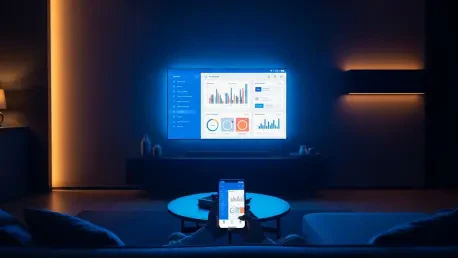

The era of digital advertising dominance is undergoing a profound structural shift as the once-impenetrable wall between traditional broadcast media and mobile-first performance marketing finally crumbles. For years, mobile app developers viewed television as an expensive black hole of broad awareness, a medium reserved for legacy brands with massive budgets and a tolerance for imprecise metrics. However, the current landscape of 2026 presents a different reality: rising acquisition costs on social media and tightening privacy regulations have forced a migration toward more stable, scalable environments. Television has emerged from this transition not just as a supplementary channel, but as a sophisticated, full-funnel performance engine that allows data-driven marketers to acquire high-intent users with the same surgical precision they once reserved for search or social campaigns.
Redefining the Strategic Value of Television
Bridging the Gap: Brand Awareness Meets Performance
The traditional divide between brand-centric television advertising and data-driven performance marketing is rapidly disappearing as marketers seek “blue ocean” opportunities beyond saturated digital platforms. As the cost of customer acquisition on traditional digital channels hits a critical tipping point, companies are discovering that television offers a level of scale that social feeds simply cannot match. This shift is characterized by the application of rigorous data analysis to a medium that was once considered purely qualitative. Today, an airing of a television spot is treated as a discrete data point, allowing for the immediate correlation of airtimes with real-time spikes in app installs and website traffic. This transformation allows mobile-first brands to leverage the immense reach of the living room screen while maintaining the accountability and return-on-investment focus that defines modern growth strategies.
Television has evolved into a strategic frontier where the goal is no longer just “getting the word out” but driving specific, measurable user actions within a defined attribution window. This convergence of interests means that the planning process for a TV campaign now mirrors the setup of a sophisticated digital ad set, complete with audience segmentation, creative testing, and granular scheduling. Marketers are no longer satisfied with broad demographics; they are utilizing advanced data sets to ensure their ads appear when their target users are most likely to be engaged. By integrating television into the core performance mix, app developers can achieve a lower overall cost per acquisition because the sheer volume of high-intent traffic generated by a single national airing often outweighs the incremental gains found in hyper-targeted but expensive digital niches.
The New Architecture: Television as a Scalable Growth Engine
The transformation of television into a performance tool is fundamentally supported by the technological infrastructure of the modern media environment. As digital platforms become increasingly constrained by privacy-centric operating system updates, television provides a stable environment where storytelling can flourish without the constant threat of algorithmic volatility. For a mobile app seeking to break through the noise, television offers a “lean-back” experience that captures a viewer’s undivided attention in a way that scrolling through a mobile feed rarely does. This high-impact engagement is being harnessed by growth teams to build a foundation of trust and legitimacy, which is particularly vital for apps in the financial services, health, or high-ticket e-commerce sectors where consumer confidence is a prerequisite for conversion.
Furthermore, the scalability of television allows for a smoother growth trajectory compared to the often-erratic performance of digital-only campaigns. When a mobile app finds success on a social platform, it often hits a “performance ceiling” where increasing the budget leads to rapidly diminishing returns. Television, by contrast, offers a much higher ceiling, allowing brands to maintain efficiency even as they scale their spending into the millions. This reliability makes television an essential component of a long-term growth strategy, providing a steady stream of new users that can be accurately forecasted and optimized over time. By moving away from the “siloed” approach of the past, marketers are creating a unified funnel where television acts as the primary driver of demand, fueling all subsequent layers of the marketing stack.
Maximizing the Impact of Cross-Channel Synergy
The Ripple Effect: Leveraging the Halo Phenomenon
A critical advantage of modern television advertising is the “halo effect,” a phenomenon where a brand’s presence on the big screen significantly enhances the performance of every other active marketing channel. When a consumer views a compelling television spot, they may not immediately reach for their phone to download the app, but the exposure creates a subconscious layer of brand recognition. This psychological priming means that when that same user later encounters a paid search result or a social media ad, their likelihood of clicking and converting increases exponentially. This cross-channel synergy effectively lowers the blended cost of acquisition across the entire marketing department, making expensive digital keywords more affordable by increasing the click-through rate and lowering the friction of the eventual conversion.
The efficiency gains provided by the halo effect are particularly evident during peak promotional periods or seasonal launches. For instance, a mobile gaming company might find that their cost-per-install on social media drops by 30% during the weeks their television campaign is active. This isn’t a coincidence; it is the direct result of television building the necessary social proof and “mental availability” that allows digital ads to close the deal. By analyzing the correlation between TV airings and the performance of bottom-funnel channels, marketers can more accurately attribute the value of their media spend. This holistic view of the customer journey encourages a shift in focus from last-click attribution toward a more nuanced understanding of how different media touchpoints work together to drive a single, unified outcome.
Re-Engagement: Using Storytelling to Win Back Lapsed Users
In the current landscape of 2026, where digital retargeting has become significantly more difficult due to the loss of device-level identifiers, television has emerged as a powerful tool for user retention and re-engagement. Mobile apps often struggle with “churn,” where users download an app but eventually stop using it as it becomes buried in a folder on their device. Television overcomes this by utilizing high-production storytelling to remind existing users of the app’s value proposition in a non-intrusive way. By aligning television spots with specific usage cycles—such as live sports for a betting app or the start of a new season for a fitness platform—brands can reignite interest among their installed base, driving a surge in app opens from users who may have been inactive for months.
This re-engagement strategy is particularly effective because it reaches the user in a relaxed, receptive state rather than interrupting their workflow on a smaller device. Television allows a brand to re-establish its narrative, highlighting new features or updated content that may not have existed when the user originally downloaded the app. For example, a travel app might use television to showcase new destination guides just as holiday planning begins, prompting former users to reopen the app and explore. This approach treats the existing user base as a valuable asset that can be reactivated through strategic media placement, proving that television is just as much about maintaining a relationship with the customer as it is about finding a new one.
Navigating the Convergent Media Landscape
Strategy Alignment: Moving Beyond a Streaming-Only Mentality
Many mobile marketers initially approach television through the lens of Connected TV (CTV) because its programmatic buying process and data-driven targeting feel comfortably similar to digital advertising. While CTV is undoubtedly a vital entry point for any performance strategy, a narrow focus on streaming often overlooks the massive, untapped potential of linear television. To achieve true scale in 2026, successful brands are adopting a “convergent” approach that bridges the gap between traditional broadcast and modern streaming. Linear TV remains the primary medium for high-stakes live events—such as major league sports, breaking news, and national award shows—which command a level of viewer attention and cultural relevance that on-demand streaming cannot always replicate.
By neglecting linear broadcast, a mobile-first brand risks missing a significant portion of the population that still consumes media through traditional channels. A convergent strategy involves using the broad reach and high frequency of linear television to build a solid foundation of brand awareness while utilizing the surgical targeting of CTV to reach specific audience segments or extend reach to cord-cutters. This dual-pronged approach ensures that the app remains top-of-mind across all viewing environments, creating a comprehensive brand presence that follows the consumer regardless of how they choose to watch. The key is to view these two forms of television not as competitors, but as complementary tools that, when used together, provide a level of market saturation that is impossible to achieve through a single-medium strategy.
Audience Extension: Balancing Reach and Precision
Building on the foundation of a convergent strategy, marketers must learn to balance the broad reach of traditional airings with the high-precision targeting of digital-native television platforms. The beauty of the current media ecosystem lies in the ability to use data from one side of the house to inform the other. For instance, insights gained from a high-performing CTV campaign can be used to identify specific linear networks or dayparts that are likely to yield the best results. Conversely, the massive influx of traffic generated by a successful linear spot can provide a wealth of first-party data that can then be used to build “lookalike” audiences for streaming-based retargeting. This creates a virtuous cycle of data exchange that constantly refines the efficiency of the entire television budget.
This balance is particularly important for apps with a niche target audience that still requires mass-market scale to grow. A fintech app, for example, might use linear television to reach a broad demographic of homeowners during the evening news, while simultaneously using CTV to target young professionals who are actively searching for investment advice on streaming platforms. This ensures that the marketing message is both widespread and personally relevant. By mastering the interplay between these different viewing modes, app developers can avoid the trap of “over-targeting,” where a campaign becomes so narrow that it fails to reach enough people to move the needle. Instead, they can achieve a “wide-net” effect that is still informed by the rigorous data standards of the performance marketing world.
Implementing Rigorous Measurement and Procurement
Measurement Innovation: From Black Box to Incremental Lift
The most significant historical barrier to television adoption for mobile marketers was the “black box” nature of measurement, but the industry has moved toward a model based on proven incrementality. In the past, marketers were forced to rely on “view-through” attribution, which often credited television for conversions that would have happened anyway. In 2026, the gold standard has shifted toward controlled experiments that isolate the specific lift generated by a television campaign. This involves comparing the behavior of a group of users exposed to the ad against a control group of similar users who were not. By measuring the difference in app installs, sign-ups, and long-term retention between these two groups, brands can determine the “true” impact of their TV spend with a high degree of statistical confidence.
This move toward incrementality-based measurement allows television to be held to the same performance standards as any digital channel. Marketers can now calculate a precise Return on Ad Spend (ROAS) for their television campaigns, identifying which networks, programs, and even specific creative versions are driving the most value. This level of transparency has transformed television from a speculative “top-of-funnel” expense into a predictable driver of growth. As measurement tools continue to evolve, they are becoming more integrated with mobile measurement partners (MMPs), allowing for a seamless flow of data between the television screen and the mobile device. This connectivity ensures that every dollar spent on air can be justified by a corresponding increase in bottom-line performance metrics.
Procurement Logistics: The Power of the Hybrid Buying Model
To maximize the efficiency of a television performance strategy, brands must navigate the complexities of media procurement through a hybrid model that combines programmatic flexibility with direct-access quality. While programmatic buying is popular for its ease of use and ability to target specific households in the streaming space, it often comes with hidden fees and limited access to the most premium “must-have” inventory. Conversely, direct relationships with networks and broadcasters allow brands to secure high-impact placements during major televised events at more favorable rates. The most successful mobile marketers in 2026 are those who leverage the best of both worlds: using programmatic for its speed and agility while maintaining direct partnerships to ensure their brand appears in the highest-quality environments.
This hybrid approach also provides greater control over ad frequency and placement, preventing the common digital pitfall of over-saturating a small audience until the message becomes white noise. By diversifying their procurement methods, brands can ensure their ads are distributed across a wide variety of high-value contexts, from live sports to prime-time dramas. This diversity not only improves the overall reach of the campaign but also protects the brand from the volatility of any single inventory source. As the television market continues to consolidate and evolve, the ability to navigate these procurement channels with a performance-oriented mindset will remain a key competitive advantage for mobile-first companies looking to sustain their growth in an increasingly crowded digital landscape.
Moving forward, the successful integration of television into a mobile growth strategy requires a commitment to continuous testing and a willingness to move beyond traditional digital silos. Marketers should prioritize building an internal framework that supports incrementality testing, ensuring that every television airing is backed by a clear hypothesis and a measurable goal. Furthermore, brands should explore the potential of “shoppable TV” features, which are increasingly blurring the lines between the living room screen and the mobile checkout. By staying agile and embracing the convergent nature of modern media, mobile app developers can transform television from a legacy medium into a vital, high-performance engine for long-term success. The focus must remain on the data, but the canvas has never been larger or more influential than it is today.