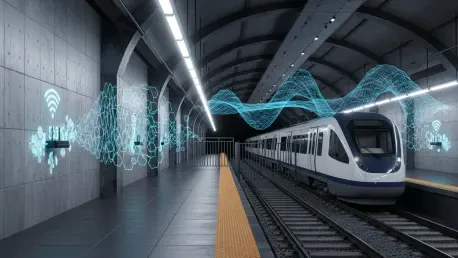

Navigating the subterranean labyrinth of New York’s Penn Station has long been a test of patience for millions of daily commuters who rely on seamless digital access to manage their lives while in transit. As the busiest transportation hub in the Western Hemisphere, the facility demands a level of technological sophistication that transcends traditional wireless coverage models found in standard commercial environments. Boingo Wireless recently addressed this necessity by deploying an expansive 5G and Wi-Fi 6 network designed to blanket the sprawling transit complex with reliable, high-speed connectivity. This initiative represents more than just a hardware upgrade; it serves as a foundational shift in how critical infrastructure supports the relentless flow of people moving through the heart of Manhattan. By leveraging a neutral host model, the deployment ensures that all major cellular carriers can utilize the infrastructure, providing a consistent experience for every passenger regardless of their service provider. This strategic overhaul successfully mitigates the dead zones that once plagued the deep tunnels and crowded platforms of the station.
Structural Impediments: Overcoming Barriers to Digital Connectivity
Neutral Host Systems: Deploying Comprehensive 5G Infrastructure
The physical environment of Penn Station presents a unique set of obstacles for wireless signals, characterized by thick concrete walls, steel reinforcements, and deep underground levels. Traditional macro-cell towers located at street level are often unable to penetrate these dense materials, leading to signal degradation and lost connections for those on the move. Boingo has countered these physical limitations through the implementation of a state-of-the-art Distributed Antenna System throughout the terminal. This system consists of a network of small, strategically placed antenna nodes that distribute signal strength evenly throughout the entire facility. By acting as a neutral host, the infrastructure allows multiple carriers to share the same hardware, which significantly reduces the physical footprint of the equipment while maximizing efficiency. This approach ensures that the 5G signal remains robust and reliable even in the most remote corners of the station, from the deep tracks of the Long Island Rail Road to the bustling main concourses used by Amtrak and NJ Transit.
High-Density Capacity: Utilizing Wi-Fi 6 for Commuter Networks
Alongside the 5G deployment, the integration of Wi-Fi 6 technology plays a crucial role in managing the massive data demands of thousands of simultaneous users. While 5G is ideal for wide-area coverage and mobility, Wi-Fi 6 provides the localized capacity needed to support data-intensive tasks such as video streaming, large file transfers, and remote work connectivity. This next-generation Wi-Fi standard is specifically engineered for high-density environments like transit hubs, where hundreds of devices may attempt to connect to a single access point at once. Wi-Fi 6 utilizes features such as Orthogonal Frequency Division Multiple Access to handle multiple client transmissions simultaneously, effectively reducing latency and increasing overall throughput. For the commuter, this translates to a lag-free experience even during the peak morning and evening rushes when network congestion is typically at its highest. The synergy between cellular 5G and Wi-Fi 6 creates a comprehensive wireless ecosystem that supports both personal convenience and the increasingly digital nature of modern professional life.
Public Safety: Transforming Transit Efficiency and Security
Resource Management: Improving Operational Performance and Maintenance
Beyond the immediate benefits to the individual commuter, the upgraded network infrastructure provides the Metropolitan Transportation Authority and other transit agencies with powerful tools for operational management. A robust 5G backbone allows for the deployment of thousands of Internet of Things sensors that can monitor everything from air quality and temperature to the mechanical health of escalators and elevators. Real-time data transmission ensures that maintenance crews are alerted to potential issues before they lead to service disruptions, thereby increasing the overall reliability of the station’s facilities. Furthermore, the high-bandwidth network supports sophisticated logistics and ticketing systems that require constant, low-latency connections to function correctly. By digitizing these background operations, transit authorities can achieve a higher level of efficiency, reducing long-term costs and improving the passenger experience. The ability to collect and analyze granular data on foot traffic also enables more informed decisions regarding future crowd management and station design.
Future Readiness: Evaluating Strategic Next Steps for Urban Mobility
The introduction of this high-speed connectivity significantly strengthened security protocols in major metropolitan hubs by allowing for the deployment of advanced surveillance systems. High-definition video cameras transmitted crystal-clear footage in real time to command centers, which enabled law enforcement to respond more effectively to incidents. Emergency responders also benefited from dedicated network slices that prioritized critical communications during peak congestion, ensuring that first responders always possessed access to vital data. Moving forward, the focus shifted toward the continuous monitoring of network security to protect against cyber threats targeting public assets. Transit authorities explored the potential for integrating biometric boarding and automated safety alerts that were pushed to commuter devices based on location. From 2026 to 2028, maintaining this digital edge required a commitment to regular hardware refreshes and proactive system audits to ensure the network remained resilient against the growing demands of urban mobility.