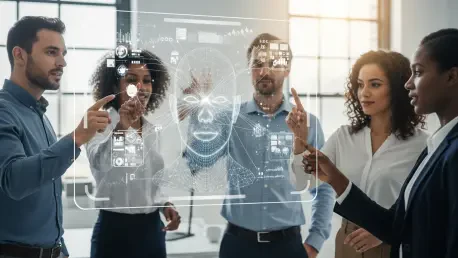

A new reality quietly took effect at U.S. borders in December 2025, fundamentally altering the nature of international travel and personal identity for millions. Under a Department of Homeland Security mandate, every non-citizen entering or exiting the country may have their face photographed and processed through sophisticated biometric systems, with no exemptions for age or frequent traveler status. While officially framed as a routine security measure to “biometrically confirm departure,” the implications are far-reaching. Once captured, these facial scans are converted into digital templates, or faceprints, that become permanent entries in vast government databases. These databases can be queried, cross-referenced with other data sets, and potentially shared with a wide array of law enforcement agencies for an indefinite period. This policy is not an anomaly but a clear indicator of a global trend. Facial recognition technology has rapidly transitioned from a concept in science fiction to an integral component of modern infrastructure. The global market for this technology is on a steep upward trajectory, projected to reach $24.28 billion by 2032, fueled by a combination of government security contracts, commercial applications seeking to streamline customer experiences, and consumer demand for frictionless personal security. This shift is visible worldwide, from police forces in the United Kingdom deploying mobile facial recognition vans that scan public crowds in real time to China’s integration of the technology into its comprehensive social credit and mass surveillance networks. The critical question is no longer whether this technology will become a ubiquitous part of daily life—it already has. The urgent question now is whether society can establish the necessary safeguards to retain meaningful control over its most personal and unchangeable identifier: the human face.
1. The Mechanics Behind the Scan
At its core, a facial recognition system operates by analyzing the unique geometric patterns of an individual’s face. It measures critical nodal points, such as the distance between the eyes, the width of the nose, the depth of the eye sockets, the shape of the cheekbones, and the contour of the jawline. These precise measurements are then converted into a complex mathematical formula, creating a unique numerical representation known as a faceprint. This digital template is highly efficient for storage and comparison, allowing a system to search through millions of other faceprints in a matter of milliseconds to find a potential match. The technology serves two primary functions, each with vastly different implications for privacy. The first is one-to-one verification, a process that confirms a person’s claimed identity by matching their live face to a pre-enrolled template. This is the mechanism used to unlock a smartphone with Face ID or pass through an automated airport gate. The second, and far more concerning, function is one-to-many identification. In this scenario, the system captures a face from a crowd or a photograph and searches an entire database to determine who that person is, often without their knowledge or consent. This is the method employed by law enforcement when scanning surveillance footage or public gatherings for individuals on a watch list.
The true power and potential for misuse of facial recognition technology lie not just in the act of identification but in what happens immediately after a match is made. Once a face is successfully linked to a database entry, it transforms from a simple physical feature into a powerful digital key. This key can unlock a vast and interconnected web of personal information that was previously siloed or difficult to aggregate. A successful match can instantly pull up an individual’s name, current and past addresses, employment history, social media profiles, and travel patterns. It can also reveal associations, linking a person to family members, friends, and colleagues who appear in tagged photos or other shared data. In this new reality, a person’s face is no longer just their own; it becomes a persistent, searchable, and trackable identifier that follows them through both physical and digital spaces. The erosion of public anonymity is a direct consequence of this capability, as the simple act of walking down a street or attending a public event can now be logged and analyzed. This fundamentally alters the traditional balance of power between the individual and institutions, creating an environment where constant, passive monitoring is not only possible but increasingly normalized as a part of everyday life.
2. The Pervasive Scope of Modern Surveillance
The integration of facial recognition into government surveillance programs has expanded at an unprecedented rate, often outpacing the development of legal and ethical frameworks to govern its use. Beyond the DHS mandate at U.S. borders, police departments across the United States and Europe have widely adopted the technology as a tool for identifying criminal suspects, monitoring protests, and tracking the movements of individuals in public spaces. For instance, the South Wales Police in the UK conducted extensive trials that involved scanning over half a million faces at public events, matching them against watch lists in real time. In many jurisdictions, these programs operate in a legal gray area with minimal public transparency or oversight. There is often no judicial warrant required for law enforcement to conduct a mass scan of a public area, and the policies regarding how long biometric data is retained are frequently vague or non-existent. This lack of clear regulation creates a significant risk for civil liberties, as it allows for the potential of unchecked surveillance without a clear basis of suspicion. The infrastructure built for these purposes creates a permanent capability for monitoring that can be used on any segment of the population, fundamentally changing the relationship between citizens and the state.
Simultaneously, the commercial exploitation of facial data has turned human likeness into a valuable commodity, with businesses deploying the technology in increasingly inventive and intrusive ways. Social media platforms like TikTok have experimented with creating AI-generated avatars based on the likenesses of real actors, who in some cases sold the perpetual rights to their face for a nominal one-time fee. These digital doubles can then be used in advertisements, programmed to speak different languages, or made to endorse products, all without any ongoing consent from the original person. In the retail sector, stores use facial recognition cameras to track shoppers’ movements, analyzing everything from how long a customer looks at a particular product display to their perceived emotional responses, using this data to optimize store layouts and pricing strategies. The travel and hospitality industries market the technology as a tool for a “seamless” customer experience, allowing for frictionless check-ins at airports and hotels. While convenient, this process also allows companies to build detailed, long-term profiles of customer behavior, preferences, and travel patterns. The convenience offered by these systems effectively masks a troubling reality: every face that is captured and every database that is expanded contributes to a global surveillance infrastructure that concentrates immense power in the hands of corporations and governments.
3. The Real and Underestimated Risks
Facial recognition technology is not a neutral tool; it carries inherent biases and systemic vulnerabilities that can amplify existing societal inequalities and create new forms of harm. One of the most significant issues is the documented problem of accuracy, which disproportionately affects marginalized communities. Multiple independent studies, including those by academic institutions and government agencies, have consistently shown that leading facial recognition algorithms misidentify women and people of color at significantly higher rates than they do white men. The consequences of these algorithmic errors are not abstract or hypothetical. Individuals have been wrongfully arrested and jailed based on a false match generated by a facial recognition system that incorrectly linked their face to grainy surveillance footage of a crime. In a justice system where a false positive can lead to detention, interrogation, loss of employment, and immense personal distress, algorithmic bias is not merely a technical glitch; it is a critical civil rights crisis. When law enforcement agencies deploy flawed technology, they risk reinforcing and automating historical biases, leading to the over-policing of already vulnerable communities and undermining the very principles of fairness and justice.
Beyond the issue of accuracy, facial recognition databases represent high-value targets for malicious actors, and the consequences of a data breach are both severe and permanent. In 2019, a massive biometric database used by banks, law enforcement agencies, and other organizations across multiple countries was discovered to be exposed online without any password protection. This breach leaked the fingerprints and facial recognition data of over a million people, making their most personal identifiers accessible to anyone on the internet. Unlike a compromised password or credit card number that can be changed, a person’s biometric data—their face and fingerprints—cannot be altered. Once this information is stolen, it creates a permanent vulnerability that can be exploited for identity theft, fraud, or other malicious purposes for the rest of their life. Furthermore, the deployment of this technology is subject to the phenomenon of “mission creep,” where a system introduced for a single, specific purpose is gradually expanded for other uses. For example, surveillance systems installed in a city to identify terrorists can easily be repurposed to monitor peaceful protesters or track the movements of immigrant communities. The surveillance infrastructure being built today for one stated reason will define the capabilities available to future governments, including those that may have authoritarian ambitions, creating a powerful tool for social control that is difficult to dismantle once it becomes normalized.
4. A Fractured and Insufficient Regulatory Landscape
In response to the rapid proliferation of facial recognition technology, some jurisdictions have begun to implement regulations, but these efforts have resulted in a fragmented and largely inadequate patchwork of rules that fails to address the technology’s full scope. The European Union has taken a notable step with its AI Act, which classifies certain applications of real-time remote biometric identification in publicly accessible spaces as “high-risk.” This designation imposes stringent requirements on developers and deployers, including transparency, human oversight, and accountability measures. On a more local level in the United States, several cities, including San Francisco, Boston, and Portland, have taken a more aggressive stance by enacting outright bans on the use of facial recognition technology by government agencies and police departments. In a different approach, Denmark has proposed legislation aimed at granting individuals ownership rights over their likeness in the context of AI-generated content and deepfakes, though the bill has not yet been passed into law. While these initiatives represent important progress and acknowledge the inherent risks of the technology, they remain exceptions in a global landscape characterized by a lack of comprehensive and consistent governance.
This piecemeal approach is most evident in the United States, where a significant regulatory vacuum exists at the federal level. To date, Congress has failed to pass any comprehensive legislation governing the collection, use, and storage of biometric data. Most existing federal laws and proposals focus narrowly on specific, high-profile misuses of AI, such as the creation of non-consensual deepfake pornography or the use of manipulated media to interfere in elections. While important, these laws leave the much larger issue of everyday mass surveillance entirely unaddressed. Complicating matters further, some legislative proposals under consideration in Congress include provisions that would preempt states from passing their own, potentially stronger, AI and data privacy regulations for several years. Such a move would effectively freeze progress on this critical issue at a time when rapid and decisive action is needed most. In the absence of a strong federal framework, private companies face almost no legal restrictions on their ability to collect, analyze, and sell facial data. This lack of guardrails has created a Wild West environment where the commercial and governmental appetite for biometric data continues to grow unchecked, leaving individual rights and privacy largely unprotected.
5. Navigating the Path Forward
The path to safeguarding privacy in an age of ubiquitous facial recognition required a dual approach, combining individual protective measures with systemic, policy-driven reforms. For individuals, options were limited but could still provide a meaningful layer of defense. One key step involved actively opting out of publicly searchable facial recognition databases like PimEyes and FaceCheck, which allowed users to submit requests for their images to be removed. Another crucial action was to scrub personal information from the myriad of data broker websites, such as WhitePages, Spokeo, and Intelius, that aggregate and sell personal data, often without consent. On a personal level, individuals locked down their social media privacy settings to restrict public access to their photos and personal information. The adoption of tools like Signal for end-to-end encrypted communication and the practice of covering or disabling cameras on laptops and other devices when not in use also became more common. However, it was widely acknowledged that these steps, while helpful in reducing one’s digital footprint, could not eliminate the risk entirely. The burden of protection could not and should not rest solely on the shoulders of individuals navigating an increasingly complex and opaque technological landscape.
For these individual actions to be truly effective, they had to be supported by a robust framework of legal and corporate accountability. Policymakers faced a clear mandate to classify biometric data as a highly sensitive category of personal information, requiring explicit and informed consent before it could be collected or processed. The use of facial recognition by law enforcement needed to be brought under judicial control, requiring warrants based on probable cause for targeted searches and being subject to rigorous, independent oversight. Strict data retention limits were essential, with mandatory deletion of biometric data after a defined and limited timeframe to prevent the creation of permanent, perpetual databases. A fundamental right was established for individuals to know when their face had been scanned, by whom, and for what purpose, with meaningful legal recourse available when those rights were violated. Furthermore, mandatory and independent algorithmic audits became standard practice, with public reporting on accuracy rates across different demographic groups to ensure that the technology was not perpetuating discriminatory biases. Technology companies were also held to a higher standard of transparency, required to disclose exactly what data they collected, how long they retained it, and with which third parties it was shared. These reforms collectively shifted the balance, ensuring that the deployment of this powerful technology was guided by principles of privacy, fairness, and accountability.