
The relentless pursuit of a completely uninterrupted, edge-to-edge smartphone display has long been the ultimate goal for device manufacturers, and Apple’s methodical journey toward this ideal is approaching a pivotal milestone with the anticipated integration of under-display Face ID. This technological leap, projected to debut with the iPhone 18 Pro models in 2026, represents a monumental engineering feat aimed at achieving a seamless aesthetic without compromising the security and performance that have become hallmarks of the user experience. Synthesizing information from supply chain reports, intricate patent filings, and expert analyses reveals a clear narrative of the formidable technical hurdles, the strategic evolution of the iPhone’s design language, and the profound implications this innovation holds for Apple’s entire product ecosystem. This is not merely about hiding a sensor; it is about fundamentally redefining the interaction between user, device, and display.
The Intricate Engineering Challenge Behind Invisible Biometrics
The core of this technological evolution lies in the immense engineering complexity of embedding a sophisticated biometric system beneath an active display, a task that goes far beyond simple component relocation. It necessitates a fundamental re-engineering of both the sensor technology and the display itself to function in perfect harmony. Multiple supply chain sources confirm that Apple is deeply engaged in testing under-display 3D facial recognition prototypes specifically for its 2026 Pro-level iPhones. The primary technical obstacle is ensuring that the infrared light, which is essential for Face ID’s operation, can pass through the various layers of the OLED display to reach the sensors without encountering significant distortion or degradation. Maintaining the absolute integrity of the captured image data is paramount for the system’s accuracy, and any interference could compromise the security standard Apple has established. This demands an unprecedented level of integration between display and sensor technology.
To overcome this significant hurdle, Apple’s patented approach involves a meticulous process of removing or reconfiguring individual subpixels in specific areas of the screen where the sensors reside. This must be executed with such precision that the modifications are entirely invisible to the naked eye, preventing any perceptible impact on display quality, brightness, or color accuracy. A critical innovation central to solving this challenge is the use of metalenses. According to detailed mobile technology reports, current prototypes leverage these ultra-thin, flat lenses, which manipulate light not through traditional curvature but through microscopic, precisely engineered surface etchings. This advanced optical technology is uniquely capable of directing and focusing infrared light accurately even when positioned beneath active OLED pixels, a task where conventional curved lenses fail due to prohibitive optical interference from the light-emitting display elements above them.
The Future of the Dynamic Island and iPhone Design Language
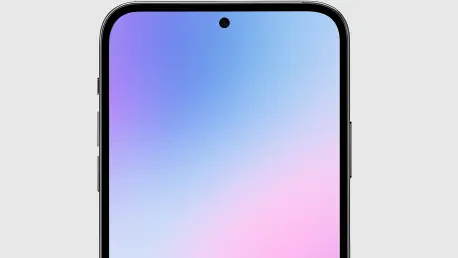
The successful implementation of under-display Face ID is set to fundamentally alter the iPhone’s iconic front-facing design, moving it closer than ever to the ideal of a single, uninterrupted slab of glass. By concealing the TrueDepth camera system components completely beneath the screen, Apple can finally move away from the notch and the current Dynamic Island hardware cutout. This long-awaited transition would enable a much cleaner and more immersive aesthetic, featuring only a single, small pinhole cutout for the front-facing selfie camera. Such a design would bring the iPhone’s physical appearance more in line with the current look of many modern Android flagship devices, satisfying a key desire for a maximized, edge-to-edge screen experience that does not compromise on secure biometric authentication. It marks a significant step in realizing the minimalist design philosophy that has guided Apple for years.
However, analysis of leaked insider information suggests that Apple’s strategy extends far beyond simple hardware elimination. The company reportedly views the Dynamic Island not merely as a temporary solution to a hardware constraint but as a “significant evolution” of the user interface that has become a permanent and integral cornerstone of iPhone interaction. This perspective reframes the Dynamic Island as a core interface paradigm—a dynamic, contextual hub for system alerts, Live Activities, background notifications, and seamless cross-app workflows. Consequently, even after the physical hardware for Face ID disappears from view, the software-based functionality that defines the Dynamic Island is expected to remain and continue to evolve. This indicates a commitment to the interaction model it introduced, separating the software experience from the physical hardware that initially necessitated its creation.
Timeline Feasibility and the Rationale for Revisions
The projected timeline for this technology’s arrival has been a subject of notable revision, reflecting the substantial and complex hurdles involved in its development. Esteemed display industry analyst Ross Young initially forecasted the feature for the iPhone 17 Pro models but later pushed his projection back to 2026. This revised timeline is corroborated by Bloomberg’s Mark Gurman, who indicates the technology will likely arrive in the iPhone 18 Pro models sometime between 2026 and 2027. These repeated postponements are not indicative of simple development delays but are direct consequences of the specific, intricate challenges being systematically addressed. These include resolving complex optical interference patterns from the display, optimizing the power efficiency of sensors operating through screen layers, scaling a completely new manufacturing process for the supply chain, and ensuring the final product passes Apple’s notoriously rigorous quality assurance standards.
Recent developments from within the supply chain have lent significant credibility to the 2026 timeframe, suggesting the project is transitioning from research to production. Michael Helander, CEO of OTI Lumionics, a key materials supplier for advanced displays, publicly confirmed that smartphones utilizing their under-panel Face ID materials are on track to be available for sale in 2026. Such a direct confirmation from a critical supplier is a powerful indicator that the technology is moving beyond the prototype phase and into concrete production planning. Furthermore, industry experts predict that by 2026, the manufacturing costs associated with this advanced technology will have decreased sufficiently to make mass production economically viable for a product on the scale of the iPhone. This 2026–2027 window also aligns perfectly with parallel advancements in OLED display technology, which are crucial for a successful and high-quality integration.
Broader Ecosystem Implications and a Calculated Strategy
The development of under-display Face ID is not an isolated project confined to the iPhone; it is an integral part of Apple’s larger, long-term technological roadmap that spans its entire product ecosystem. Evidence of this broader strategy is found in reports that Apple is concurrently testing this technology in a prototype of a foldable iPad Pro, which is said to feature an expansive 18.8-inch display. This cross-device testing reveals a systematic and methodical approach aimed at enhancing and unifying the authentication experience across its entire ecosystem. For a device like the iPad, this technology could unlock significant improvements, including seamless and secure authentication for professional content creation workflows and a more fluid user experience for large-screen multitasking. This innovation could ultimately extend beyond the iPhone and iPad to the Mac, fundamentally reshaping the security and user interaction paradigm across all of Apple’s major product lines.
Apple’s deliberate and patient development process for this technology stands in stark contrast to the strategies employed by some of its competitors. The company’s methodical approach prioritizes quality, security, and the overall user experience over the prestige of being the first to market. While some Android manufacturers have already released devices with under-display cameras, these early implementations are often met with critical reviews that cite noticeable reductions in image quality and other performance issues. Apple’s delay is a calculated decision to ensure that its under-display Face ID system matches or, ideally, exceeds the current gold standard in every critical metric. This includes maintaining its 99.9% accuracy rate, preserving sub-second unlock speeds, and guaranteeing unwavering and reliable performance for all users in all conditions. This quality-first philosophy was central to maintaining the company’s reputation for delivering a premium user experience.