
The silent, daily ritual of unlocking a smartphone has become the frontline in a technological contest for our most personal data, pitting convenience against impenetrable security. As the digital and physical worlds merge on the screens we carry, the method used to guard that gateway is more critical than ever. The landscape of 2025 is defined by a fierce competition between three core biometric technologies: the lightning-fast glance of face recognition, the trusted touch of a fingerprint scanner, and the high-security precision of an iris scan. This is not merely a contest of technical specifications but a global referendum on real-world performance, user trust, and practical application. From the controlled environments of Western tech hubs to the unpredictable conditions of India’s bustling public spaces, the ultimate victor will be the technology that provides the most effective and reliable balance for the everyday user, seamlessly integrating into the rhythm of modern life without compromising the sanctity of our digital identity.
The Enduring Primacy of the Fingerprint
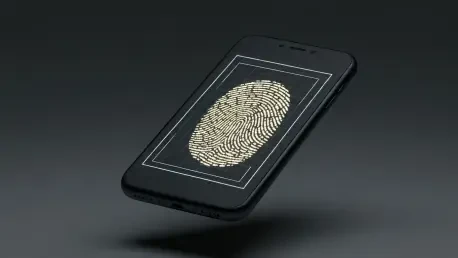
Despite the futuristic appeal of hands-free and eye-based authentication, the humble fingerprint scanner decisively maintained its position as the dominant biometric technology in 2025. Its supremacy is built on a foundation of technological maturity and unparalleled user trust, cultivated over years of reliable performance across billions of devices. The primary strength of fingerprint authentication lies in its remarkable consistency, functioning with equal precision in the bright glare of daylight and the complete darkness of night. This resilience to ambient lighting conditions gives it a significant practical advantage over its competitors. While the system’s main vulnerability is contact-based interference—failing when a user’s finger is wet, oily, or dusty—this has proven to be a minor and manageable inconvenience for most. In the grand calculus of daily use, its consistent accuracy and speed have cemented its reputation as the most dependable and practical gatekeeper for the modern smartphone, earning it a level of trust that newer technologies are still striving to achieve.
The global reign of fingerprint authentication was further solidified by its compelling economic advantages and widespread implementation. Its cost-effectiveness has made it a ubiquitous feature, democratizing high-level security by making it standard on everything from premium flagship models to the budget-friendly smartphones that dominate emerging markets. This universal availability ensures that users do not have to choose between affordability and robust security. In a market as vast and diverse as India, this combination of reliability and accessibility has made it the overwhelmingly preferred method for securing the most sensitive mobile applications. It is the default choice for authorizing transactions on the massively popular Unified Payments Interface (UPI), serving as a tangible testament to its status as the most trusted and practical form of digital security for hundreds of millions of users who depend on it daily for their financial well-being. This deep integration into critical ecosystems makes it more than a feature; it is essential infrastructure.
The Allure of Effortless Access
Face recognition has emerged as the most compelling challenger to the fingerprint’s throne, built almost entirely on the powerful promise of effortless convenience. The ability to unlock a device with a simple, passive glance offers a seamless, hands-free experience that is undeniably attractive for users on the move. This fluid interaction is ideal for quick, low-stakes access, such as checking notifications or changing a song, where the friction of touching a sensor can feel cumbersome. Its popularity has surged, particularly in the premium device market, where manufacturers have invested in sophisticated hardware like advanced cameras and infrared sensors. These components significantly enhance the system’s speed and accuracy, allowing it to function reliably in a wider range of lighting conditions and creating the “it just works” experience that defines modern flagship smartphones. For many, this level of convenience has become the new standard for a premium user experience, making it an excellent secondary option for quick access.
However, the technology’s real-world performance remains its Achilles’ heel, preventing it from achieving universal dominance. The effectiveness of face recognition systems is significantly compromised by common environmental variables. They often struggle in the harsh glare of direct sunlight, which can wash out facial features, as well as in very low-light situations where there isn’t enough detail for the sensor to capture an accurate map. Furthermore, its accuracy is easily diminished by everyday physical obstructions like face masks, scarves, and certain types of sunglasses, forcing users to revert to a passcode. This unreliability creates a distinct digital divide; while the technology performs admirably in the controlled indoor environments common in many Western markets, its inconsistent performance on a sunlit street or a dimly lit bus in a country like India renders it a less practical and often frustrating primary security method for a significant portion of the global population.
Security at the Cost of Convenience
From a purely technical standpoint, iris scanning represents the zenith of biometric security available on a consumer device. This method works by identifying and mapping the incredibly intricate and unique patterns within a person’s iris, a biological characteristic that is virtually impossible to replicate or spoof. This exceptional level of security grants it a significant theoretical advantage over both face and fingerprint recognition. It also bypasses some of the key weaknesses of its competitors, functioning perfectly even if the user is wearing a face mask, gloves, or non-reflective glasses. For applications demanding the highest level of assurance, such as governmental or high-stakes corporate access, the near-unbreakable security of an iris scan makes it an ideal solution. Its inherent resistance to forgery positions it as the ultimate guardian for the most sensitive digital information, setting a benchmark that other biometric methods struggle to meet.
Unfortunately, the exceptional security offered by iris scanning is shackled by significant practical limitations that have severely hampered its mainstream consumer adoption. The authentication process is notably slower and more cumbersome than its counterparts, requiring the user to hold their phone at a specific distance and deliberately align their eyes with the sensor. Many users find this action awkward and unnatural for the dozens of times they unlock their phone each day. This usability issue is compounded by its poor performance in bright, direct sunlight, which can interfere with the sensor’s ability to capture a clear image of the iris. These combined drawbacks have resulted in a widespread consumer rejection of the technology. Consequently, it has all but vanished from mainstream smartphones, having been relegated to a niche role in specialized, high-security devices used for government programs like India’s Aadhaar verification system or in corporate environments with stringent security protocols.
The Critical Conversation on Data Privacy
A persistent and understandable fear among smartphone users revolves around the security and storage of their most personal biometric data. Contrary to the common misconception that this information is uploaded to distant cloud servers where it could be vulnerable to breaches, modern smartphones employ a far more robust security model. Sensitive biometric data, whether it be a map of a face, the ridges of a fingerprint, or the pattern of an iris, is encrypted and stored locally on the device. This information is held within a specially protected hardware component known as a Secure Enclave, which is isolated from the main processor and operating system. This on-device storage architecture is a fundamental security feature that significantly mitigates the risk of remote hacking and unauthorized access, ensuring that the keys to a user’s digital identity never leave their physical possession. This design principle provides a strong foundation of trust in the technology.
This robust technical framework is further reinforced by a complex tapestry of regional data protection laws and varying user priorities around the globe. In regions like Europe, with its stringent General Data Protection Regulation (GDPR), the legal and social emphasis on data privacy is paramount, shaping how companies can handle user information. In contrast, in markets where the digital economy is rapidly expanding, user perspectives can differ. For many individuals, the immediate and tangible security benefit offered by biometrics—such as preventing financial fraud on a mobile banking app or stopping unauthorized access to personal messages—is a more pressing and practical concern than abstract debates about data privacy. The ability to lock down a lost or stolen device with a fingerprint provides a clear and present value that often outweighs potential, less-defined risks, highlighting a global variance in how security and privacy are weighed in the daily lives of users.
A Verdict Forged in Practicality
An analysis of the 2025 landscape revealed that fingerprint authentication decisively continued its reign as the most trusted and practical biometric solution for the global majority. It struck the optimal and most sought-after balance between robust security, affordability, speed, and real-world reliability that appealed to the broadest segment of smartphone users, from budget-conscious students in developing nations to power users in established markets. Face recognition firmly established itself as an excellent secondary option, prized for its convenience in low-stakes situations, with its capabilities steadily advancing, especially within the premium market. The most effective approach for the modern user had become a hybrid, two-factor biometric strategy: leveraging the speed of face unlock for quick, casual access while relying on the unwavering security of the fingerprint scanner for sensitive operations like mobile banking and digital payments. While the future pointed toward more advanced, multi-modal biometric systems, the realities of 2025 ensured that proven reliability and sheer practicality kept the fingerprint sensor as the people’s undisputed choice.