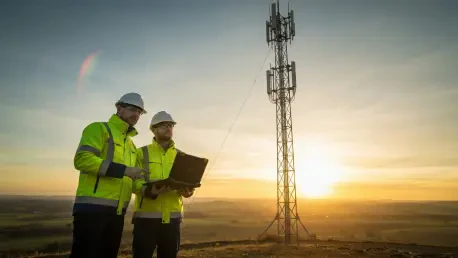

In the rolling hills and expansive fields that define much of the nation’s countryside, a persistent silence has long hampered progress, a digital silence born from the absence of a reliable mobile signal. For years, this connectivity gap has been more than an inconvenience; it has been a significant barrier to economic growth, safety, and the well-being of rural communities, particularly for those in the agricultural sector. Now, a major infrastructure initiative promises to break that silence. The government, in a landmark collaboration with the UK’s leading mobile network operators, has announced a plan to upgrade over 100 mobile masts across the most remote parts of England, Scotland, and Wales. This effort is a core component of the ambitious Shared Rural Network (SRN) program, designed to deliver a new era of 4G coverage to areas that have been left behind in the digital revolution. For the first time, many of these communities will have access to consistent mobile service from all major providers, potentially transforming how they live, work, and stay safe in an increasingly connected world.
A Landmark Initiative for Rural Connectivity
The Shared Rural Network in Action
The Shared Rural Network represents a powerful public-private partnership aimed directly at leveling the digital playing field between urban and rural areas. This collaborative program unites the government with the nation’s primary mobile network operators—EE, Virgin Media O2, and Vodafone Three—to tackle the challenging and often commercially unviable task of extending mobile infrastructure into sparsely populated regions. The immediate focus of this latest phase is the upgrade of more than 100 existing masts, a move projected to introduce high-speed 4G coverage from all participating providers to these locations for the first time. The tangible impact of this is expected to be vast, extending reliable outdoor 4G signals across an additional 4,000 square kilometers of the UK. This isn’t merely about providing faster downloads; it’s a foundational step toward unlocking the full potential of rural economies, enabling modern agricultural technologies, and ensuring that essential digital services are accessible to everyone, regardless of their postcode.
The ripple effects of enhanced connectivity extend far beyond the farm gate, touching upon fundamental aspects of rural life such as personal safety and mental well-being. For individuals working long hours in isolated environments, a dependable mobile signal is not a luxury but a critical lifeline, enabling them to call for help in an emergency or simply stay in touch with family and colleagues. The National Farmers’ Union (NFU) has been a vocal proponent of this view, highlighting how improved coverage can help alleviate the profound sense of loneliness that can affect those in remote professions. This issue becomes particularly poignant around holidays, when feelings of isolation can be magnified. By providing a stable connection to the outside world, the SRN initiative is seen as a direct investment in the mental health of the agricultural community. It supports the NFU’s long-standing campaign to ensure that the network effectively eradicates “total not-spots,” thereby granting remote communities access to services that can profoundly benefit both farm safety and overall quality of life.
A Cautious Welcome from the Agricultural Sector
While the announcement of the mast upgrades has been formally welcomed by the National Farmers’ Union, this support is framed by the stark reality of the current digital deficit. The organization’s own digital access survey paints a clear picture of the challenge at hand: a mere 22% of its members report having a reliable mobile signal across their entire farm. More alarmingly, nearly one in ten farmers have no access to 4G or 5G connectivity whatsoever, effectively cutting them off from the tools and services that are standard in other industries. NFU Vice-president Rachel Hallos has articulated that this persistent lack of connectivity has severely hindered the full potential of British farming, preventing the adoption of innovative technologies that could boost productivity and sustainability. The new mast program is therefore seen not as a final solution, but as a crucial and long-overdue step in the right direction. The agricultural community views these upgrades as an essential foundation upon which a more digitally inclusive rural economy can be built, allowing farms to operate as modern, efficient businesses.
Beyond the technical aspects of the network rollout, the NFU has raised a critical point concerning the human element of the infrastructure expansion: the fair and respectful treatment of the landowners who host the mobile masts. The organization has been unequivocal in its insistence that these individuals, who are essential partners in the project, must be fully consulted throughout the entire process. This includes transparent communication regarding the construction, maintenance, and technological upgrades planned for the equipment on their property. Furthermore, the NFU is advocating for fair and sufficient compensation that accurately reflects the value and importance of their land in building out this national infrastructure. This stance underscores a core principle: for the Shared Rural Network to be a true success, it must be implemented in a way that respects and values the contributions of the rural communities it is designed to serve, ensuring that the benefits of progress are shared equitably among all stakeholders involved in this transformative effort.
Bridging the Divide or Just a First Step
The Persistent Challenge of Digital Exclusion
A primary objective championed by the NFU has been the complete elimination of “total not-spots”—areas devoid of any usable mobile signal from any provider. The organization has actively lobbied the government to ensure the Shared Rural Network is designed not just to improve existing coverage but to strategically target and eradicate these digital black holes. The existence of not-spots creates a significant disparity in opportunity, as residents and businesses in these locations are shut out from an ever-growing list of essential services that have migrated online. From digital banking and government services to telehealth consultations and online education, access to a reliable mobile connection has become a prerequisite for full participation in modern society. This digital exclusion places rural communities at a distinct disadvantage, hampering their ability to innovate, compete, and thrive. Consequently, the success of the SRN will ultimately be measured not by the number of masts upgraded, but by its ability to provide comprehensive and universal coverage that ensures no community is left behind in the digital age.
The current wave of over 100 mast upgrades, while significant, represents just one phase of a much larger and more complex undertaking. The Shared Rural Network is a multi-year program scheduled to continue its rollout of new and upgraded infrastructure until 2027. This extended timeline reflects the immense logistical and engineering challenges involved in bringing robust connectivity to the UK’s most remote and rugged landscapes. The NFU, representing the interests of the agricultural sector, remains steadfast in its call for the government and its mobile network partners to maintain momentum and see the project through to its full completion. The overarching goal is not merely to patch a few holes in the network but to fundamentally reshape the digital landscape of rural Britain. The ultimate vision is to provide all rural businesses, families, and communities with the same digital opportunities as their urban counterparts, creating an environment where a farm in a remote valley can be just as connected and technologically advanced as an office in the city center.
Looking Beyond the Mast Upgrades
The initiative to upgrade rural mobile masts became a testament to the idea that technological advancement was about more than just infrastructure. It represented a pivotal acknowledgment that the digital divide was a barrier to economic equity, safety, and community well-being. The program catalyzed a much-needed national conversation that shifted from simply counting coverage percentages to understanding the profound human impact of connectivity. It forced policymakers and industry leaders to confront the practical realities faced by landowners, the mental health implications of rural isolation, and the untapped potential of industries like agriculture that were eager to integrate modern digital tools. The project underscored the intricate relationship between technology and society, proving that successful infrastructure development required not only engineering expertise but also deep community engagement and a commitment to fair partnership. This effort ultimately set a new standard for future projects, demonstrating that connecting people was just as important as connecting networks.