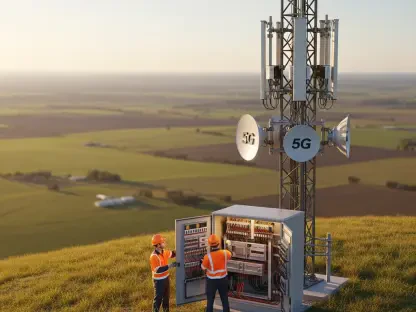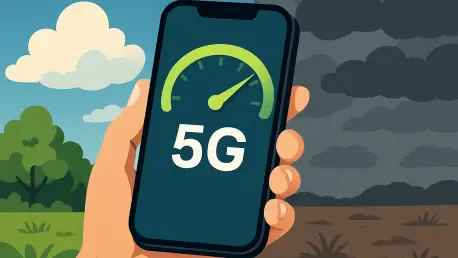

The appearance of a 5G icon on a smartphone screen often brings an expectation of lightning-fast downloads and flawless connectivity, yet the reality for many users can be a frustrating mix of incredible speed one moment and a complete loss of signal the next. This growing disconnect between the advertised potential of next-generation networks and the inconsistent daily experience has become a significant point of concern for consumers and regulators alike. A recent comprehensive study conducted by the Telecom Regulatory Authority of India (TRAI) in the Bihar licensed service area provides a stark, data-driven look into this very issue, revealing a landscape where impressive technological capability is frequently undermined by fundamental gaps in network availability. The findings from this extensive Independent Drive Test (IDT), which meticulously measured performance across diverse environments, offer critical insights into the true state of mobile services and highlight the urgent need to balance the pursuit of peak performance with the foundational requirement of reliable, widespread coverage for all users.
Unpacking the Network Assessment
A Comprehensive Testing Framework
To capture an accurate and holistic view of mobile network performance, the assessment employed a multi-faceted Independent Drive Test methodology supervised by TRAI’s Kolkata office. This was not a simple stationary test but a rigorous evaluation designed to mirror the varied conditions a typical user encounters daily. The scope of the testing was extensive, covering a total of 220.9 kilometers of city routes within the Hazaribagh district, a significant 327.5-kilometer stretch along the vital Ranchi–Patna highway corridor, and another 376.9 kilometers on the busy Patna–Ranchi railway route. This combination of urban, highway, and rail testing ensured that the data reflected performance in high-density areas as well as along critical transportation links. Beyond mobile testing, the evaluation also included static tests at 18 different public hotspots and detailed walk tests at key locations like the Hazaribagh Town railway station. This comprehensive approach allowed for a granular analysis of how networks perform not just for users in transit but also for those who are stationary or moving on foot in crowded public spaces, providing a complete and realistic picture of service quality.
Evaluating the Core User Experience
The evaluation delved deep into the specific metrics that define the quality of both voice and data services, moving beyond simple speed measurements to assess overall reliability and performance across 2G, 3G, 4G, and 5G technologies. For voice communications, the tests measured key performance indicators such as the call setup success rate, which determines how reliably a connection can be established, the dropped call rate, a critical indicator of network stability, and overall speech quality, which impacts the clarity of conversations. On the data front, the parameters were equally thorough, focusing on download and upload throughputs to gauge the speed of data transfer, latency to measure network responsiveness—a crucial factor for real-time applications like online gaming and video conferencing—and video streaming performance to assess the network’s ability to deliver high-quality, buffer-free content. By meticulously measuring these distinct yet interconnected parameters, the study provided a nuanced understanding of the end-user experience, revealing how well each operator’s network supported the full spectrum of modern mobile activities, from making a simple phone call to streaming high-definition video on the go.
The Stark Contrast in Performance
The Tale of Two Networks
The findings from the drive tests painted a picture of a network landscape defined by extreme contrasts. On one hand, the capabilities of 5G technology were on full display, demonstrating the immense potential of the next-generation infrastructure. The report highlighted that 5G services achieved a maximum average download throughput of an impressive 199.26 Mbps, a speed that facilitates near-instantaneous downloads of large files and seamless streaming of ultra-high-definition content. The average upload speed was also robust, recorded at 24.47 Mbps, enabling users to quickly share high-resolution media and participate in high-quality video calls without issue. These figures represent a significant leap forward in mobile data performance and underscore the transformative power of 5G when a strong connection is available. However, this high-speed capability was only part of the story. The same comprehensive testing that revealed these powerful speeds also uncovered a troubling and contradictory trend: significant and widespread gaps in basic network coverage, particularly in urban environments where consistent connectivity is most expected and needed by the population.
Unmasking the Coverage Deficit
The impressive 5G speed metrics stood in stark opposition to the pervasive issue of poor network coverage, which the report meticulously detailed. When test devices were set to automatically select the best available network—a standard setting for most consumer smartphones—the results revealed alarming weaknesses in signal availability within city limits. For some of the nation’s leading operators, the problem was notable; Airtel’s network showed poor signal strength across 5.53% of the urban test route, while Reliance Jio fared slightly better with poor coverage over 4.52% of the same route. However, the situation was far more critical for other providers. Vodafone Idea Limited (VIL) exhibited a substantial coverage deficit, with poor signal strength plaguing 23.98% of the urban drive. The most severe challenge was faced by the state-owned BSNL, which struggled with poor signal strength across a staggering 46.10% of the tested urban areas. This data brought a crucial reality to light: while networks were capable of delivering high speeds on major corridors, the fundamental reliability of their signal remained a significant hurdle, exposing a critical divide between technological potential and consistent real-world performance.
From Data to Action
The detailed findings of the Independent Drive Test were not merely an academic exercise but served as a crucial diagnostic tool. TRAI promptly shared the comprehensive report with the respective telecom operators, providing them with a clear, evidence-based roadmap of their network’s specific shortcomings in the Bihar service area. This direct feedback loop was essential, as it moved the discussion beyond anecdotal user complaints to a conversation grounded in objective performance data. The operators were presented with precise locations and conditions under which their services faltered, from dropped calls on urban routes to inadequate data speeds at public hotspots. This empowered them to undertake targeted network optimization and infrastructure enhancements aimed directly at resolving the identified service gaps. The ultimate goal of this regulatory oversight was to compel providers to improve the overall quality of experience, ensuring that the promise of high-speed 5G was built upon a foundation of consistent and reliable coverage for every customer.