
The escalating problem of SIM swapping in the Democratic Republic of the Congo presents a stark and urgent illustration of how regional instability and profound economic hardship can dangerously amplify a global cybercrime trend. This insidious form of fraud, in which criminals seize control of a victim’s phone number to access their digital life, has found an exceptionally fertile breeding ground within the DRC. The nation’s unique circumstances—a complex blend of systemic weaknesses, including inconsistent regulatory enforcement, and a population that has become heavily reliant on mobile technology for basic financial survival—have created a perfect storm. It is within this volatile environment that criminal opportunism thrives, systematically exploiting the vulnerabilities of a nation grappling with a multifaceted crisis. The impact is not merely financial; it tears at the fabric of trust in the digital systems that have become an essential lifeline for millions, leaving individuals and communities exposed and vulnerable. A recent security and political crisis in the eastern DRC acted as a powerful catalyst, as the capture of Goma and Bukavu by M23 rebels in early 2025 and the subsequent closure of banks forced the populace to depend almost entirely on mobile money, creating a massive pool of new targets for fraudsters.
The Anatomy of the Scam
The Mechanics of Deception
The foundation of a SIM swapping scheme is built on sophisticated social engineering, a methodical process where criminals meticulously gather personal information to convincingly impersonate their intended target. These fraudsters employ a variety of tactics, ranging from classic phishing emails designed to trick individuals into revealing login credentials to extensively combing through public social media profiles for details like birthdates, family members, and frequently visited locations. In the city of Goma, a particularly common and deceptive tactic involves sending unsolicited text messages that falsely proclaim the recipient has won a substantial cash prize, instructing them to simply reply with the word ‘ok’ to claim it. This seemingly innocuous response can trigger a system that grants the attackers access to the victim’s personal data. Another insidious method involves luring unsuspecting individuals with fake but highly attractive job offers that demand minimal qualifications, such as fluency in widely spoken languages like French or Swahili, as a pretext to harvest sensitive personal information during the “application” process.
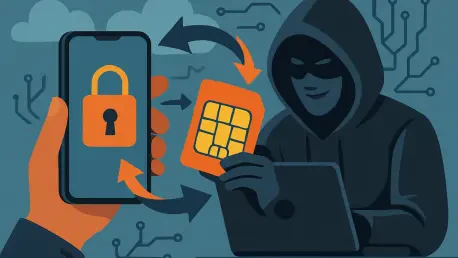
Once armed with a sufficient cache of the victim’s personal data, the fraudster is ready to execute the core of the scam: the physical transfer of the phone number. They approach a telecommunications provider with the goal of having the target’s number ported to a new SIM card in their possession. While official telecommunication dealer locations typically enforce stricter identification protocols, criminals have discovered a significant vulnerability in the system by targeting less regulated and often more desperate street vendors. By fabricating a sympathetic story, such as claiming their phone and all identification documents were recently stolen, and supplementing this plea with a small payment of around 3,000 Congolese francs (FC), fraudsters can effectively circumvent the more rigorous security measures. This exploitation of both the sympathy and economic precarity of street vendors allows them to bypass the official requirement for verified identification, making the swap alarmingly easy to complete. The moment the transfer is authorized, the fraudster gains complete and unfettered control over the victim’s mobile number, and the legitimate owner’s SIM card is instantly deactivated.
The Aftermath of the Attack
The successful completion of a SIM swap immediately provides the fraudster with total command over the victim’s mobile identity, a position of power that has devastating and far-reaching consequences. With control of the phone number, the criminal can intercept all incoming calls and text messages, but their primary target is the stream of one-time passwords and two-factor authentication (2FA) codes sent via SMS. These codes, designed to be a crucial layer of security, are transformed into a master key that unlocks the entirety of the victim’s digital existence. This unfettered access allows the criminal to systematically breach the most sensitive personal accounts, including online banking portals, email platforms, social media profiles, and increasingly valuable cryptocurrency wallets. The financial fallout is often swift and catastrophic, with criminals draining bank accounts and liquidating digital assets within minutes, leaving the victim with little to no recourse. The speed and efficiency of these thefts underscore the profound vulnerability exposed when a single point of failure—the mobile number—is compromised.
The damage inflicted by SIM swapping extends far beyond immediate financial theft, plunging victims into a prolonged ordeal of personal and legal turmoil. They face severe identity theft, profound breaches of personal privacy, and significant emotional distress that can last for years. Moreover, the criminals can weaponize the hijacked phone line for a host of other illicit activities, such as money laundering, corporate espionage, or maliciously harassing the victim’s personal and professional contacts. In these scenarios, the legitimate owner of the number can find themselves held liable for crimes committed using their identity, creating a nightmarish legal battle. One victim shared a harrowing experience of having his Airtel SIM card swapped on two separate occasions. The first time, a scammer posing as a customer care agent skillfully tricked him into revealing his frequently called numbers, which were then used to facilitate the swap and extort his contacts for sums as high as US$10,000. The second time, he only realized he had been targeted again when his friends and family reached out through other channels to verify the sudden and highly unusual cash requests they were receiving from his number.
Combating the Threat
Current Responses and Persistent Challenges
In reaction to this burgeoning threat, both the Congolese government and the country’s major telecommunications operators have begun to initiate a series of countermeasures aimed at fortifying defenses against SIM swap fraud. At the national level, the Autorité de Régulation de la Poste et des Télécommunications du Congo (ARPTC) has taken a significant step by mandating far stricter SIM registration requirements. These new rules now necessitate the collection of biometric identification, such as fingerprints and detailed photographs, for all new SIM card activations and replacement requests. In regions identified as high-risk, including the heavily affected city of Goma, service providers like Vodacom, Airtel, and Orange have implemented additional, layered security measures. These include multi-factor authentication methods that require more than just a simple request, demanding PIN codes, official ID verification, or correct answers to pre-set security questions before a SIM swap can be authorized. Furthermore, companies such as Vodacom have deployed sophisticated, automated fraud detection systems to monitor for unusual account activity and have adopted advanced anti-fraud roaming systems to better secure cross-border communications.
Despite these important and necessary efforts, their overall effectiveness continues to be undermined by a series of deeply entrenched and significant challenges. A primary issue is the weak enforcement of the new regulations, which is frequently compromised by pervasive corruption and the potential for insider collusion, rendering even the most robust security protocols functionally ineffective. Infrastructural limitations also play a critical role, as many service centers, particularly those located outside of major urban hubs like Kinshasa or Lubumbashi, lack the necessary biometric scanning equipment to fully comply with the new mandates from the ARPTC. This creates a disparity in security between urban and rural areas. Compounding these issues are widespread digital illiteracy and limited internet connectivity in remote parts of the country. These factors make it exceedingly difficult for large segments of the population to understand complex cyber threats, recognize sophisticated social engineering tactics, and adequately protect themselves from becoming victims in an increasingly digitized world where their mobile phone is their bank.
A Path Toward Resilience
Ultimately, addressing these persistent vulnerabilities required a multifaceted and culturally resonant strategy. It became clear that the most effective path forward involved developing more targeted public education campaigns conducted in local languages such as Swahili, Lingala, and Kikongo, which were essential to bridge the critical knowledge gap among at-risk populations. These campaigns focused on delivering practical, actionable advice, such as urging consumers never to respond to unsolicited prize notifications and to always verify cash requests from contacts by making a direct call back to their number. Crucially, the government also had to establish and implement robust enforcement and accountability mechanisms. This ensured that all SIM card vendors, particularly the informal network of street vendors, strictly complied with legal and security protocols during registration and swap procedures. Finally, a consensus was reached on the need for the systematic collection of statistics on SIM swap fraud, as such data was the only way to accurately gauge the scale of the problem and determine if more targeted actions were needed to protect citizens.