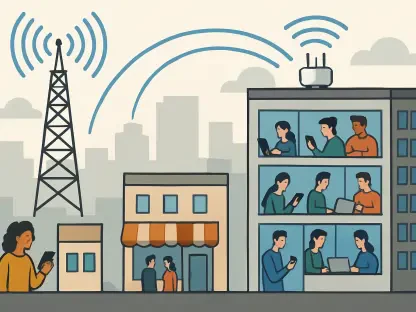

The ability to maintain a consistent digital presence regardless of geographic isolation has long been the final frontier for smartphone manufacturers seeking to provide total reliability. Samsung Electronics has officially shifted the parameters of mobile telecommunications by announcing a comprehensive expansion of satellite communication capabilities across its device ecosystem. This strategic initiative is not limited to the flagship Galaxy S26 series but also encompasses several previous generations and mid-range models, marking a departure from the industry trend of gatekeeping advanced features for premium tiers. By integrating non-terrestrial network technology into the broader user experience, the company aims to eliminate “dead zones” that have historically hindered emergency response and remote data access. This move signifies a pivotal moment where satellite connectivity transitions from a niche safety backup to a foundational element of the global mobile infrastructure, facilitated by a complex network of international carrier partnerships.
The Intersection of Connectivity and Artificial Intelligence
Modern artificial intelligence relies heavily on the constant exchange of data between the local device and powerful cloud-based processing centers. As Galaxy devices integrate more sophisticated generative AI and real-time translation tools, the necessity for an uninterrupted network connection becomes a matter of functional survival rather than just convenience. Samsung recognizes that an AI-driven smartphone loses a significant portion of its utility when it enters a cellular blind spot, effectively stalling the automated workflows and predictive services that users have come to expect. By bridging these gaps with satellite links, the manufacturer ensures that the intelligence of the device remains persistent, whether a user is in a dense urban canyon or a remote mountainous region. This integration ensures that the latency and throughput requirements of modern AI models are met through a hybrid approach that leverages the best of both terrestrial and non-terrestrial signal sources.
The concept of “everyday infrastructure” is central to this technological evolution, positioning satellite access as a natural extension of the cellular experience. Rather than treating satellite features as a separate mode that must be manually toggled during a crisis, Samsung is working to make the transition between different network types entirely transparent. This approach allows for a seamless flow of information where the device intelligently selects the most stable connection available without requiring user intervention. Such a development is crucial for maintaining the integrity of cloud-synced applications and background services that underpin the modern mobile ecosystem. As the industry moves toward 2027 and beyond, the expectation for “always-on” connectivity is shifting the burden of network management from the consumer to the hardware and software layers of the device. This shift ensures that the natural feel of the Galaxy user interface is never interrupted by the physical limitations of ground-based radio towers or geographical barriers.
Regional Rollouts and Global Telecommunications Partnerships
Global rollout strategies reflect a highly localized approach, where Samsung tailors its satellite services to match the specific regulatory and technical landscapes of different regions. In North America, the strategy is defined by distinct partnerships with major carriers like T-Mobile, which utilizes the Starlink constellation to offer a robust suite of services including T911 emergency assistance, text messaging, and basic data functions. This particular implementation is notable for its backward compatibility, reaching users with devices as old as the Galaxy S21 series. Meanwhile, Verizon has chosen a more focused path by prioritizing emergency SOS and messaging features for its customers using the Galaxy S25 and subsequent models. AT&T also remains a key player in this transition, with ongoing development projects aimed at harmonizing satellite signals with existing 5G frameworks. These varied approaches demonstrate that while the hardware provides the capability, the service experience is defined by the synergy between manufacturers and network operators.
The European and Asian markets are witnessing a similar surge in collaborative efforts to blanket vast territories with reliable non-terrestrial coverage. Samsung has already secured foundational agreements with Virgin Media O2 in the United Kingdom and is currently conducting technical trials with MasOrange in Spain to refine signal handoffs in diverse terrains. The involvement of Vodafone further suggests a long-term vision to create a pan-European satellite network that supports Galaxy users across national borders, which is particularly beneficial for international travelers and residents in isolated rural communities. In Japan, the implementation takes on a specialized role by integrating critical safety features like the Earthquake and Tsunami Warning System directly into the satellite link. Starting with KDDI and expanding to SoftBank and DOCOMO, these services provide a vital lifeline during natural disasters when traditional infrastructure often fails. This multi-carrier strategy ensures that safety and communication are not dependent on a single point of failure or a specific regional provider.
Hardware Democracy and Software Requirements
Perhaps the most significant aspect of this announcement is the democratization of satellite technology, which was previously a luxury reserved for the most expensive “Ultra” flagship models. Samsung has broken this tradition by explicitly including the mid-range Galaxy A series in its satellite rollout plans, signaling a trend toward making safety and connectivity a standard across a wider price spectrum. This decision reflects a corporate philosophy that high-stakes communication tools should be accessible to a broader demographic, rather than being restricted by a paywall of premium hardware. By equipping more affordable devices with the necessary antennas and modems to communicate with low-earth orbit satellites, Samsung is effectively raising the baseline for what constitutes a modern mobile device. This move likely pressures competitors to follow suit, potentially leading to a market-wide adoption of satellite standards in the mid-tier segment. Consequently, the distinction between high-end and budget-friendly devices is becoming less about essential connectivity and more about secondary hardware specifications.
Despite the hardware readiness of many Galaxy devices, the actual activation of satellite services remains contingent upon a complex interplay of software updates and carrier-specific timelines. The rollout of One UI versions that support non-terrestrial networks is a prerequisite for unlocking these capabilities, meaning that software optimization is just as critical as the physical modem inside the phone. Samsung has indicated that the availability of these features will vary depending on the specific model and the regional progress of network operators. This creates a tiered implementation schedule where some users may gain access to text messaging first, while others might wait for full data integration. Furthermore, the regulatory environment in each country dictates which frequency bands can be used for satellite-to-cell communication, adding another layer of complexity to the global deployment. Users are encouraged to stay informed about their specific carrier’s roadmap, as the transition to a satellite-enabled ecosystem is a collaborative effort that requires alignment between the manufacturer, the satellite provider, and the carrier.
Future Implications: Toward an Invisible Hybrid Network
The leadership at Samsung MX Business, led by President Won-Joon Choi, championed a philosophy of “open collaboration” as the primary driver for this connectivity revolution. By acting as a central integrator, Samsung successfully harmonized the technical requirements of massive satellite constellations with the everyday needs of mobile users. This collaborative model moved beyond traditional competition, focusing instead on building a unified network layer that prioritizes reliability during crucial moments. The ultimate goal was to establish a hybrid connectivity environment where the transition between terrestrial and satellite signals occurred without any perceptible change for the end-user. This approach addressed the long-standing problem of signal fragmentation, ensuring that a smartphone remained a dependable tool for both high-bandwidth AI tasks and essential emergency communications regardless of the environment. By embracing this vision, the company effectively differentiated its brand through a commitment to total network availability, setting a new benchmark for the global telecommunications industry.
In light of these developments, users should verify their device compatibility and prepare for the necessary system updates to enable these advanced communication features. The transition toward a hybrid network model offered a practical solution for those living in or traveling through areas with inconsistent cellular coverage, providing a secondary layer of security that was once impossible for standard mobile devices. Future considerations for the industry will likely revolve around expanding data throughput on satellite links to support even more demanding applications, such as real-time video streaming in remote areas. As more carriers join this global initiative, the price of these services is expected to decrease, making universal connectivity a standard feature of the modern digital lifestyle. Consumers and enterprise users alike benefited from this systemic push toward reliability, ensuring that the next generation of mobile experiences remained grounded in the principle of constant, uninterrupted access to the world. Samsung’s initiative thus provided a roadmap for a world where geographical limitations no longer dictated the quality of digital interaction.