
Apple has officially pulled back the curtain on its second-generation AirTag, introducing a suite of significant hardware and software enhancements designed to make finding misplaced items faster, easier, and more intuitive than ever before. Building on the success of its predecessor, the new tracker boasts a louder speaker, extended range, and a reimagined Precision Finding feature, all while maintaining its accessible price point. This article will explore the technological leaps behind the new AirTag, analyze its expanded capabilities within the Apple ecosystem, and examine its impact on the competitive personal tracker market.
From Disruptor to Dominator: The AirTag’s Journey Since 2021
When Apple entered the item tracker market in 2021, it fundamentally shifted the landscape. Leveraging the power of its vast, crowdsourced Find My network, the original AirTag offered a level of reach that competitors like Tile couldn’t easily match. This deep integration with hundreds of millions of Apple devices worldwide quickly established it as the dominant force. By late 2024, the AirTag had captured an estimated 70% of the market, solidifying its position and setting a high bar for this much-anticipated second-generation release. Understanding this context is crucial to appreciating why these new upgrades are designed not just to improve a product, but to cement a market leader’s dominance.
A Closer Look at the Second-Generation Upgrades
Precision Finding Reimagined: The Power of the UWB Chip
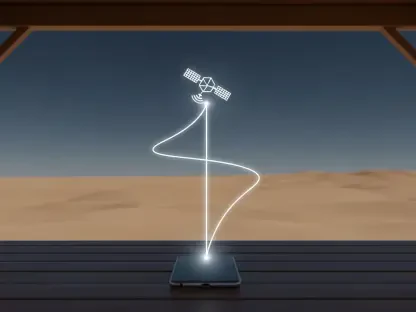
The centerpiece of the new AirTag is Apple’s second-generation Ultra Wideband (UWB) chip, the same advanced silicon found in the latest iPhone 17 and recent Apple Watch models. This powerful upgrade supercharges the Precision Finding feature, extending its operational range by up to 50%. Users are now guided to their items with a more responsive combination of haptic, visual, and audio feedback, making the search process more direct and efficient. This shared chip technology deepens the synergy across Apple’s product line, creating a more cohesive and powerful location-aware ecosystem.
Enhanced Usability and Deeper Ecosystem Integration
Beyond the UWB chip, Apple focused on practical, real-world usability. The new AirTag features a speaker that is 50% louder, allowing its alert chime to be heard from up to twice the distance of the original. This, combined with an extended Bluetooth range, ensures users can locate items from further away. In a significant step for ecosystem integration, Precision Finding is no longer exclusive to the iPhone. Owners of an Apple Watch Series 9 or later, or an Apple Watch Ultra 2 or later, can now get turn-by-turn directions to their lost item directly from their wrist, a major convenience for users on the go.
Expanding Functionality for Travel and Sharing
Apple is also expanding the AirTag’s utility with new software features and strategic partnerships. A new “Share Item Location” feature in iOS allows a user to temporarily grant tracking access to a third party, perfect for sharing a set of keys or a bag with a friend. Recognizing the AirTag’s popularity among travelers, Apple has also partnered with 50 major airlines to provide enhanced luggage tracking, offering greater peace of mind during transit. Despite these substantial upgrades, the price remains unchanged at $29 for a single unit and $99 for a four-pack, with free personalized engraving continuing to be a key part of its value proposition.
The Future of the Item Tracker Market
The launch of the second-generation AirTag places significant pressure on the rest of the market. With its enhanced features, deep ecosystem integration, and unchanged price, Apple is tightening its grip on the 70% market share it already commands. This move will likely force competitors to innovate beyond simple Bluetooth tracking, perhaps focusing on niche markets or alternative form factors. For Apple, the advanced UWB chip serves as a platform for future innovations, potentially enabling even more sophisticated location-aware experiences and further embedding the AirTag into the fabric of daily life.
Key Takeaways and Consumer Guidance
The new AirTag is a powerful evolution that solidifies Apple’s lead in the personal tracking space. The key takeaways are the dramatic improvements to Precision Finding via the new UWB chip, the practical benefits of a louder speaker and extended range, and the added convenience of Apple Watch integration. For existing users, the upgrade is most compelling for those who frequently use Precision Finding or want the new watch functionality. For new buyers, it is the undisputed best choice within the Apple ecosystem. Furthermore, frequent travelers will find the new airline partnerships a decisive factor, making it an essential travel accessory.
Securing Its Lead: Apple’s Vision for a Connected World
In conclusion, the second-generation AirTag is more than just an incremental update; it is a clear statement of Apple’s strategic vision. By enhancing the core technology, expanding its use cases, and deepening its integration with other devices, Apple reinforces the strength of its walled-garden ecosystem. This launch not only solidifies the AirTag’s market dominance but also pushes the boundaries of what a personal item tracker can be. As our world becomes increasingly connected, the new AirTag stands as a testament to Apple’s commitment to making that connectivity seamless, intuitive, and secure.