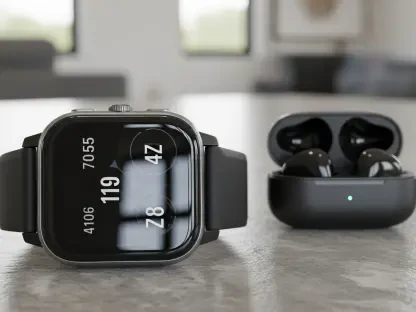
This year’s refresh of the Apple Watch lineup has created a fascinating dilemma for consumers, forcing a reconsideration of what truly defines a “flagship” experience when the budget-friendly model packs such a powerful punch. The once-clear lines separating the tiers of Apple’s smartwatch offerings have blurred, presenting a more complex but ultimately more rewarding choice for prospective buyers. The decision is no longer a simple matter of good, better, and best; instead, it is a nuanced evaluation of necessity versus luxury.
Defining the 2026 Lineup: Which Watch Wins?
The central question facing most consumers is not which Apple Watch is technologically superior, but which one offers the most practical value. This review serves as a guide to navigate that choice, focusing specifically on whether the flagship Series 11 justifies its premium price tag when compared to the substantially upgraded and more affordable Apple Watch SE 3. While a third model exists at the pinnacle of the lineup, the primary decision for the mainstream market rests between these two highly capable devices.
For the sake of clarity, the Apple Watch Ultra 3 remains in its own category. It is a specialized tool designed for extreme athletes, divers, and adventurers who require uncompromising durability and niche features like an advanced depth gauge. Its high price and robust feature set place it outside the consideration set for the average user, allowing the spotlight to fall squarely on the compelling matchup between the Series 11 and its budget-conscious sibling.
What’s New in 2026: An Overview of the Models
The 2026 collection presents three distinct smartwatches, each tailored for a different segment of the market. At the top sits the rugged Apple Watch Ultra 3, priced at $799. In the middle is the mainstream flagship, the Apple Watch Series 11, starting at $399. Finally, the entry point is the impressively revamped Apple Watch SE 3, which begins at a very accessible $249, positioning it as a powerful contender for the consumer dollar.
This year, the most significant story is the evolution of the Apple Watch SE 3. It sheds its reputation as a “lite” version and adopts features once reserved for premium models. The inclusion of the powerful S10 chip, an always-on display, and fast charging fundamentally elevates its daily usability. Furthermore, the addition of a wrist-temperature sensor brings sophisticated sleep and cycle tracking to the budget tier, making the SE 3 a far more compelling alternative to the flagship than any of its predecessors.
Head-to-Head: Comparing Core Experience and Exclusive Features
A detailed assessment of the Series 11 and SE 3 reveals an astonishing degree of overlap in the core user experience. Both models are powered by the same S10 processor, which means performance, app launch times, and interface responsiveness are identical. Users of either watch will enjoy the convenience of an Always-on Retina display, ensuring the time and complications are always visible. Essential heart health notifications, comprehensive sleep tracking with a new sleep score metric, and critical safety features like Fall and Crash Detection are standard across both, creating a powerful and consistent foundation.
The distinction between the two models becomes clear when examining their exclusive capabilities. The Apple Watch Series 11 carves out its premium identity with a suite of advanced health sensors, including an ECG app for taking an electrocardiogram, a Blood Oxygen app, and alerts for hypertension. Its display is also noticeably superior, reaching a peak brightness of 2000 nits—double that of the SE 3—for exceptional legibility in direct sunlight. Moreover, the Series 11 offers more luxurious material choices, such as titanium, and boasts a certified IP6X dust resistance rating for enhanced durability in harsh environments.
Weighing Your Options: Key Strengths and Limitations
The primary strength of the Apple Watch SE 3 lies in its extraordinary value proposition. By incorporating essential flagship features like the always-on display and a modern processor, it delivers the quintessential Apple Watch experience for a fraction of the cost. For most users, its capabilities are more than sufficient for everyday fitness tracking, notifications, and communication. Its main limitations, however, are the absence of the advanced health-monitoring tools and a more restricted selection of case materials and colors, confining it to a standard aluminum finish.
In contrast, the key advantage of the Apple Watch Series 11 is its comprehensive health-monitoring suite, which provides deeper insights and potential early warnings for specific cardiac and respiratory conditions. This, combined with its superior build quality, brighter screen, and wider range of premium finishes, makes it the more polished and capable device overall. Its primary disadvantage is a significantly higher price point for a set of features that, while impressive, may not be essential for the average consumer, making it a luxury rather than a necessity.
The Final Verdict: Is the Upgrade Justified?
The findings indicate that the functional gap between Apple’s budget and flagship smartwatch models has narrowed to its smallest point ever. With shared core performance and essential features, the Apple Watch SE 3 now stands as the most logical and cost-effective choice for the majority of consumers. It delivers nearly all of the practical benefits of its more expensive counterpart without the steep investment, representing a decisive shift in the lineup’s value dynamic.
The Apple Watch Series 11 remains the superior product, but its superiority is now confined to a narrower set of use cases. It is recommended primarily for users who have a specific, pre-existing need for its advanced health-tracking capabilities, such as the ECG and Blood Oxygen apps. It also appeals to those who place a high value on premium design aesthetics, a brighter screen for outdoor use, and the absolute maximum durability offered in a non-Ultra model. For these specific buyers, the additional cost is justified.
Our Recommendation: Who Should Buy Which Watch?
The Apple Watch SE 3 is the ideal choice for a wide range of users. This includes first-time smartwatch buyers, budget-conscious consumers, and anyone seeking the core Apple Watch experience of fitness tracking, notifications, and seamless iPhone integration without paying for specialized sensors they may never use. It is a remarkably complete package that satisfies the needs of most people.
On the other hand, the Apple Watch Series 11 is best for health-focused individuals who will regularly engage with the ECG and Blood Oxygen apps to monitor specific health conditions. It is also the right choice for users who demand the best possible display for outdoor visibility and prefer the look and feel of premium materials like titanium. These users will find the added expense worthwhile for the enhanced features and elevated design. This detailed evaluation ultimately revealed a significant shift in Apple’s product strategy, where the entry-level model became powerful enough to challenge the flagship for the average consumer’s attention.