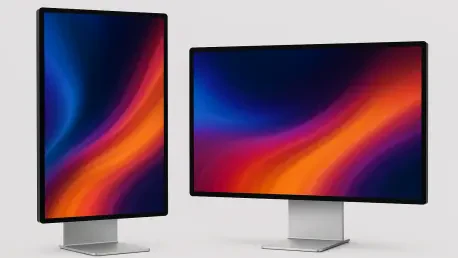

The rapid convergence of high-bandwidth connectivity and absolute color precision has transformed the modern professional workstation from a mere collection of tools into a seamless extension of the creative mind. With the introduction of the latest hardware ecosystem, two new high-performance monitors have arrived to redefine visual expectations: the $1,599 Studio Display and the $3,299 Studio Display XDR. These 27-inch displays, launched in conjunction with the updated MacBook Pro and MacBook Air lineups, emphasize a sophisticated approach to workflow management. A defining characteristic of this release is the integration of Thunderbolt 5 technology, which facilitates unprecedented data throughput for external peripherals. By utilizing the included Thunderbolt 5 Pro cable, users are now able to daisy-chain up to four high-resolution displays through a single connection point. This advancement effectively eliminates the cable clutter that historically hindered complex multi-monitor setups, allowing for a cleaner and more efficient desktop environment that supports the high demands of contemporary video production and software development.
Technical Capabilities: Bridging Consumer Media and Industrial Utility
The standard Studio Display serves as a robust entry point for general creative work, featuring a 5K Retina screen that delivers 600 nits of brightness and comprehensive P3 wide-gamut color support. However, professionals working in high-end cinematography or scientific visualization may find the Studio Display XDR more aligned with their rigorous technical requirements. This flagship model utilizes an advanced mini-LED backlight system containing over 2,000 local dimming zones, which enables a staggering 1,000,000:1 contrast ratio and a peak HDR brightness of 2,000 nits. Furthermore, the XDR model supports a 120Hz refresh rate through Adaptive Sync and adheres to Adobe RGB color standards for print and design accuracy. Beyond traditional creative fields, the hardware targets the healthcare sector by incorporating DICOM medical imaging presets. A specialized calibrator, currently undergoing the FDA clearance process, highlights a strategic move toward mission-critical industrial applications, ensuring that the hardware meets the stringent standards required for diagnostic accuracy.
Ergonomic Integration: Advanced Collaboration and Future Considerations
Both displays integrated several key functional enhancements, such as a 12MP Center Stage camera that enabled the “Desk View” feature for simultaneous broadcasting of a user’s face and their physical workspace. The audio experience received a significant upgrade via a three-microphone array and a six-speaker system capable of delivering Spatial Audio with 30% deeper bass than the previous hardware generation. While both models offered nano-texture glass to mitigate environmental glare, the XDR version provided a superior height-adjustable stand, whereas the standard model remained limited to basic tilt adjustments. Organizations looked toward the March 11 availability date to begin transitioning their legacy setups to these Thunderbolt 5 environments. Moving forward, teams should evaluate their specific color-grading and brightness needs to determine if the XDR’s medical-grade precision justifies the premium cost. Investing in the Thunderbolt 5 infrastructure now ensured long-term compatibility with the next wave of high-speed data standards while maximizing the utility of the current generation.