
For many technology enthusiasts, the allure of a seamlessly integrated ecosystem has long been the cornerstone of brand loyalty, a digital comfort zone where devices communicate effortlessly. After five years deeply embedded within Apple’s world, culminating with the use of an iPhone 16, a growing sense of compromise began to overshadow the convenience. This led to a deliberate exploration of the Android landscape, a journey that concluded with the adoption of a Xiaomi 15T Pro. This was not a decision rooted in fleeting curiosity but in a pragmatic re-evaluation of priorities, driven by the inescapable conclusion that the tangible, day-to-day advantages offered by superior hardware had finally outweighed the powerful gravitational pull of Apple’s walled garden. The shift represented a logical next step, where the physical capabilities of the device in hand became more critical than the software that once bound it to a family of other products.
The Primacy of Hardware Over Software
A foundational belief in technology is that the quality of any software experience is ultimately constrained by the hardware on which it operates. No amount of elegant code or seamless integration can fully compensate for a device that underperforms in key physical areas. This perspective suggests that Apple, particularly with its standard, non-Pro iPhone models, has masterfully leveraged its software ecosystem as a primary retention tool. The high-friction barrier to exit, created by the effortless interoperability between an iPhone, Mac, iPad, and Apple Watch, is a testament to a brilliant business strategy. However, this focus on the “walled garden” has arguably come at the cost of aggressive hardware innovation in the company’s more accessible product tiers, creating a scenario where users may be paying a premium for ecosystem convenience rather than for cutting-edge physical components. The result is a powerful lock-in effect that discourages users from seeking objectively better hardware elsewhere.
In stark contrast, the highly competitive Android market often forces manufacturers to prioritize tangible hardware advancements as a key differentiator. This dynamic creates an environment where devices like the Xiaomi 15T Pro can emerge, offering a specifications sheet that directly challenges established flagships at a similar or even lower price point. For a user prioritizing the physical tool in their pocket, the value proposition becomes undeniably clear. When a device offers a significantly larger battery, faster charging speeds, and a brighter, more fluid display, the abstract benefits of software continuity begin to lose their luster. The argument shifts from “what can my devices do together?” to “what can my primary device do for me, every single minute of the day?” This hardware-first approach represents a significant departure from the ecosystem-centric model, empowering consumers to make decisions based on measurable performance metrics rather than brand allegiance.
A New Standard for Daily Performance
While Apple’s introduction of the iPhone 17 brought welcome improvements, such as a 120Hz ProMotion display and an A19 chip, it failed to meaningfully address the most persistent issue for many users: battery endurance. The device’s approximately 3,692 mAh battery, while an improvement, still only delivered around seven hours of screen-on time, a modest gain from the five hours experienced with the iPhone 16. This incremental progress felt insufficient in a market where user expectations for longevity have dramatically increased. The experience is placed in sharp relief when compared to the Xiaomi 15T Pro, which is equipped with a formidable 5,500 mAh battery. This larger capacity is not merely a number on a spec sheet; it fundamentally redefines the user’s relationship with their device. Consistently achieving nearly 11 hours of screen-on time translates to two or sometimes even three full days of use on a single charge, effectively eliminating the pervasive “battery anxiety” that dictates so many daily routines.
This newfound freedom from the power outlet was further amplified by a revolutionary leap in charging technology. The Xiaomi 15T Pro’s 90W wired charging capability replenishes its massive battery from empty to 100% in roughly 30 minutes. This represents a profound quality-of-life upgrade that renders traditional charging habits obsolete. The concept of needing to charge a phone overnight has become a relic of the past; a brief connection to power during a morning coffee routine is more than enough to prepare the device for a full day of heavy use. This stands in stark contrast to Apple’s 40W charging, which, while an improvement for the brand, feels decidedly dated when compared to the speeds now available elsewhere. The combination of multi-day endurance and near-instantaneous charging creates a user experience that is simply more convenient and less stressful, a tangible benefit felt every single day.
The Myth of the Impenetrable Walled Garden
One of the greatest apprehensions for any long-term Apple user considering a switch is the perceived loss of seamless interconnectivity. Features like AirDrop for instant file transfers, deep iCloud integration for synchronized data, and the ability to mirror an iPhone’s screen on a Mac are the “golden handcuffs” that keep many firmly planted within the ecosystem. The fear of losing this frictionless workflow is a powerful deterrent, often overshadowing even significant hardware deficiencies in the primary mobile device. This was the central concern before making the leap to Android, a worry that the convenience of a unified system would be sacrificed for the sake of a better phone. However, this long-held belief was challenged by the discovery that the walls of the garden were not nearly as high or as impenetrable as they once seemed, with robust third-party solutions emerging to bridge the gap.
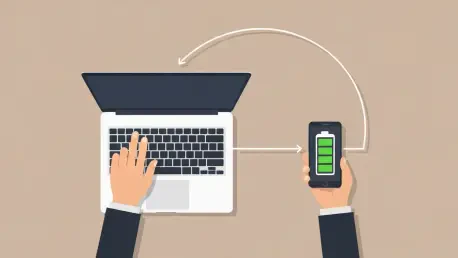
The catalyst that solidified the decision to switch was the discovery of Xiaomi’s Interconnectivity app, a free and surprisingly polished application for macOS that effectively dismantles the ecosystem barrier. This software successfully replicates many of the most valued convenience features with remarkable fidelity. Xiaomi Share, for example, functions as a powerful and reliable alternative to AirDrop, facilitating rapid, local file transfers between the Android phone and the Mac through a familiar and intuitive interface. More impressively, the application provides a sophisticated screen mirroring capability that transcends simple display casting. It allows phone apps to run directly on the MacBook in individual, resizable windows that integrate seamlessly with other Mac applications. This enables true, fluid multitasking, effectively making the phone a powerful extension of the computer. This experience is further enhanced by thoughtful features like cross-device unlocking via the Mac’s Touch ID and single-tap hotspot connections, proving that a mixed-device setup is not only viable but can be just as convenient.
A Shift in the Ecosystem Paradigm
The journey from a dedicated iPhone user to an Android advocate revealed a significant evolution in the mobile technology landscape. The primary finding was that the long-held paradigm of a binary choice—forcing a user to commit entirely to one ecosystem or the other—was no longer valid. The transition proved to be a much smaller and less disruptive leap than anticipated, as workable, and in some cases superior, alternatives were readily available for most of Apple’s exclusive features. It became possible to retain a preferred Mac and Apple TV setup while gaining a primary mobile device that offered objectively better value, battery life, charging speed, and display quality. The overarching trend that this experience illuminated was the active and effective effort by Android manufacturers to breach Apple’s walls, empowering consumers to prioritize superior hardware without sacrificing the cross-device convenience that had once been the company’s unrivaled advantage. This demonstrated that a mixed-device ecosystem was not only possible but, for users who value tangible performance, potentially preferable.