
Apple currently finds itself at a pivotal crossroads where its storied history of hardware dominance faces an unprecedented challenge from the rapid acceleration of generative artificial intelligence technologies. While the company has long relied on its walled garden to maintain consumer loyalty, the lackluster performance of Siri compared to advanced rivals has started to erode the perceived value of the iPhone ecosystem. Market observers have noticed that Apple’s stock has consistently underperformed when compared to peers like Alphabet, largely because Google’s Gemini models have set a new benchmark for what a mobile assistant should achieve. This disparity is not merely a matter of technical specs; it represents a fundamental shift in how users interact with their devices. As we move through 2026, the delay in deploying a truly conversational and autonomous version of Siri until the latter half of the year provides a significant window for competitors to capture the attention of high-value tech enthusiasts who demand more.
Analyzing the Competitive Deficit
The Performance Gap: Siri vs. Advanced Models
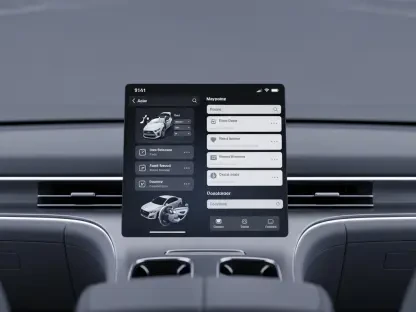
The central issue remains the persistent development delays that have prevented Siri from evolving past its legacy architecture into a modern large language model framework. While competitors have successfully integrated deep reasoning and multimodal capabilities into their standard mobile operating systems, Apple’s virtual assistant often struggles with basic contextual awareness and complex multi-step instructions. Recent industry benchmarks indicate that the latest Gemini iterations can process nuanced intent with nearly ninety percent accuracy, whereas Siri continues to fall short in conversational continuity. This gap is particularly glaring as generative AI becomes the primary interface for productivity, forcing users to rely on third-party applications rather than built-in system tools. The inability to offer a seamless AI experience directly within iOS harms the brand’s reputation for intuitive design and places Apple in the uncharacteristic position of playing catch-up in a field it once pioneered.
Looking toward the 2026 to 2028 period, the roadmap for Apple’s software integration appears increasingly congested as engineers work to overhaul the underlying Siri engine. The market is currently reassessing the value of software-as-a-service disruption, but for Apple, the risk is concentrated on the hardware-software synergy that has historically justified its premium pricing models. If an Android-based device can offer a significantly superior voice-controlled experience, the friction associated with switching ecosystems begins to dissipate for a growing segment of the population. Although historical surveys showed that only a small fraction of users prioritized AI during hardware upgrades, the 2026 landscape shows a marked increase in demand for integrated intelligence. Consumers are no longer satisfied with simple voice commands; they expect their devices to anticipate needs, manage schedules, and interact with complex data sets across multiple applications without manual intervention.
Ecosystem Loyalty and the Risk of Migration
The strength of the iPhone has always been the cohesion of its services, yet this strength becomes a liability if the core interactive component feels like a relic of a previous decade. Roughly sixty-five percent of AI interactions now occur on mobile devices, making the virtual assistant the most critical touchpoint for the modern digital experience. When this touchpoint fails to deliver on the promises of the generative AI era, it creates a psychological opening for rival manufacturers to showcase their superior software capabilities. Alphabet and other competitors have been aggressive in marketing their AI-first approach, specifically targeting iPhone users who feel frustrated by Siri’s limitations. This strategy is starting to yield results as technical early adopters, who often serve as influencers within their social circles, begin to experiment with alternative hardware that offers better integration with the leading AI models of the current 2026 market environment.
Maintaining a dominant market share requires more than just high-quality camera lenses and sleek industrial design in an age where software intelligence defines the user’s daily journey. Apple must address the fact that its ecosystem is only as strong as its weakest link, which at this moment is clearly its stagnant virtual assistant. The psychological barrier to switching brands is high, but it is not insurmountable, especially when the disparity in utility becomes too large to ignore. If Siri does not show a massive leap in capability by the end of 2026, the trickle of users moving to Android could turn into a more substantial migration. Analysts worry that the “Siri-ous” problem might lead to a long-term erosion of the services revenue that has been a cornerstone of Apple’s financial stability. The company’s challenge is to prove that it can innovate at the speed of modern AI development without compromising the privacy and security standards that define its brand identity for its global user base.
Strategic Initiatives and Financial Prospects
Diversifying Hardware: Beyond the Smartphone
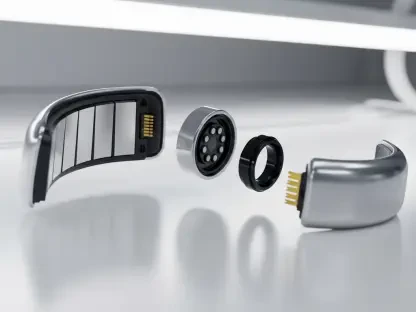
To counter the narrative of stagnation, Apple is reportedly diversifying its hardware portfolio with several ambitious AI-centric projects that aim to redefine wearable technology. These include augmented reality smart glasses, a wearable pendant designed for ambient intelligence, and an updated version of AirPods equipped with integrated camera systems for environmental sensing. These devices are intended to work in tandem with a revamped Siri, providing a more immersive and proactive AI experience that goes beyond the screen of a traditional smartphone. By expanding the physical touchpoints of its ecosystem, Apple hopes to create a new category of “ambient computing” that makes the assistant indispensable. If these products launch successfully and are paired with a functional, high-performance AI backend, they could serve as the catalyst for a significant surge in the company’s stock price. The goal is to make the assistant a constant companion that understands the physical world.
The success of these upcoming hardware ventures is entirely contingent on the software execution that has so far eluded the engineering teams in Cupertino. Smart glasses and wearable pendants require a level of natural language processing and visual recognition that is far beyond the current capabilities of the legacy Siri system. Without a powerful generative AI engine to drive these devices, they run the risk of becoming niche gadgets rather than the next major computing platform. Investors are watching closely to see if Apple can deliver a cohesive experience that justifies the continued high capital expenditures required for AI data centers and research. The transition from a mobile-first company to an AI-first hardware ecosystem represents a massive shift in strategy that carries both enormous potential and significant operational risk. Success in this area would reinforce Apple’s role as a market leader, while failure could lead to a protracted period of stagnation relative to the broader technology sector.
Financial Assessments: Navigating Future Growth
Financial analysts remain cautious about Apple’s immediate prospects, noting that the company is no longer viewed as a safe bet in the high-stakes AI race. Recent reports from major investment firms have excluded the tech giant from their top recommendation lists, citing the critical software execution risk as a primary deterrent. While Apple remains a cash-flow powerhouse with a massive installed base, the consensus viewpoint is that the company must prove its AI mettle to justify its current market valuation. The market is increasingly unforgiving of delays, especially when competitors are iterating on their models every few months. To regain its footing, Apple needed to demonstrate a clear and rapid path to Siri’s transformation. Investors were looking for evidence that the company could move beyond its conservative development cycles to meet the frantic pace of the AI industry, ensuring that the assistant became an asset rather than a liability that weighed down the overall stock performance.
The path forward required a concentrated effort to integrate generative capabilities into every facet of the user experience to maintain competitive parity. Organizations and individual users alike should monitor Apple’s upcoming software updates closely for signs of significant architectural improvements rather than mere incremental tweaks. Stakeholders would be wise to evaluate how effectively the new AI-centric wearables integrate with the broader ecosystem, as these products represented the company’s best chance to reclaim its reputation for innovation. If the late 2026 updates delivered on their promises, Apple would likely secure its position for the remainder of the decade; however, continued stagnation would necessitate a broader reassessment of the company’s long-term growth trajectory. Navigating this transition successfully involved balancing the traditional focus on privacy with the intensive data requirements of modern AI, a challenge that will define the next chapter of the company’s influence in the global technology market.