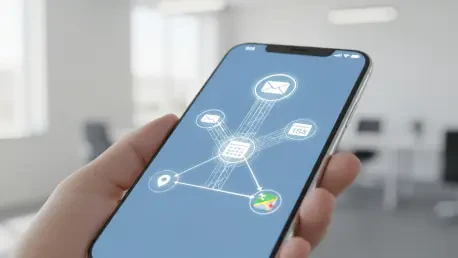

The release of Apple Intelligence within iOS 26 represents a watershed moment in personal computing, fundamentally altering the iPhone’s identity from a sophisticated tool into a proactive, cognitive assistant. This evolution is not a mere incremental update but a complete redefinition of the user experience, powered by a landmark partnership with Google that embeds its advanced Gemini AI models directly into the operating system’s core. By moving beyond simple command-and-response interactions, Apple has engineered an agentic system capable of understanding nuanced context, anticipating user needs, and executing complex, multi-step tasks across various applications. This strategic integration positions the iPhone at the apex of the personal AI revolution, setting a new standard for what a smartphone can and should be. The underlying philosophy has shifted from providing users with helpful apps to offering a unified, intelligent fabric that seamlessly orchestrates their digital lives, making technology more intuitive and powerful than ever before.
The New iOS Experience
The Hybrid Foundation Power Meets Privacy
At the heart of Apple’s intelligence revolution lies a meticulously designed hybrid processing architecture, engineered to deliver formidable AI capabilities without sacrificing the company’s foundational commitment to user privacy. This system adeptly balances on-device processing for routine, latency-sensitive tasks by leveraging powerful, efficient small language models (SLMs) that operate directly on the iPhone’s silicon. For more computationally intensive operations that demand the scale of a large language model, the system seamlessly offloads workloads to Apple’s enhanced Private Cloud Compute (PCC) infrastructure. Unlike conventional cloud processing, PCC is architecturally designed to be a “black box” where data is cryptographically secured end-to-end, ensuring that not even Apple can access user information. This bifurcated approach allows the iPhone to tap into the immense power of server-grade AI for complex queries while handling personal data locally, creating a powerful yet trustworthy user experience that stands as a key differentiator in an increasingly data-hungry industry.
This sophisticated architectural choice is a direct reflection of Apple’s long-standing brand promise, providing a technical solution to the privacy paradox that has plagued the AI industry. By building the PCC on its own custom silicon within highly secure, carbon-neutral data centers, the company maintains complete control over the entire processing pipeline. The system ensures that requests sent to the cloud are stateless and are not stored, preventing the creation of user profiles from sensitive data. This approach allows Apple to integrate best-in-class models like Gemini while wrapping them in its own privacy-preserving framework, effectively getting the benefits of a massive, pre-trained model without inheriting its data privacy liabilities. This technical and ethical stance allows users to confidently engage with advanced AI features, knowing their personal calendars, messages, and photos remain confidential, thereby fostering a level of trust that is critical for the deep integration of agentic AI into daily life.
Siri Evolved A Context Aware Agent
The most profound and immediately noticeable transformation in iOS 26 is the radical reinvention of Siri. By integrating Google’s formidable Gemini 3 Pro model, Siri has shed its reputation as a limited, command-based assistant and has evolved into a highly capable conversational agent. It can now comprehend and execute complex, multi-turn queries that require reasoning and contextual memory, a feat that was previously far beyond its scope. The system’s standout innovation is a feature called “On-Screen Awareness,” which employs a dedicated vision transformer model to grant the AI the ability to “see” and interpret the content displayed on the user’s screen. For example, a user viewing a detailed event invitation in an email can now issue a compound verbal command like, “Siri, RSVP ‘yes’ to this, add it to my calendar, and get me directions for that time.” The AI visually parses the on-screen data—date, time, location, and contact information—and executes the multi-app task without requiring any manual input, representing a monumental leap from a passive assistant to a proactive digital agent.
This newfound capability fundamentally changes the user’s relationship with their device, shifting the interaction model from app-centric navigation to intent-based delegation. Previously, accomplishing a multi-step task required the user to manually switch between different applications, copying and pasting information along the way. With an agentic Siri, the user simply states their ultimate goal, and the AI handles the procedural steps in the background, interacting with the user interface in a human-like manner. This paradigm shift has significant implications for both usability and accessibility, as it dramatically lowers the cognitive load required to perform complex digital chores. It also redefines the role of apps, turning them from standalone destinations into services that the central AI can call upon as needed. This deep integration transforms the iPhone into a cohesive, intelligent system that works on the user’s behalf, making technology feel less like a tool to be managed and more like a capable partner.
Bridging Worlds Real Time Communication
With iOS 26, Apple has effectively democratized global communication by seamlessly integrating live, multi-modal translation directly into core applications like FaceTime and Phone. The new “Live Translated Captions” feature provides real-time, on-screen text overlays of spoken dialogue during a call, effectively breaking down language barriers with unprecedented ease. This system distinguishes itself from third-party solutions through its remarkable technical sophistication. It utilizes the advanced Neural Engine for highly efficient on-device processing, which ensures both privacy and speed. Furthermore, it employs a novel technique called “Speculative Decoding,” an advanced algorithm that predicts the likely continuation of a sentence to significantly reduce the perceptual latency between spoken words and their translated captions. The result is a near-instantaneous subtitle stream that makes cross-lingual conversations feel fluid and natural, rather than disjointed and delayed.
The system’s design goes beyond simple word-for-word transcription by also focusing on preserving the nuances of human conversation. The technology is engineered to maintain the original speaker’s tonality and cadence in the translated audio output, making interactions feel more personal and less mediated by a robotic intermediary. This breakthrough has profound implications, transforming the iPhone into a universal translator that can be used in a variety of contexts, from international business negotiations conducted over FaceTime to personal calls with family and friends abroad. By making seamless global communication an accessible, built-in feature, Apple is not merely adding a convenient tool but is actively fostering greater understanding and connection between cultures. This move effectively eliminates a significant barrier to human interaction, making the world feel smaller and more interconnected for millions of iPhone users.
Reshaping the Market
The Google Alliance A Strategic Duopoly
The deepened partnership between Apple and Google represents a strategic masterstroke that effectively reshapes the competitive landscape of personal AI, creating a formidable duopoly poised to dominate the market. For Apple, this alliance provides an immediate and powerful solution to the advanced AI capabilities being aggressively pushed by competitors, most notably the Microsoft and OpenAI partnership. Instead of spending years and billions of dollars attempting to develop a comparable large-scale model from the ground up, Apple has licensed a best-in-class engine and focused its resources on what it does best: integration, user experience, and privacy. By ingeniously routing all Gemini-powered queries through its own Private Cloud Compute gateway, Apple retains complete control over the user experience and masterfully reinforces its core privacy narrative, delivering superior intelligence without compromising its principles.
For Google, the deal is equally momentous, securing its Gemini large language model as the default intelligence engine for the world’s most profitable and influential mobile ecosystem. This integration provides Google with unparalleled scale and reach, solidifying its LLM’s dominance and creating a significant moat against the growing influence of other AI players in the consumer space. This symbiotic relationship allows both tech giants to leverage their respective strengths—Apple’s hardware and ecosystem control, and Google’s AI research and infrastructure—to create a product that is more powerful than what either company could have built alone in the short term. This alliance effectively raises the barrier to entry for any potential competitor, forcing them to contend with a tightly integrated hardware, software, and AI stack that will be incredibly difficult to replicate.
Neutralizing a New Class of Competitors
The OS-level integration of sophisticated agentic AI is also a brilliantly executed defensive maneuver against an emerging class of “AI-first” hardware devices, such as the Rabbit R1 and the Humane AI Pin. These standalone gadgets sought to disrupt the traditional smartphone market by offering a more direct, conversational interface for completing tasks, aiming to bypass the established app model entirely. However, by embedding even more advanced and context-aware capabilities directly into the core of iOS, Apple has effectively rendered the primary value proposition of such devices redundant. Why carry a separate AI-powered pin or gadget when the iPhone in your pocket can already understand on-screen context, manage complex multi-app workflows, and proactively assist you throughout your day? This move powerfully reinforces the iPhone’s position as the central, indispensable hub of a user’s digital life.
This strategy not only protects Apple’s existing hardware dominance but also stifles a nascent product category before it can gain a significant foothold. The convenience of an all-in-one device with deeply integrated intelligence is a compelling advantage that standalone gadgets will find nearly impossible to overcome. An iPhone user with the new Siri can accomplish everything a dedicated AI device promises, but with the added benefit of a rich app ecosystem, a high-resolution display, and a familiar user interface. By co-opting the core philosophy of these challengers and implementing it more effectively within its own ecosystem, Apple has demonstrated a keen understanding of the competitive landscape. This proactive integration ensures that the next wave of AI innovation will happen on the iPhone, not on a competing piece of hardware, thereby securing its market leadership for the foreseeable future.
Disrupting the Software Ecosystem
The competitive shockwaves from Apple Intelligence extend far beyond hardware, directly disrupting established software sectors. Newly introduced AI-powered features, such as “Semantic Search” and “Generative Relighting” within the native Photos app, deliver professional-grade photo editing results with virtually no user learning curve. “Semantic Search” allows users to find images using natural language queries like “that picture of mom smiling in a blue hat by the lake,” while “Generative Relighting” can intelligently alter the lighting conditions of a photo with a single tap. These powerful, seamlessly integrated tools directly challenge the business models of specialized third-party software suites that have historically charged premium prices for similar functionalities. By offering these capabilities for free as part of the core OS, Apple is raising consumer expectations and putting immense pressure on developers whose apps offer single-purpose utilities.
This trend signals a broader shift in the App Store ecosystem, where the line between operating system features and third-party applications is becoming increasingly blurred. As the OS becomes more intelligent and capable of handling complex tasks natively, the viability of many app categories may come into question. Developers will be forced to innovate beyond basic utility and offer truly unique, specialized experiences that the native AI cannot easily replicate. The rise of agentic AI within iOS also creates a new platform for developers to build upon, but it simultaneously centralizes power within the operating system itself. The long-term implication is a potential consolidation of the software market, where a handful of powerful, deeply integrated native features could replace dozens of standalone apps, fundamentally altering the economics and creative landscape of the App Store for years to come.
The Path Forward
Societal Shifts and Ethical Questions
The industry-wide evolution from “Generative AI,” which is focused on creating content, to “Agentic AI,” which is designed to perform actions on a user’s behalf, carries profound societal implications that extend far beyond technology. On one hand, this shift fosters unprecedented levels of accessibility and convenience. Features like live translation dismantle long-standing communication barriers, while a proactive Siri can manage complex digital tasks, freeing up valuable time and mental energy for users. However, this increased delegation to autonomous systems also raises critical concerns regarding digital dependency, algorithmic bias, and the inherent lack of transparency in AI decision-making. As users grant AI agents the authority to take actions like booking travel, managing schedules, or communicating on their behalf, the potential for error and the question of accountability for those errors become paramount societal and ethical dilemmas that require careful consideration.
These new capabilities force a re-examination of trust and control in the digital realm. When an AI agent makes a mistake—booking the wrong flight or misinterpreting a crucial instruction—where does the responsibility lie? Is it with the user who delegated the task, the company that developed the AI, or the platform that deployed it? Furthermore, the datasets used to train these models can perpetuate and even amplify existing societal biases, leading to inequitable outcomes in everything from search results to automated recommendations. Addressing these challenges will require a multi-faceted approach involving robust regulatory frameworks, transparent AI development practices, and a public discourse centered on establishing clear ethical guidelines for the deployment of agentic technologies. The convenience offered by this new era of computing must be carefully balanced against the potential risks to individual autonomy and societal fairness.
Future Innovations and Hardware Hurdles
Looking toward the horizon, Apple’s product roadmap clearly signals an even more ambitious future for on-device intelligence. The impending release of iOS 27 and the secretive “Project ‘Campos'” aim to evolve Siri from a voice assistant into a full-fledged AI chatbot with advanced multimodal capabilities designed to compete directly with next-generation models. The long-term vision includes a concept known as “Ambient Intelligence,” where the iPhone will leverage its full suite of sensors—microphone, camera, and LiDAR—to proactively anticipate user needs without explicit commands. For instance, the device might sense a user has entered a grocery store and automatically surface a relevant shopping list, or detect that they are driving and suggest an alternate route based on real-time traffic analysis from satellite imagery. Further innovations are also expected in applications like Apple Maps with “Satellite Intelligence,” which will use AI to interpret low-resolution satellite data for real-time pathfinding in remote areas without cellular service.
However, this ambitious future is constrained by a significant and unyielding technical hurdle: the physical limitations of hardware. The immense computational power required to run large, sophisticated transformer models locally places an enormous strain on battery life and thermal management. Pushing the boundaries of AI performance directly translates to increased power consumption and heat generation, which are two of the most critical constraints in mobile device engineering. This reality is predicted to fuel a new “silicon arms race,” where the primary limiting factor for AI software advancement will not be the ingenuity of the algorithms themselves, but the ability of mobile chips to run them efficiently without overheating the device or draining the battery in a matter of hours. The future of personal AI will therefore be defined by the co-evolution of software and hardware, with progress depending on breakthroughs in chip architecture and power efficiency as much as it does on advances in artificial intelligence.