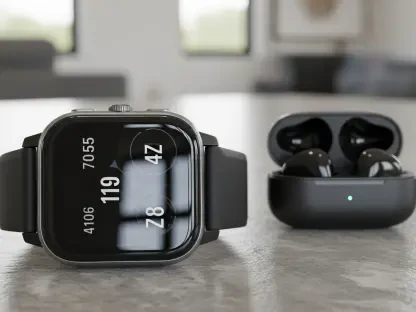

The tension inside the walls of Apple Park has reached a fever pitch as engineers struggle to reconcile the marketing department’s grand promises of a revolutionary artificial intelligence with the stubborn limitations of privacy-focused hardware. While the public anticipated a transformative leap in assistant capability with the release of the spring software cycle, the internal reality paints a far more complicated picture of technical compromise and stalled innovation. Reports from within the development teams suggest that current builds of the mobile operating system are struggling with significant performance issues, ranging from noticeable latency in voice processing to complete failures in retrieving personal data. This disconnect stems from a fundamental disagreement between the desire to match the fluid capabilities of cloud-based competitors and the unwavering commitment to keeping user data isolated on the physical device. The result is a software environment where the promised magic often feels unfinished or entirely absent.
The Engineering Hurdles of the Linwood Architecture
At the heart of this struggle lies a sophisticated but restrictive system known internally as Linwood, which serves as the backbone for Apple’s private intelligence efforts. This architecture is designed to prioritize on-device processing and private compute cycles over the sprawling public cloud servers utilized by industry rivals. By forcing the digital assistant to run on smaller, more restricted local models, Apple ensures that sensitive user information never leaves the device, but this choice introduces a massive engineering hurdle that is difficult to clear. While competitors can offload complex reasoning tasks to massive server farms with nearly infinite resources, the Linwood system must operate within the thermal and power constraints of a handheld processor. This limitation frequently results in an assistant that is unable to match the speed and breadth of response seen in other generative models, leading to a user experience that often feels sluggish and reactive rather than truly intelligent.
Furthermore, the strict adherence to this private framework has led to an increasingly fragmented user experience where certain high-level tasks are essentially punted to third-party models. When the local system reaches its computational ceiling, it must request permission to send queries to external services like ChatGPT, a move that fundamentally breaks the seamless integration that has long been the hallmark of the ecosystem. This reliance on outside partners acts as a temporary bandage for the performance gap but highlights the underlying difficulty of scaling complex generative AI within a closed privacy loop. Engineers are finding that the more they try to increase the assistant’s utility, the more they collide with the hard walls of the on-device environment. Consequently, the software currently in testing often stalls mid-stream, leaving users waiting for a response that the hardware is simply not yet optimized to provide without compromising the security of the underlying data.
Strategic Shifts and the Development of Project Campo
Recognizing that the current spring update may not meet the lofty expectations of the consumer market, Apple has begun a strategic pivot to rebrand several upcoming features as experimental or beta. This shift in messaging is a direct response to the technical hurdles encountered during the development of the latest software builds, as the company seeks to manage public perception while it refines the underlying technology. By labeling these tools as work-in-progress, the organization hopes to buy more time for its engineering teams to solve the latency and reliability issues that have plagued the recent development cycles. This cautious approach ensures that the brand’s reputation for stability remains intact, even if it means trailing behind competitors in the immediate race for feature parity. The focus has now moved toward a longer-term roadmap that prioritizes the refinement of core functionalities rather than the rushed release of unoptimized AI tools.
This revised strategy centers on a secretive initiative codenamed Project Campo, which represents the next major evolution of the digital assistant planned for the fall release cycle. Project Campo is designed to move beyond simple command-and-control functions, focusing instead on providing the assistant with a deep sense of contextual awareness and a long-term memory of recent user activity across multiple applications. The goal is to create a more fluid interaction model where the AI can anticipate needs based on previous behaviors without needing to upload that behavioral history to a central server. This effort requires a complete reimagining of how data is indexed and accessed on the device, moving toward a system where the assistant acts as a secure layer between the user and their third-party apps. If successful, this project will represent the true turning point for mobile intelligence, finally bridging the gap between high-level utility and the company’s rigorous privacy standards.
Navigating the Transition to Secure Intelligence
The path toward a fully capable yet private digital assistant required a fundamental shift in how the industry viewed the relationship between data and intelligence. Apple chose to reject the standard industry practice of harvesting user information to train massive centralized models, opting instead for a decentralized approach that prioritized the individual over the collective. This decision created a period of transition where the gap between the promised capabilities and the actual product remained wide, but it also established a foundation for a more secure future. Engineers worked tirelessly to optimize neural engines and compression algorithms, ensuring that the next generation of processors could handle the immense load of generative tasks. By refusing to sacrifice its privacy guardrails, the company maintained its position as a trusted steward of personal data, even as it navigated the complex technical realities of a rapidly evolving technological landscape.
Ultimately, the successful integration of advanced artificial intelligence into the existing framework depended on the ability to deliver server-level performance within the strict confines of a private environment. The transition highlighted the importance of hardware-software synergy, as the development teams focused on creating specialized silicon capable of executing billions of operations per second without excessive heat. As the fall release cycle approached, the focus shifted from solving basic connectivity issues to enhancing the nuanced interaction between the user and the device. This era of development demonstrated that true innovation did not require the abandonment of core values, but rather a more disciplined and creative approach to engineering. The lessons learned during this challenging period provided a clear roadmap for future developments, ensuring that the evolution of the digital assistant remained grounded in the principles of security and user autonomy.