
A groundbreaking piece of artificial intelligence software known as the Doubao Mobile Assistant has recently captured the attention of the technology industry and consumers alike, propelling an engineering prototype phone to viral fame and a speculative market value of nearly 5,000 yuan on e-commerce platforms. This is not merely another application but a deeply integrated “super butler” embedded within the foundational, underlying layers of the mobile operating system, granting it unprecedented access and control. Its emergence marks a pivotal moment where the concept of an AI Agent—a truly autonomous and intelligent entity operating on a personal device—has transitioned from a theoretical future to a tangible reality. This innovation fundamentally reconstructs the user’s interaction with their smartphone, shifting the paradigm from a user-operated tool to a collaborative, intelligent partner capable of executing highly complex, multi-step instructions from simple, natural language commands. The assistant’s capabilities have sparked a widespread conversation about the future of personal computing and the very nature of human-device interaction.
A Paradigm Shift in Human-Computer Interaction
The central theme surrounding the Doubao Mobile Assistant is the evolution of mobile AI from a passive, auxiliary tool to a proactive, intelligent partner capable of anticipating and executing user needs with remarkable autonomy. The key distinction lies in its ability to perform what are described as “vague and complex long-chain requirements,” a capability that sets it far apart from its contemporaries. While other AI assistants can adeptly handle simple, single-app tasks like setting an alarm or sending a text message, the Doubao agent demonstrates a far more sophisticated level of understanding and execution. It can seamlessly orchestrate a sequence of actions across multiple, disparate applications without requiring continuous user intervention or step-by-step guidance. This ability to maintain context and purpose across a complex workflow represents a significant leap forward in AI-powered assistance, moving beyond simple command-and-response interactions to a more fluid and intuitive partnership between human and machine.
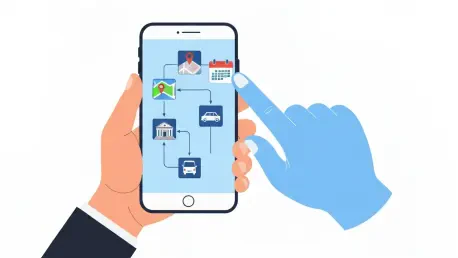
A salient example often cited to illustrate its advanced functionality is its capacity to process a single, high-level command like “plan an outing.” Upon receiving this request, the agent autonomously executes a series of intricate sub-tasks that would normally require significant manual effort. It can identify and mark recommended restaurants on a map application, concurrently search for nearby museums or attractions based on implicit user preferences, and then navigate to a separate travel platform to inquire about and book tickets for a chosen venue. This level of uninterrupted, long-chain task completion has led observers to marvel at its seemingly profound intelligence and problem-solving abilities. The discussion it has generated explores fundamental questions about this technological leap: Is this “AI operating the phone” the future norm for mobile device usage, and what specific technological and strategic achievements allowed the Doubao Mobile Assistant to succeed where so many others have faced significant, seemingly insurmountable obstacles? This new reality forces a reevaluation of what a smartphone can be.
Overcoming Monumental System-Level Challenges
A clear consensus among academic experts is that creating a true system-level Graphical User Interface (GUI) Agent is an extraordinarily difficult endeavor, a multi-faceted challenge that spans distinct yet interconnected layers of technological obstacles. The first of these is the Perception Layer, which concerns the agent’s ability to “see” and “understand” the phone’s screen with human-like acuity. The AI must be able to identify and comprehend all interactive elements—such as icons, buttons, text fields, and sliders—with near-instantaneous speed, processing them within milliseconds to enable a fluid user experience. This task is complicated by the dynamic and often chaotic nature of modern user interfaces, which are filled with visual noise like pop-up advertisements and floating notifications. The agent requires pixel-level precision to know exactly where to tap or swipe and, more profoundly, must grasp the “functional semantics” behind visual cues. For instance, it needs to understand that a magnifying glass icon universally signifies a search function, regardless of an app’s specific design. This requires a sophisticated level of visual comprehension that goes far beyond simple pattern recognition.
Once the agent perceives the screen, it must navigate the Planning Layer challenge, where it formulates and executes a plan, especially for tasks that span multiple applications. This involves managing the intricate flow of information across these apps, which includes complex operations like app switching, retrieving context from memory, and utilizing the system’s clipboard. The core difficulty here is handling the inherent unpredictability of real-world usage, which is fraught with potential disruptions such as network congestion, unexpected login prompts, application crashes, and security verification pop-ups. A traditional, rigid script would fail at the first sign of such an interruption. A true GUI Agent, therefore, must possess a robust capacity for self-reflection and dynamic replanning. It needs to maintain logical coherence across the entire task chain, remember its previous actions and current state, anticipate potential next steps, and ingeniously find alternative paths or solutions when its initial plan is obstructed, demonstrating a level of problem-solving that mimics human intuition.
The Doubao Solution A Fusion of Access and Intelligence
The Doubao Mobile Assistant’s breakthrough lies in its elegant and effective solution to the multifaceted problem of creating a system-level agent. It employs a dual-pronged strategy that combines the visual intelligence of a “GUI Agent” with the privileged access of “system-level permissions,” creating a powerful synergy that overcomes previous limitations. Through a deep, collaborative integration with the mobile phone manufacturer at the operating system (OS) level, the Doubao Mobile Assistant obtains a level of access that is fundamentally different from and superior to third-party applications that rely on limited accessibility services. This deep integration allows it to send instructions directly to the system kernel, enabling it to perfectly simulate human finger actions like clicks, long-presses, swipes, and typing with exceptional stability and universality across the entire OS. Critically, these powerful permissions are only invoked with explicit user authorization, striking a crucial balance between unprecedented capability and robust security and privacy protocols.
This deep system access is the foundation upon which the agent’s intelligence operates. The second prong of the strategy is its Visual Multimodal Capabilities, which function as the agent’s “brain” and “eyes.” It uses advanced visual models to perceive and interpret the screen’s UI content in real-time, analyzing the visual layout, identifying all interactive elements, and understanding their function within the context of the user’s goal. When a user gives a command, the agent parses the intent of the natural language, correlates it with the visual information currently on the screen, and then independently decides on the optimal sequence of subsequent actions—”where to click next, what to input, and which app to jump to.” This synthesis of deep system access and cognitive visual understanding creates what experts describe as a “ghost finger + brain + decision-making system.” This integrated approach is what allows the assistant to demonstrate capabilities far exceeding those of its predecessors, achieving a remarkable balance in reasoning speed, task completion rate, and long-context processing ability.
The Technological Core Behind the Breakthrough
The “secret” behind the Doubao Mobile Assistant’s remarkable performance is UI-TARS, a self-developed, system-level GUI Agent engine created by ByteDance. The success of this engine is built upon four foundational technological innovations that directly address the core challenges of building a functional agent. The first is a Scalable Data Flywheel Mechanism, which solves the critical problem of data scarcity in the GUI domain. Unlike text or code, training data for GUI agents requires complete, annotated operational trajectories—including the reasoning, clicks, screen changes, and feedback for each step—which are immensely difficult and expensive to collect at scale. UI-TARS implements a self-improving “data flywheel” where the current model generates new interaction data. This data is then automatically filtered and sorted by quality; the highest-quality trajectories are used for advanced training, while lower-quality ones are recycled for earlier stages. This creates a powerful, self-reinforcing closed loop: a better model generates higher-quality data, which in turn is used to train an even stronger model.
Another key pillar of UI-TARS is a Scalable Multi-Round Reinforcement Learning (RL) Framework. RL is notoriously difficult to implement in complex, interactive environments due to issues like delayed rewards and training instability. UI-TARS introduces a specialized framework to overcome this by using techniques like “asynchronous rollouts with state-keeping” to maintain context during long tasks and an enhanced Proximal Policy Optimization (PPO) algorithm combined with reward shaping to stabilize and accelerate the learning process. Furthermore, it utilizes a Hybrid GUI Center Environment, recognizing that many real-world tasks cannot be completed with on-screen clicks alone. This allows the agent to seamlessly integrate its graphical interactions with direct access to the device’s file system and other external tools. For example, it can download a compressed file using a browser’s GUI, then invoke a shell command to extract its contents, and finally open a file within it using another application, all as part of a single, fluid workflow. This hybrid approach is crucial for enabling the agent to handle truly complex, real-world tasks.
A Blueprint for the Future
In the final analysis, the Doubao Mobile Assistant became an internet sensation not because of a single feature, but because it represented a successfully implemented, full-stack reconstruction of how AI could and should interact with a personal computing device. It provided a compelling and functional answer to the long-standing challenges that had plagued the development of system-level AI agents for years. By holistically addressing the obstacles across the perception, planning, decision-making, and system layers, it achieved a new echelon of capability that felt less like software and more like a human operator. The key to its success was a synergistic combination of a strategic partnership that granted it deep OS permissions and the advanced cognitive intelligence of a sophisticated GUI Agent. This potent combination was powered by the UI-TARS engine, a technological marvel built on innovations that solved the fundamental problems of data scarcity, reinforcement learning instability, and engineering scalability. Ultimately, the Doubao Mobile Assistant proved to be more than just a clever product; it was a landmark achievement that provided a clear and powerful blueprint for the future of human-computer interaction, transforming the smartphone from a passive collection of tools into a truly intelligent and autonomous partner.