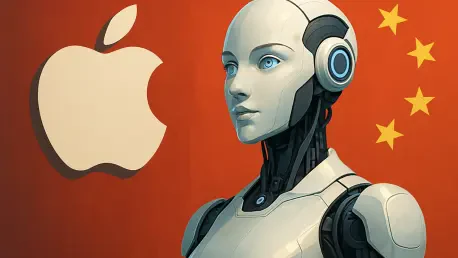

Apple Inc. has orchestrated one of the most remarkable corporate turnarounds in recent history, completely altering its growth trajectory and Wall Street’s perception of its future after a turbulent period. Following a challenging 2024 defined by significant regulatory hurdles and intensified competition from domestic Chinese brands, the tech giant has successfully reclaimed its dominant position in the world’s largest smartphone market. This resurgence was not merely an incremental gain but a fundamental shift, primarily attributed to two interconnected catalysts: the overwhelmingly successful launch of the iPhone 17 series and, more significantly, the introduction of “Siri 2.0.” This groundbreaking, agentic Artificial Intelligence platform has redefined consumer expectations for personal technology, creating a powerful new software-driven incentive for hardware upgrades and solidifying Apple’s place at the forefront of the AI revolution.
A Strategic Redemption
In late 2024, Apple’s prospects in China appeared increasingly precarious, with its market share declining to approximately 17% and trailing formidable rivals like Huawei and Xiaomi, who were riding a powerful wave of patriotic consumerism. The prevailing narrative among industry analysts suggested that Apple, long seen as a leader in innovation, was lagging in the global AI race, a perception that weighed heavily on its stock and future outlook. This period of skepticism was decisively shattered in September 2025 with the release of the iPhone 17. The new device, powered by a more advanced A19 chip, saw an immediate 14% increase in global unit sales compared to its predecessor. The most striking success, however, was in China, where the base iPhone 17 model experienced an astonishing 100% surge in sales. This incredible momentum was not a fleeting launch-week phenomenon; it was sustained and amplified throughout the latter half of the year.
The commercial success of the new hardware translated directly into a swift and decisive market share recovery, halting the advance of domestic competitors. By October 2025, Apple’s monthly sales in China were climbing by an impressive 37% year-over-year, a clear indicator that the company’s appeal had not just returned but had intensified. This surge effectively reversed the previous year’s negative trend, allowing Apple to reclaim a top-tier position with 15.8% of the market in the third quarter of 2025. The company’s ability to not only stop the decline but also to recapture significant ground in such a short period demonstrated a profound understanding of the evolving consumer priorities in the region. The turnaround was less about brand loyalty and more about a new, undeniable value proposition that competitors were unprepared to counter, setting the stage for a new chapter of growth driven by intelligent software.
The Dawn of Agentic AI
The most crucial element of this turnaround is the paradigm shift introduced by Siri 2.0, also officially branded as “Apple Intelligence.” This platform represents a fundamental evolution from a conventional voice assistant into a sophisticated, autonomous agent capable of understanding and acting on user intent with unprecedented depth. The technology is defined by two core capabilities: “on-screen awareness,” which allows Siri to understand the context of what a user is viewing on their screen, and “cross-app action control,” which enables it to execute complex, multi-step tasks across different applications without requiring manual user input. For instance, Siri 2.0 can autonomously analyze information from a user’s emails, calendar, and encrypted messages to perform actions like booking intricate travel itineraries, managing personal finances, or summarizing lengthy work documents into actionable bullet points, all with a simple conversational prompt.
This transformation has repositioned the iPhone from a mere hardware device into what is now described as the essential “Gen AI base camp” for the average consumer, driving a new, software-led upgrade cycle. The profound utility of these agentic features has created a compelling reason for consumers to invest in the latest hardware. A key finding from the initial sales data is that this new level of functionality effectively makes older iPhone models obsolete, as they lack the necessary A19 processing power to run these advanced AI features with the required speed and efficiency. This reality compels users to upgrade to remain current with what are quickly becoming standard professional and social functionalities, ensuring a sustained demand for the iPhone 17 and future models. It is a masterstroke of integrating hardware and software to create an indispensable ecosystem.
A Masterclass in Localization
Apple’s success was not merely a result of technological innovation but also of savvy diplomatic and strategic maneuvering within China’s complex geopolitical and regulatory landscape. Recognizing the unique challenges of the market, the company engaged in extensive and delicate negotiations with Chinese regulatory bodies, including the powerful Cyberspace Administration of China (CAC), to develop a framework for Siri 2.0 that would be fully compliant with local laws without compromising its core principles on privacy. The outcome was a sophisticated hybrid model that leverages local cloud infrastructure for certain data-intensive processes while upholding Apple’s unwavering commitment to user privacy through its signature end-to-end encryption for all sensitive, on-device processing. This carefully crafted approach demonstrated respect for local sovereignty while preserving the trust of its global user base.
This localized strategy led to strategic alliances with Chinese tech giants, turning potential competitors into vital partners in a landmark move. Specifically, Apple integrated Alibaba’s robust compliance engines and Baidu’s highly advanced, localized search and visual intelligence tools directly into Siri 2.0 for the Chinese market. This partnership provides a powerful blueprint for how global technology firms can successfully operate within the “splinternet”—the increasingly fragmented digital world characterized by separate and often incompatible Western and Chinese ecosystems. By collaborating on compliance and local data processing, Apple not only gained regulatory approval but also enhanced its service offering, ensuring that Siri 2.0 was as effective and culturally relevant in China as it was anywhere else in the world.
Shaking Up the Ecosystem
The ripple effects of Apple’s resurgence have reverberated across the broader technology ecosystem, creating a new set of clear winners and losers. Beyond Apple itself, a primary beneficiary of this AI-driven super-cycle is Taiwan Semiconductor Manufacturing Co. (TSMC), which manufactures the cutting-edge A19 and A19 Pro chips on an advanced 2nm-class process. This sophisticated silicon is presented as the only mobile hardware currently capable of running Siri 2.0’s most demanding features, such as “World Knowledge Answers” (WKA), with the necessary low latency and power efficiency. This dependency creates a significant technological moat for Apple and a critical bottleneck for its competitors, cementing TSMC’s indispensable role in the high-end semiconductor supply chain and ensuring its own robust growth for the foreseeable future.
Conversely, domestic Chinese hardware manufacturers like Huawei and Vivo have faced renewed and intense pressure. While still formidable, the novelty of their home-grown systems, such as HarmonyOS, is being outmatched by the sheer utility and seamless integration of Apple’s AI ecosystem. Consumers are increasingly prioritizing the sophisticated agentic capabilities of the iPhone, shifting the competitive focus from hardware specifications to the intelligence of the software experience. Xiaomi continues to perform well in the mid-range market but struggles to compete with Apple’s high-end Average Selling Price (ASP), as a growing segment of the market demonstrates a willingness to pay a premium for the transformative AI features that only the latest iPhones can offer. This has fundamentally altered the competitive dynamics at the top end of the smartphone market.
The Road Ahead
Looking forward to 2026, the consensus viewpoint among market analysts is overwhelmingly bullish, with many viewing this AI-driven super-cycle not as a fleeting event but as a multi-year phenomenon that will redefine Apple’s growth narrative. Wall Street analysts are aggressively revising their price targets for the company, with some projecting a market capitalization between $3.5 trillion and $4 trillion. Morgan Stanley has set a particularly optimistic price target as high as $376 per share, forecasting that Apple could ship as many as 262 million iPhones in the 2026 fiscal year. The forthcoming iPhone 18 is expected to be the first device with these AI features fully mature and integrated from its initial launch, likely accelerating adoption even further. Furthermore, the analysis points toward Apple’s next strategic move: monetization of its AI platform.
The company’s monumental comeback in China was successfully cemented through a combination of technological superiority and astute local partnerships. By “thinking different” about AI, regulation, and consumer utility, Apple navigated a period of intense skepticism and competitive pressure. The launch of the technologically superior iPhone 17 and the revolutionary Siri 2.0 agentic AI, bolstered by crucial alliances with Baidu and Alibaba, not only neutralized immediate threats but also initiated a powerful, software-driven upgrade cycle. This strategy has fundamentally rebranded the company as the world’s premier AI orchestration platform, securing a robust growth trajectory for the remainder of the decade. However, this success also introduced long-term geopolitical risks and set the stage for unprecedented regulatory scrutiny regarding data privacy and the ethical implications of its increasingly autonomous technology.